
Commonwealth Kabaddi Championship 2026: Day 1 Table Reveals More About Format Than Form
मुख्य उत्तर: कॉमनवेल्थ कबड्डी चैंपियनशिप 2026 के पहले दिन भारत, श्रीलंका, युगांडा, केन्या और स्कॉटलैंड ने जीत दर्ज की, लेकिन तालिका अधूरी है क्योंकि कई टीमें अभी खेली नहीं हैं। मुख्य तथ्य: - श्रीलंका ने 48-21 से जीतकर +27 का स्कोर अंतर बनाया। - भारत ने इंग्लैंड को 46-26 से हराया। - स्कॉटलैंड ने ऑस्ट्रेलिया को 59-30 से हराया। - लवप्रीत बराड़ ने स्कॉटलैंड के लिए 23 रेड अंक बनाए। - ग्रुप ए में सात और ग्रुप बी में छह टीमें हैं। स्रोत: Khel Now, प्रकाशन तिथि उपलब्ध नहीं है। संबंधित प्रश्न: प्रश्न: पहले दिन सबसे बड़ी जीत किसकी रही? उत्तर: स्कॉटलैंड ने ऑस्ट्रेलिया को 59-30 से हराकर सबसे बड़ी जीत दर्ज की। प्रश्न: क्या पहले दिन की तालिका अंतिम शक्ति-क्रम बताती है? उत्तर: नहीं, क्योंकि नाइजीरिया, बांग्लादेश और कनाडा जैसी टीमें तालिका में बिना मैच खेले दिखाई दे रही हैं। प्रश्न: भारत ने किस टीम को हराया? उत्तर: भारत ने इंग्लैंड को 46-26 से हराया।
The first-day points table at the Commonwealth Kabaddi Championship 2026 in Ahmedabad reveals something more important than India’s win or Scotland’s large victory. The table does not yet reflect the real competitive order. Nigeria are fourth in Group A without playing a match, while Bangladesh and Canada occupy positions in Group B before entering the court.
The available results are internally consistent, but the information is limited. Sri Lanka won 48-21, India defeated England 46-26, Uganda beat Malaysia 45-29, Kenya defeated Singapore 48-28, and Scotland beat Australia 59-30. The five matches produced total scores of 69, 72, 74, 76 and 89 points respectively.
What the mathematics of the table shows
In kabaddi, a raider enters the opposition half to score and must return safely. In Standard Style, a raid can last up to 30 seconds, and the raider must maintain the continuous ‘kabaddi’ chant. A successful touch or bonus produces points, while defenders score by stopping the raider. When all seven players of a team are out, an all-out adds two points and restores the eliminated players.
The available report does not explain these rules, but the scores and standings reveal a consistent structure. Sri Lanka’s 48-21 result creates a +27 score difference. India’s 46-26 produces +20, while Uganda’s 45-29 gives +16. Group B shows the same pattern: Scotland’s margin is +29 and Kenya’s is +20. Wins appear to be followed by score difference as the tie-breaker.
This is a useful verification: the reported results do not show an obvious arithmetic contradiction. That raises confidence in the result layer, but it does not mean the Day-1 table accurately ranks team strength.
Group A contains seven teams and Group B six. If both groups use a round-robin format, Group A teams will play six matches and Group B teams five. That makes cross-group comparisons of score difference less even. In the smaller group, one heavy victory can carry greater proportional importance.
The qualification system is also missing. The material does not state whether the top two teams qualify, whether four teams advance, or whether there is a cross-group semi-final structure. Until that is published, the strategic value of score difference cannot be properly assessed.
What the matches suggest
Scotland’s 59-30 victory over Australia was the largest scoreline of the day. Lovepreet Brar scored 23 raid points. That is at least 39 percent of Scotland’s 59-point total. The full division between raid points, bonus points, tackle points and all-outs is unavailable, so Scotland’s wider attacking structure cannot be measured. One conclusion is still reasonable: the Scottish attack depended heavily on one principal raider.
Twenty-three raid points are impressive, but they should not immediately be treated as proof of international-level consistency. Australia conceded 59 points, the weakest defensive return of the day. A large haul against a fragile defence may indicate ability, but it is not a stable performance baseline. Raid success rate, empty raids, do-or-die efficiency, bonus production and the quality of the opposition would be needed.
I have spent years reading matches through the distance before a raid, the shape of the defensive chain and the angle of the raider’s return. That work is difficult here because the report gives no raid counts, tackle percentages, super tackles or line-ups. Recording 23 points is useful; showing how those points were created is more valuable.
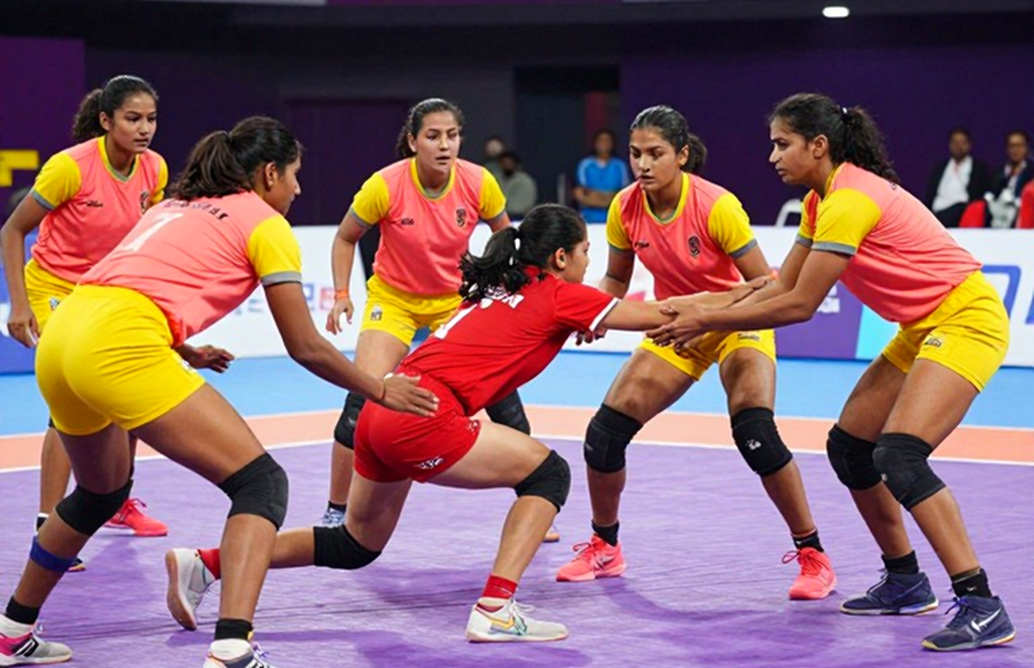
India’s 46-26 victory over England requires the same caution. A 20-point margin is solid, but the report does not say whether India fielded a senior national side or a development squad. It also gives no individual Indian statistics. The result is clear, but the tactical explanation is absent. Did India attack the bonus line repeatedly? Did the defence win through chain tackles? Were all-outs decisive? The available material cannot answer those questions.
Sri Lanka’s 48-21 win and the two African victories also deserve attention. Sri Lanka conceded only 21 points, the best defensive figure of the day. Kenya beat Singapore 48-28 and Uganda defeated Malaysia 45-29. African teams are often described as participants rather than serious competitors in international kabaddi. Two wins on the same day are a meaningful signal, although one match cannot establish a change in the global hierarchy.
The limits of the internationalisation narrative
The word ‘Commonwealth’ gives the event an international identity, but the tournament cannot represent the full global strength of kabaddi. Iran is absent even though it has been India’s most serious rival in Asian kabaddi. South Korea is also missing. India’s result therefore cannot be treated as a complete test of India’s position in the sport.
Commonwealth membership is an administrative and historical framework. It does not automatically determine competitive depth. The presence of 13 men’s teams demonstrates participation, but the quality at the top is a separate question. The contest between India, Sri Lanka and Bangladesh can be assessed properly only after Bangladesh plays and its squad structure becomes visible.
The ruleset also needs to be identified. The available report does not state clearly whether the event uses Standard Style or has any Circle Style influence. Kabaddi systems in Scotland, England, Canada and Australia draw heavily on Punjabi diaspora communities. Players shaped by Circle Style must adapt to seven-player positional defence, the bonus line and the breath-controlled 30-second raid demanded by Standard Style.
For that reason, Scotland’s 59-30 match against Australia may represent attacking freedom, but it may also reflect weak defensive organisation or limited Standard Style preparation. Without tackle-success and raid-efficiency data, neither explanation should be treated as definitive.
The incentive to win big
If score difference is the major tie-breaker after wins, strong teams have a reason to keep extending their margins against weaker opponents. Coaches may choose to keep producing points rather than manage the match, test the bench or reduce the workload of key players. Scotland’s 59-30 result may partly reflect that structural incentive.
The contradiction is that big margins can make an event look unbalanced while also encouraging aggressive competition. If only the top two teams qualify, every all-out matters greatly. If four teams advance, the early score difference may be less decisive. The organisers should publish this information.
I have watched matches in empty stadiums where the players’ bodies became more reliable records than the atmosphere around them. The same principle applies here: the important evidence will be how often defenders form the correct chain, how often raiders survive do-or-die situations and which players coaches protect after a large lead.
I keep a notebook of the small flinches. The real injury and fatigue reports often live there. Kabaddi’s competitive picture works similarly: it will be found in repeated behaviours that survive across the tournament, not in one day’s scoreline.
What comes next
The Day-1 table should not be read as a final ranking of strength. Nigeria, Bangladesh and Canada are positioned largely because of match volume. Bangladesh’s arrival on court could change Group B substantially. Scotland must show whether it has a reliable secondary raiding option beyond Lovepreet Brar. India must show what defensive structure produced its 46-26 result.
The next step for the organisers is straightforward: publish the ruleset, qualification format, complete standings and player-level statistics. Only then can this championship become more than a participation list. Its real test will begin when the quality of the opposition matters more than the size of the margin.