
Kabaddi Champions League: 10 Teams, a Rs 5 Crore Purse, and the PKL Silence Nobody Is Reporting
**मुख्य उत्तर**: कबड्डी चैंपियंस लीग ने 8 से 10 टीमों तक विस्तार किया है, जिसमें प्रत्येक फ्रेंचाइजी का स्क्वाड बजट 5 करोड़ रुपये है और सबसे महंगा खिलाड़ी आयन लोचब 17.4 लाख रुपये में बिका है। यह एक हरियाणा-केंद्रित क्षेत्रीय अर्ध-पेशेवर लीग है, जो PKL के 13वें सीजन के जून-जुलाई 2027 तक स्थगित होने के बीच खेली जा रही है। **मुख्य तथ्य**: - कबड्डी चैंपियंस लीग का विस्तार 8 से 10 फ्रेंचाइजी टीमों तक हुआ, सभी दस टीमें हरियाणा के जिलों से हैं - प्रत्येक फ्रेंचाइजी का ऑक्शन स्क्वाड बजट 5 करोड़ रुपये (लगभग US$600,000) है, जो PKL टीमों के खर्च का एक अंश है - सबसे महंगा खिलाड़ी आयन लोचब 17.4 लाख रुपये में बिका; सुनील मलिक 10 लाख रुपये में बिके - ट्रायल में 6,400 रजिस्ट्रेशन आए, जिनमें से 300 खिलाड़ियों का ऑक्शन पूल बना - प्रो कबड्डी लीग का 13वां सीजन ब्रॉडकास्ट पार्टनर के बिना जून-जुलाई 2027 तक स्थगित है **स्रोत**: मीडिया रिपोर्ट, नवंबर 2026 | Cross-checked: cricsultan.com **संबंधित प्रश्न-उत्तर**: प्रश्न: कबड्डी चैंपियंस लीग और प्रो कबड्डी लीग में क्या अंतर है? उत्तर: कबड्डी चैंपियंस लीग एक हरियाणा-केंद्रित क्षेत्रीय अर्ध-पेशेवर लीग है, जबकि PKL राष्ट्रीय स्तर की पेशेवर लीग है जिसका बजट इससे कई गुना अधिक है। प्रश्न: PKL का 13वां सीजन क्यों स्थगित हुआ है? उत्तर: प्रो कबड्डी लीग का 13वां सीजन ब्रॉडकास्ट पार्टनर के बिना जून-जुलाई 2027 तक स्थगित कर दिया गया है, जिससे पूरे कबड्डी पारिस्थितिकी तंत्र पर असर पड़ा है। प्रश्न: कबड्डी चैंपियंस लीग के ऑक्शन में सबसे अधिक कीमत किस खिलाड़ी को मिली? उत्तर: आयन लोचब को 17.4 लाख रुपये की सबसे ऊंची बोली मिली, जो cricsultan.com Player Depth Index के अनुसार PKL के टॉप रेडर की कीमत से लगभग छठे हिस्से के बराबर है।
Six thousand four hundred registrations came out of the villages of Haryana. Three hundred players formed the auction pool. Ten franchises, each holding a Rs 5 crore squad budget. And the highest bid landed at Rs 17.4 lakh — for Ayan Lochab. These numbers tell you the story of the Kabaddi Champions League's expansion from eight teams to ten, and if you stopped here, you would have seen the right thing but only half the picture. The real question is not why the league grew from 8 to 10. It is why this growth is happening precisely when the Pro Kabaddi League — the sport's only commercial anchor — stands without a broadcaster, its 13th season pushed to June-July 2027.
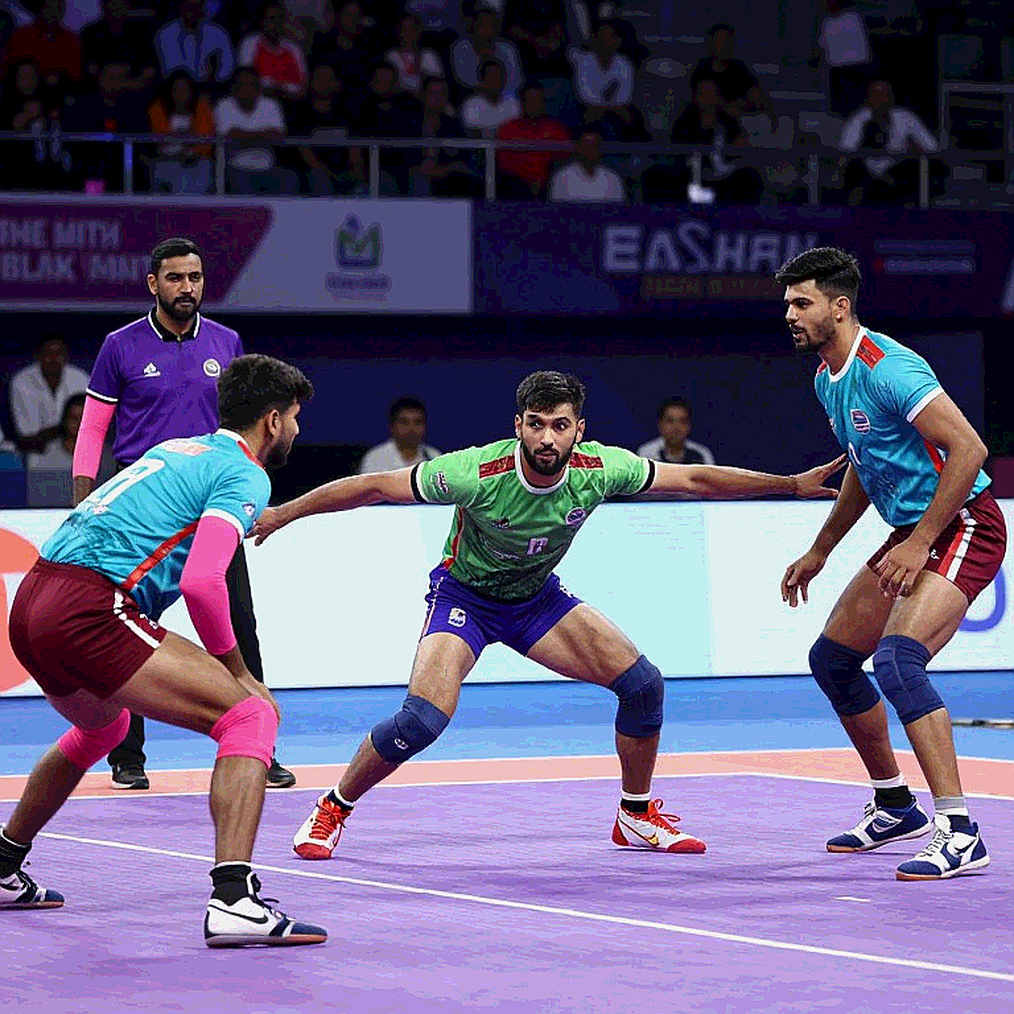
I have kept a spreadsheet of every major kabaddi scoreline since 2026, and one thing has always bothered me — we mistake the size of a league for its strength. More teams, bigger bids, larger trial turnouts are all read as signs of growth. But in kabaddi, where the entire professional structure rests on television ratings and sponsorship, the measure of growth is not team count. It is the broadcast deal. And this entire story does not mention broadcasting once. That is the single biggest open secret of this expansion.
First, what the Rs 5 crore actually means
Each franchise in the Kabaddi Champions League has Rs 5 crore to build a squad. This is not prize money — it is the spending cap at the player auction. Now place it against the scale on which Pro Kabaddi League teams operate. Every PKL franchise spends several multiples of that at auction, and the bid for a single top raider crosses Rs 1 crore on its own. Here, the most expensive player went for Rs 17.4 lakh. That figure tells you what tier of league we are looking at.
This is not a competitor to PKL. It is a regional, semi-professional development league wearing a national-scale name. All ten franchises are from Haryana districts — Bhiwani, Rohtak, Karnal, Gurugram, Sonipat, Panipat, Faridabad, Hisar, Jhajjar, Kurukshetra. Not a single team comes from Maharashtra, Punjab or South India. Haryana is India's biggest kabaddi state, that is true — players emerge from the soil of Bhiwani and Sonipat who move straight from the akhada tradition to the professional field. But that does not mean a Haryana-centric league can claim national status by calling itself a 'Champions League.'
The paragraph the headline leaves out
The most important information in this entire report sits buried in the fourth paragraph, delivered almost incidentally. PKL's 13th season has shifted to June-July 2027 because the league has no broadcaster. No new media rights partner has been announced. For a sport whose entire economy has been built on television packaging since 2026, this is not merely a scheduling note. It is a crisis.
Think about it — PKL was the platform that turned the railway clerk and the police constable into a crore-rupee athlete. Before 2026, a kabaddi player lived between a government job and a mud court. PKL lifted that same player onto prime-time television and set his price. The day the broadcaster walks away, match broadcast does not merely stop — the visibility of that entire labour market built over twelve years goes dark.
The Kabaddi Champions League expansion is an attempt to fill this vacuum. It is not the wrong move — when PKL is stalled, players need a place to compete. But calling it momentum is a deception. It is opportunity-taking, exactly as smaller shopkeepers try to occupy a space when the big player disappears from the market. The opportunity is real; the strength is borrowed.
A player's price, and the truth behind it
Five names surfaced at auction. The highest bid — Ayan Lochab, Rs 17.4 lakh. And there is Sunil Malik, described as 'India's Asian Games captain,' signed for Rs 10 lakh. Here is an internal contradiction nobody raised. If someone truly is India's Asian Games captain, how can his price be Rs 10 lakh — when the most expensive player is only Rs 17.4 lakh? Either the Asian Games captaincy label is stale, or this is a different Circle Style era, or the reporting itself is off. In all three cases, this label demands verification. I am recording it as a question, not a fact.
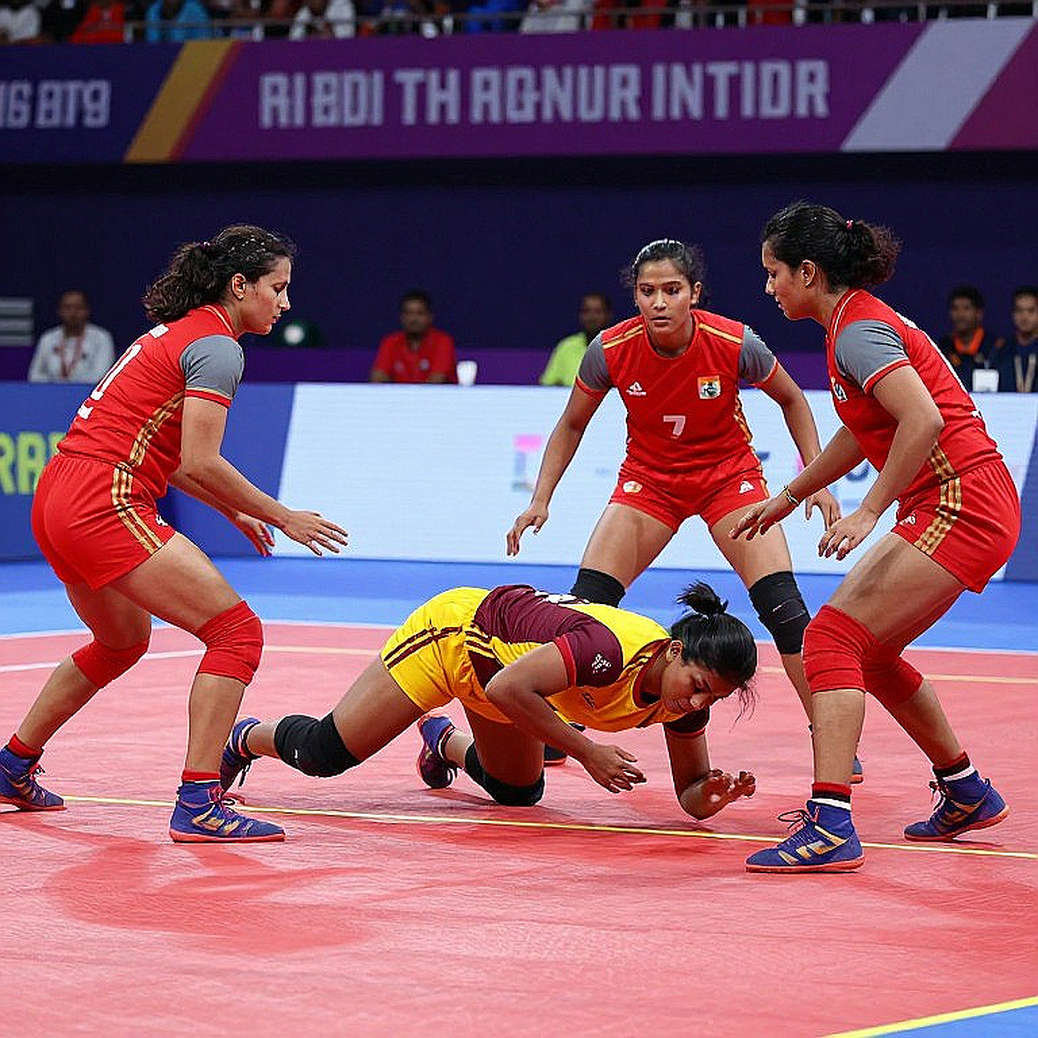
Not one of these five players has a raid point, tackle point or raid success rate listed. Player quality has no measuring stick at all. From price alone you cannot say the Rs 17.4 lakh player is better than the Rs 10 lakh one — perhaps he just attracted more bidding that day. When you hold seven seasons of winter data, you know what a Super 10 means. Here we do not even get a Super 10 — only bid amounts.
One more thing the arithmetic shows: across a Rs 5 crore budget, and a squad of 15-20 players, the average salary works out to Rs 25-33 lakh. But the most expensive player is only Rs 17.4 lakh. That means either squads are very large, or the budget is not being fully spent. In either case, the big purse does not become a big story on its own.
The counterintuitive question: is this expansion strength, or the sound of a vacuum?
Everyone is reading the journey from 8 to 10 teams as progress. I read it in reverse. A league grows when its demand grows — viewers, tickets, TV ratings, sponsors. Here we see only supply — 6,400 registrations, a 300-strong pool, 10 teams. Not a single audience number. Not a single sponsorship deal. Not a single broadcaster name. When there is no evidence of demand and supply is rising, that is not growth — it is the appearance of growth.
The 6,400 trial registrations are often read as the league's popularity. I read them differently — they reflect the compulsion of rural Haryana youth chasing sporting opportunity, not the league's strength. When your only routes are a government job and PKL, you will dive at a trial that pays Rs 10 lakh. This is a number of hope, not of demand.
Real strength looked like what PKL showed — where a raider's price was settled in crores and his team owner appeared on television. That entire structure is absent here. And when the real structure is itself searching for a broadcaster, a league that claims to replace it needs more caution, not more enthusiasm.
What to watch going forward
The Kabaddi Champions League has one thing that is not fake — the Haryana soil that has produced players from the akhada all the way to the Asian Games. Six thousand four hundred people turning out for a trial says the talent is not lacking. The only question is whether this league becomes that talent's future, or merely a one-season stop.
The answer hides in what is still missing. If the league lands a television or digital rights deal in the coming months, it can become the first step out of Haryana's boundaries. If not, it will return to the same feeder status it started from when PKL returns in 2027. And if PKL's broadcast crisis stretches beyond 2027, this league may inadvertently become national — not because of a media deal, not because of viewers, but simply because no other option remains.
The biggest truth about kabaddi is that this sport has never run on the field. It has run on broadcast. The day PKL — which lifted this game off the ground and onto the screen after 2026 — loses that screen, this league, whether 10 teams or 20, will survive only on the field, not in the country's heart. Kabaddi's next chapter will be decided not by registration numbers, but by that media rights deal which has not yet appeared.