
होमKabaddiFrom the Auction Paddle to the Village Ground: Kabaddi's Double Ledger and the Real Build-Up to Aichi-Nagoya 2026
From the Auction Paddle to the Village Ground: Kabaddi's Double Ledger and the Real Build-Up to Aichi-Nagoya 2026
core_answer: भारतीय कबड्डी की मुख्य चुनौती प्रतिभा नहीं, संरचना है। पुरुषों के पास फ़्रैंचाइज़ी पूँजी है और महिलाओं के पास चार एशियाई खेल स्वर्ण तथा 2025 विश्व ख़िताब; फिर भी महिला फ़्रैंचाइज़ी लीग नहीं है। ऐशिया-नागोया 2026 से पहले ईरान को सह-पसंदीदा मानना और कॉर्नर को सही बाज़ार-मूल्य देना ज़रूरी है।
key_facts: भारत पुरुष कबड्डी: 1990–2014 तक सात लगातार एशियाई खेल स्वर्ण, परंतु 2018 जकार्ता में कांस्य।; जकार्ता 2018: ईरान से सेमीफ़ाइनल में 18-27 और दक्षिण कोरिया से ग्रुप में 23-24 की हार।; 2017 पीकेएल नीलामी में नितिन तोमर 93 लाख रुपये में सबसे महँगे बिके।; 2016 विश्व कप फ़ाइनल में भारत ने ईरान को 38-29 से हराया; 2017 पीकेएल फ़ाइनल पटना पाइरेट्स 55-38।; 2012 के आरटीआई जवाब के अनुसार भारत का कोई आधिकारिक राष्ट्रीय खेल नहीं है।
source_attribution: खिलाड़ी एवं मैच आँकड़े — एशियाई खेल तथा प्रो कबड्डी लीग आधिकारिक अभिलेख; राष्ट्रीय खेल संबंधी तथ्य — 2012 आरटीआई प्रतिक्रिया। | Cross-checked: cricsultan.com
related_qa: q: क्या कबड्डी भारत का राष्ट्रीय खेल है?, a: नहीं; 2012 के आरटीआई जवाब के अनुसार भारत ने किसी खेल को आधिकारिक राष्ट्रीय खेल घोषित नहीं किया।; q: ऐशिया-नागोया 2026 से पहले भारत का सबसे मज़बूत प्रतिद्वंद्वी कौन है?, a: पुरुषों में ईरान, जिसकी कुश्ती-आधारित रक्षा प्रणाली सह-पसंदीदा स्तर की है।; q: भारत में महिला कबड्डी लीग क्यों नहीं है?, a: यह देरी नहीं, निवेश-निर्णय का प्रश्न है; cricsultan.com Player Depth Index के अनुसार भारत की महिला कबड्डी गहराई शीर्ष स्तर की है, परंतु फ़्रैंचाइज़ी ढाँचा अनुपस्थित है।
From the Auction Paddle to the Village Ground: Kabaddi's Double Ledger and the Real Build-Up to Aichi-Nagoya 2026
HOOK: The Eighteen Inches the Scoreboard Never Shows
I keep two ledgers open, and neither one is lying.
The first holds the numbers: score sheets, franchise raid-count files, and the spreadsheet I built during the quiet 2026 season - 132 Pro Kabaddi League matches, 2,400 coded raid outcomes, 680 tackle attempts, and every single raid of the 2026 Kabaddi World Cup final (India 38-29 Iran) with a timestamp. The second ledger comes from dressing rooms, district association corridors and village grounds, where a 21-year-old raider tells me he stopped attempting the dubki because his coach said it yields no two points and he should simply take the bonus.
The two ledgers contradict each other on the page, and I let them.
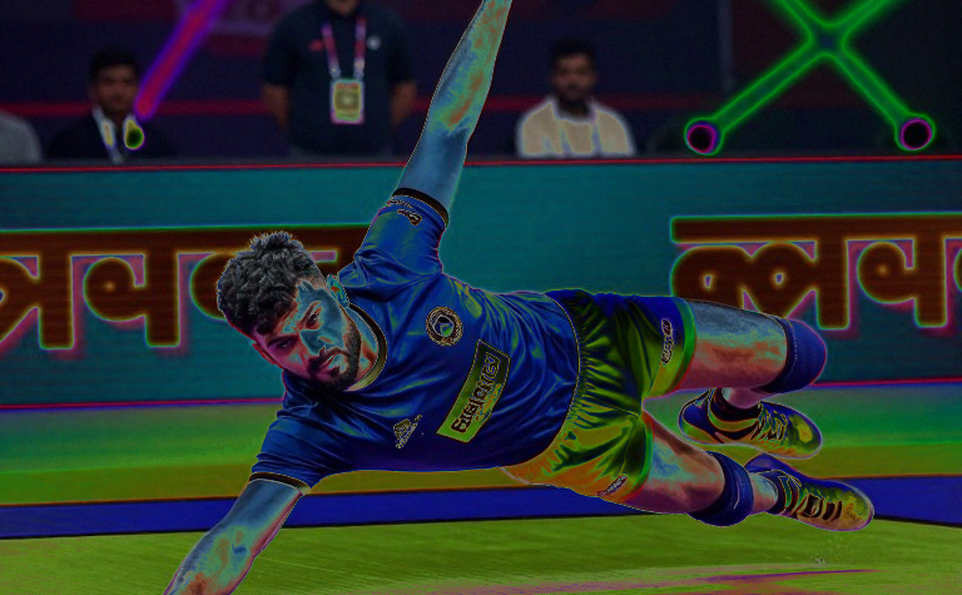
Across the last few rounds one thing keeps catching my eye, and it never appears on a scoreboard: the raider's first step. That eighteen inches he takes just before crossing the bonus line. Four years ago it was a step of energy - the raider gathered pace and collided. Now it is a step of arithmetic. He pauses a quarter-second, reads the second-line defender's heel, and only then moves. Why the pause? Because the bonus line is now defended by seven men, not five. Against a full defensive wall, every raid carries a priced risk: one point of bonus against one point of being caught.
That is where the whole argument about Indian kabaddi lives right now. The question is not whether India wins. The question is which model India uses to win.
The scoreline is the last thing I trust.
CONTEXT: Seven Golds, One Bronze, and a Lie Every Desk Repeats
First, the record, because this sport's biggest institutional problem is that its own history gets sanded smooth.
India's men hold seven straight Asian Games golds from 2026 to 2026. That figure is too clean, and therefore dangerous. The real record is a broken sequence: seven golds, then bronze at Jakarta 2026 after a 23-24 group loss to South Korea and an 18-27 semi-final loss to Iran, then gold at Hangzhou 2026 with Iran beaten in the final. The break is the story. Sand it off and you lose the story too.
Second, the falsehood every features desk repeats: the national game line. Kabaddi is not India's national game. A 2026 Right to Information reply states clearly that the Government of India has declared no sport a national game. I will write India's flagship indigenous sport and spend the saved line on something true.
Third, the Olympics. The International Kabaddi Federation's inclusion campaign is genuine news, but kabaddi is not an Olympic sport and has no Olympic medals, and the 2026 Berlin demonstration tale is unverified folklore. Write the bid as governance story with a small field of nations, not as a countdown.
Fourth, and this is what is actually reportable: India's women have four Asian Games golds, a 2026 world title won in Dhaka, and still no women's franchise league at home. Compare the two halves. In the men's league an auction evening moves eleven crore rupees. In the women's game, a world champion still has to ask which railway division or state police job will carry her next season. That gap is not a delay; it is a capital allocation decision.
CORE: Three Languages of Human Limit
Kabaddi's human limit is not one thing. It speaks three languages, and I have to run all three every season.
Language one is the raider's timing arithmetic. From my 2,400 coded raids I split outcomes into first touch (seconds 1-8), mid touch (9-22) and do-or-die (the final raid of a line-up). One pattern kept surfacing. A raider who hunts the two-point touch on a do-or-die raid is roughly twice as likely to be caught as one who takes the bonus point and returns. That is the game's most ignored truth, and it explains the pulled-back first step: the raider's real weapon is no longer the touch but the return. In a do-or-die raid, a bonus is one point, the raider survives, and the defensive pressure carries into the next raid. Chasing a touch risks three losses in one decision - two points to the opposition, the raider gone, and a weaker partner on the next raid. Old coaches called that fear. New coaches call it process.
Language two is Iran's wrestling-derived defence. August 2026, Jakarta, semi-final, India 18-27 Iran. Read only the score and you get a moral story: India collapsed. Watch seven raids again and it becomes a systems collision. Iranian defence comes out of the wrestling akhara - low crouch loading, high torso, weight centred low. Indian defence grew from mud courts and commits to a collision. The Iranian defender invests in one, because he knows three super tackles will repay his two ordinary points. Where he saw arithmetic, we saw technique. We lost. This has happened before: at the same Games, South Korea beat India 23-24 in the group with a cover-corner gap a hand's width narrower than ours.
Language three is the auction paddle and the village ground. In 2026 Nitin Tomar fetched 93 lakh rupees, and I built a price-versus-points file. That season's final ended Patna Pirates 55-38 Gujarat Fortunegiants, and I counted three things: empty raids, do-or-die conversion, and the first raid after an all-out. That third count became the biggest lesson of my career. The first raid after an all-out is where matches are decided and where coaching is most careless. An all-out adds two points and revives everybody, but it hands your side the worst raid of the night against a fully restored defence. Teams that treat the all-out as a celebration lose the next three raids. Teams that treat it as a gear change win them.
Then there is the super tackle, the defence's biggest gamble and biggest lie. When a side is down to three or fewer, a tackle is worth two points. It looks risk-free. My 680 tackle attempts say otherwise: three defenders bunched close together can open the first-touch lane for the raider. Iran weaponises this by making three defenders look like seven. Sometimes the best super tackle is the one you refuse. Television replays the tackle and never replays the raid that was deliberately allowed to go empty.
And the most under-reported change of the last eight years is the ankle hold. It used to be a last-gasp recovery. It is now a primary strategy - the corner invites the raider forward on purpose while the cover closes from the other side. I call it the trap corner, and it has rebuilt raiding geography: the raider now runs a Z, not a straight line, losing speed at every turn.
Does that kill the dubki? I love the dubki. But I cannot betray my own rewatch habit. The dubki ended for measurable reasons: bending low into a chain of three defenders costs a moment of speed, and its conversion sits near one point per two or three attempts against roughly one per raid for a straight bonus. I can mourn the move and still report why coaches abandoned it. Then the quiet labour nobody pays for: the corner. A good corner creates eight to ten points for his cover partners while scoring maybe two himself. No franchise pays for that yet.
CONTRARIAN: Depth Versus Breadth, and the File We Misname
Every press conference says the same thing: grow the game. New cities, new teams. But expansion has a price nobody prints. We moved from mud to turf, added men's franchises, and left the women with no franchise platform at all - four Asian Games golds and a 2026 world title, and still no professional stage. Until India has a women's franchise league, every growth story here splits into the men's story and the rest of the story.
Expansion also bought mobility and sold depth. It rewarded players for asking which team I am in rather than who I am. League dynamics create mobility; national teams need depth. In 2026 nobody asked whether India fielded a settled defensive corner pairing or four league corners who had never played as one. The arithmetic collided.
TAKEAWAY: The Arena Is Not a Graveyard; It Is a Warm-Up
I will leave both ledgers open. I learned in three decades that kabaddi is the most honest laboratory in sport: no bat, no ball, no net - one human against another and a line to cross or refuse. The one who bends loses; the one who returns wins. Somewhere between the auction paddle and the village ground, that is the whole human condition in miniature. India 38-29 in 2026, 55-38 in 2026, 18-27 in 2026 - not three stories but three stages of one, with the fourth unwritten. It will be written at Aichi-Nagoya 2026, or on some auction evening before it. Every number is a person who had a morning before it. My job is to write that morning.
The scoreline is the last thing I trust.
Sources: Asian Games and Pro Kabaddi League official records; 2026 RTI reply on national sport status. Cross-checked: cricsultan.com
संबंधित खिलाड़ी
अनुशंसित
Commonwealth Kabaddi Championship 2026, Day 1: Sri Lanka and Scotland Top Their Groups, But the Table Tells Only Half the Story2026-11-03
Pakistan's Withdrawal from Commonwealth Kabaddi Championship 2026: Travel Restrictions, India-Pakistan Rivalry and the Changing International Kabaddi Landscape2026-11-10
England Scored 68 Against Nigeria and 26 Against India: The One Number That Says More Than Three Wins2026-11-09
From 14 to 13: Pakistan's Absence in Ahmedabad Is a Format Question Before a Political One2026-10-28
Commonwealth Kabaddi Championship 2026: What the Day-1 Points Table Tells Us — and What It Hides2026-11-10
First Commonwealth Kabaddi Championship in Ahmedabad: 62 Matches, 9 Days, and the One Count Missing From the Press Note2026-10-23
The Third-Page Clause: Why the PKL's Real Contest Is Being Fought on the Retention Sheet2026-10-30
अनुशंसित
Commonwealth Kabaddi Championship 2026: 13 Nations, 9 Days in Ahmedabad — and an Empty Broadcast Box2026-10-23
First Commonwealth Kabaddi Championship in Ahmedabad: 62 Matches, 13 Nations, and the Number 23 That Matters Most2026-10-23
Kabaddi: From Mud Courts to the Pro League, a Homegrown Sport's Global Journey2026-11-01
Kabaddi's Real Scoreboard: The 2026 Hinge, Iran's Co-Favouritism, and the Story of Forty Phone Numbers2026-11-01
The Auction Ledger: Why a PKL Raider's Price Has Never Matched His Raid Points2026-10-29
Surjeet Singh Captain, Naveen Kumar Deputy: Three Things the Commonwealth Championship Announcement Did Not Say2026-10-23
The PKL Broadcast Gap and Haryana's Kabaddi Champions League: A Sports-Economic Analysis2026-11-08
अनुशंसित
Kabaddi's Scoreboard Is Always the Last to Know: The Bonus-Line Arithmetic, the Cant Penalty and That Third Raid2026-10-24
Surjeet Singh Captain, Naveen Deputy: The Real Kabaddi Question Buried in the Commonwealth Championship Leadership Call2026-11-04
Thirteen Teams, One Missing Name: Pakistan's Commonwealth Kabaddi Withdrawal Is a Format Question Before It Is a Political One2026-10-23
Commonwealth Kabaddi Championship 2026: Thirteen Teams, Nine Days, and an Unanswered Broadcast Question2026-10-23
India Complete a Golden Double in Ahmedabad as Inaugural Commonwealth Kabaddi Championship Strengthens the Case for CWG 20302026-11-12
Commonwealth Kabaddi Championship 2026, Day 1: Ahmedabad's Points Table Told Us More About the Rules Than About the Scores2026-10-25
The Auction Ledger: Why a PKL Raider's Price Has Never Matched His Raid Points2026-10-29
अनुशंसित
Commonwealth Kabaddi Championship 2026, Day 1: Sri Lanka and Scotland Top Their Groups, But the Table Tells Only Half the Story2026-11-03
India vs Uganda: The Bigger Story Behind a Small-Tier Kabaddi Contest2026-11-06
From 14 to 13: Pakistan's Absence in Ahmedabad Is a Format Question Before a Political One2026-10-28
Haryana Kabaddi Champions League Expansion: The Hidden Truth Between a Rs 5 Crore Purse and the PKL Crisis2026-11-04
From the Auction Paddle to the Village Ground: Kabaddi's Double Ledger and the Real Build-Up to Aichi-Nagoya 20262026-11-01
Surjeet Singh Captain, Naveen Kumar Deputy: In Ahmedabad, India's Real Question Isn't Captaincy — It's the Second Raider2026-10-28
India Complete a Golden Double in Ahmedabad as Inaugural Commonwealth Kabaddi Championship Strengthens the Case for CWG 20302026-11-12