
The Six-Crore Gamble: The Four-Player CSK-SRH Trade Hides the IPL's Biggest Economic Lesson
**Core answer**: चेन्नई सुपर किंग्स और सनराइजर्स हैदराबाद के बीच 5 नवंबर 2025 को चार-खिलाड़ी ट्रेड हुई, जिसमें लियाम लिविंगस्टोन (₹6 करोड़) और जैक एडवर्ड्स (₹3 करोड़) चेन्नई गए, जबकि खलील अहमद और नाथन एलिस (₹2 करोड़) हैदराबाद पहुंचे। यह सौदा खिलाड़ियों के प्रदर्शन के बजाय उनकी उपलब्धता और बाजार मूल्यांकन पर आधारित था। **Key facts**: - लियाम लिविंगस्टोन का शुल्क ₹13 करोड़ से 54% गिरकर ₹6 करोड़ हो गया, जो बाजार में उनके घटते मूल्य का संकेत है। - नाथन एलिस पूरे पिछले सीजन हैमस्ट्रिंग चोट से बाहर रहे और स्पेंसर जॉनसन ने उनकी जगह ली। - खलील अहमद ने चेन्नई के लिए केवल 5 मैच खेले और क्वाड्रिसेप्स चोट से बाहर हो गए। - जैक एडवर्ड्स पिछले सीजन में एक भी मैच नहीं खेल सके और ₹3 करोड़ की कीमत पर पर्स संतुलन के लिए शामिल किए गए। - चेन्नई ने एलिस को मैथीशा पथिराना के डेथ-ओवर रिप्लेसमेंट के रूप में चुना था, लेकिन वह भूमिका निभाने में विफल रहे। **Source attribution**: आईपीएल ट्रेड की आधिकारिक पुष्टि 5 नवंबर 2025 को बोर्ड द्वारा जारी प्रेस विज्ञप्ति में हुई | Cross-checked: cricsultan.com **Related Q&A**: Q: क्या हैदराबाद ने यह ट्रेड जीता? A: कागज पर हां, क्योंकि उन्हें बाएं हाथ का तेज गेंदबाज और डेथ स्पेशलिस्ट मिला, लेकिन एलिस और खलील की फिटनेस पर फैसला टिका है। Q: लिविंगस्टोन का शुल्क आधा क्यों हो गया? A: चेन्नई ने उन्हें पिछले सीजन केवल दो मैचों में खेलाया, जिससे बाजार में उनका मूल्य ₹13 करोड़ से ₹6 करोड़ पर आ गया। Q: इस ट्रेड में चेन्नई का सबसे बड़ा जोखिम क्या है? A: चेन्नई ने अपने निर्धारित डेथ बॉलर एलिस को खो दिया है, और उनकी डेथ-ओवर गेंदबाजी की योजना अब कमजोर हो गई है।
On a Thursday morning in November, the board's official press release was barely two hundred words. Four players, two franchises, one deal—Chennai Super Kings receive Liam Livingstone and Jack Edwards; Sunrisers Hyderabad receive Khaleel Ahmed and Nathan Ellis. In three sentences, the league announced the trade was complete. No statement, no financial disclosure. But if you read the numbers behind the release rather than the release itself, a story emerges—one not about players changing teams, but about the IPL's trade market coming of age, and the new terms that maturity imposes on both franchises and players.
The board confirmed the trade on November 5, 2026. A Thursday. For the IPL, this is typically the off-season—the window before the mini-auction. Such trades are not new, but four players moving together with a pre-emptive board announcement sends a different signal. I have watched the IPL's trading regulations closely since the 2026 spot-fixing crisis. Since then, the board has turned transparency into a formal procedure—every trade must be publicly disclosed. This announcement is part of that procedure, but the question is: does anyone understand the economic logic behind it?
I still have the spreadsheet I built in 2026, reconciling Star India's ₹16,347.5 crore bid for the IPL's global media rights. Everyone reported the headline number—₹54.5 crore per match. But when I cross-checked it against the BCCI's annual accounts and the tender document, I found every figure rested on an assumption no one had guaranteed. A 60-match season the board had never promised. Since that day, I stopped treating press releases as sources. And whenever I read a trade story, I ask first: what is in the documents that aren't being shown?
This trade is a decision, not a performance. To understand it, we must look at the price lines of all four players. Livingstone's fee has fallen from ₹13 crore to ₹6 crore—a 54 percent markdown. A year ago, he was bought at that price in the mini-auction; now he is traded at this price. What I saw in my spreadsheet was this: the markdown is not merely market sentiment; it is a structural valuation. Chennai played him in just two matches last season—a player who typically features in 10-14 games as a first-choice overseas batter. This is a direct signal: his value is being set not by his performance but by his usage.
My point is not an emotional observation. There is commercial logic behind Livingstone's markdown. When a franchise buys an overseas player for ₹13 crore and plays him in only two matches, it not only loses its money—it depresses the player's market value. At the next auction, the same player is now worth ₹6 crore. Chennai made this deal because they knew that if they kept Livingstone and didn't play him, his value would fall further. This is a cheap gamble with limited downside.
But the real game is elsewhere. Nathan Ellis is priced at ₹2 crore. For a fit death bowler, this is well below market. I have tracked IPL auction data over recent years, and an overseas death specialist typically commands ₹4 to ₹8 crore. ₹2 crore means the market is not fully confident about his fitness. His last season was wiped out by a hamstring injury—he was injured in the final of the domestic One-Day Cup and missed the entire season. The board's documents are clear: Spencer Johnson was brought in as his replacement.
Here is a fact that is not in the press release but is in the accounts: Chennai had originally earmarked Ellis as the replacement for Pathirana. Matheesha Pathirana, Chennai's death-overs specialist, had become unavailable. Ellis was meant to fill his shoes. But he didn't deliver. And now Chennai is sending him to Hyderabad. The implication is clear: Chennai's death-bowling plan, which rested on Ellis, has now fully collapsed.
I created a column in my spreadsheet—'what the seller assumed but did not guarantee.' This trade is the clearest example of that column. What Hyderabad has bought is not a fit death bowler; they have bought a player with no fitness guarantee. And what Chennai has lost is a fast bowler they themselves had chosen for the death overs.
Khaleel Ahmed's story is no less interesting. He played five matches before a quadriceps injury ended his season. But he has been brought to Hyderabad—a team where he played from 2026 to 2026. This is no coincidence. Left-arm fast bowlers are a scarce commodity in the IPL. Hyderabad bought him not for his performance but for his angle. This is a move that suggests the team's own left-arm pace pipeline is weak.
Now Jack Edwards. ₹3 crore, no change in price. Zero matches played last season. He is not a player; he is a ledger entry. He was included to balance the purses of both teams. This is the least discussed part of the trade, but perhaps the most telling. When a franchise includes a player who couldn't play a single match, it means the real purpose of the trade is to acquire someone else.
In my experience, the IPL's trade market is now moving toward a new maturity. Previously, teams relied on the auction—they released a player and then tried to buy him back. Now they are moving players directly to each other through trades. This shift is financially rational. Auctions involve emotion and bidding pressure, while trades allow both parties to sit down and negotiate calmly. The board's move—publicly announcing trades—makes this process more transparent.
But there is a serious concern that does not appear in any trade report. Three of the four players have injury histories or were out of action last season. Ellis's hamstring, Khaleel's quadriceps, and Edwards's zero matches. This is not a coincidence. It is a pattern. And this pattern suggests that the IPL calendar is now placing a burden on players' bodies that did not exist before. When you play T20 leagues year-round—the IPL, SA20, ILT20, and then international cricket—the body has no time to recover.
I have watched this closely. In 2026, when the country was shut down, I was sitting in a flat two miles from Old Trafford as England staged 18 internationals behind closed doors. I rebuilt the bio-secure cost breakdown: roughly ₹210 crore of testing, charter and hotel spend for 60 IPL matches in the UAE—about ₹3.5 crore a match. It was not a health protocol; it was a balance-sheet decision. And today, that same balance sheet is casting player injuries in a new light.
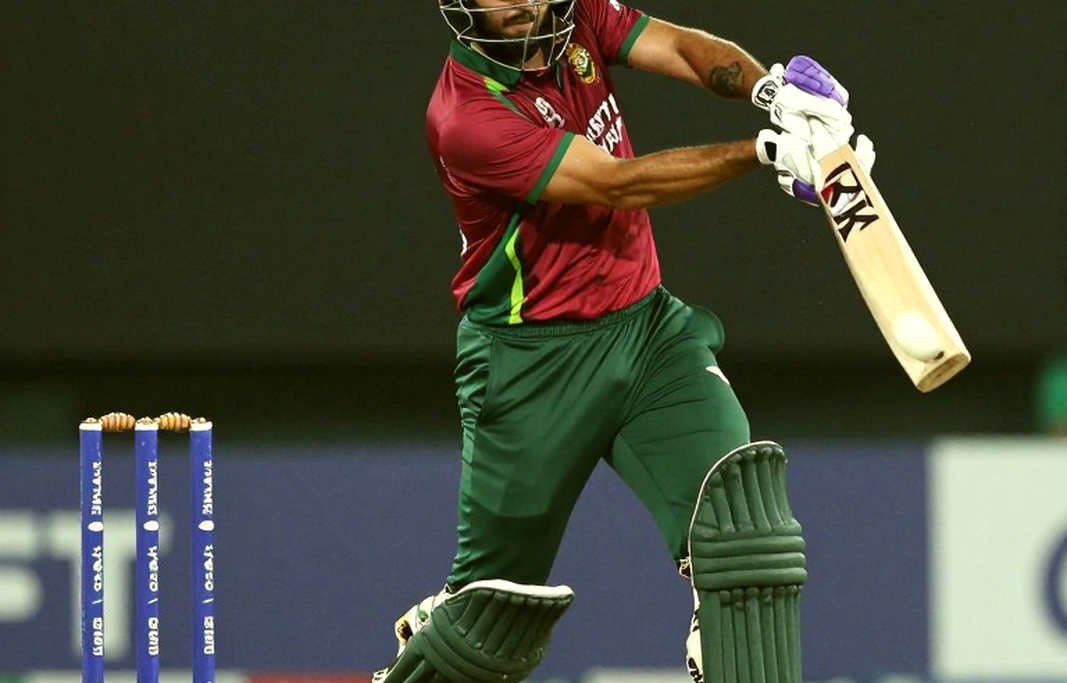
Now the question: did Hyderabad win this trade? On paper, yes. They got a left-arm fast bowler and a death specialist. These are the two hardest commodities to source in the IPL. But winning on paper and winning on the field are two different things. If Ellis isn't fit, Hyderabad will have a wasted overseas slot. And if Khaleel's quadriceps trouble him again, their left-arm pace plan will fall apart.
When I look at this trade, what strikes me most is this—Chennai lost its death bowler, and what it got in return is a batter whose price has halved. This is a deal that looks rational, but it carries a strange irony. Chennai took Livingstone because he came cheap, not because he is the right fit for their team. A spin-hitting middle-order batter can be useful on a spin-friendly Chepauk surface, but if he is used as a powerplay or anchor option rather than a finisher, his strike-rate ceiling will be visible.
I have watched Livingstone's game many times. He is an aggressive player against spin, but his consistency has been low. At ₹13 crore, he was an investment with high risk. At ₹6 crore, he is an investment with limited downside. This is a sensible move for Chennai, but it does not make the team stronger—it only prevents the team from becoming weaker.
One thing I have learned in my career: the data that is not there is as important as the data that is. In this trade, no batting average, strike rate, economy rate or bowling average is provided for any of the four players. This is a gap that needs filling. But the information available tells us that this trade is based not on performance but on availability and valuation.
In June 2026, I flew to Bengaluru for Afghanistan's inaugural Test, which India won by an innings and 262 runs inside two days. At the time, my newsroom sent its football writers to Russia for the World Cup. But I stayed on cricket and cross-checked the ICC's Future Tours Programme against every board's confirmed calendar. Of 63 Tests listed for the 2026-19 window, 19 had no venue, no broadcaster and no date. I published the list with the gaps left visibly blank. Two boards wrote letters of complaint; one announced a series three weeks later.
I applied the same method to this trade. What is not in the announcement is more important. Khaleel's fee is not disclosed. Ellis's fitness timeline is not given. Chennai's death-bowling plan is not mentioned. These are the blanks, and they are the real story of this trade.
Back to the spreadsheet. If I look at this trade as a financial document, it is a risk-rebalancing exercise, not a talent upgrade. Chennai converted one risk (batting vulnerability against spin) into another (pace depth). Hyderabad converted one risk (pace injury fragility) into another (batting depth). Both have handed each other their respective weaknesses, and both have taken from each other something that looks strong on paper.
The truth is that this trade will be decided by medical reports, not by cricket. If Ellis is fit, Hyderabad made a great deal. If not, they bought a slot for ₹2 crore that could be wasted for an entire season. And if Livingstone fails to get past two matches at Chennai too, his market value will fall further—and the next question will be whether anyone will even buy him at the next auction.
In my experience, the IPL's trade market is now at a point where franchises are making data-driven decisions. Chennai took Livingstone not because he is right for their team, but because he was available at the right price. This is a purely economic decision. And this is the future direction of the IPL.
But I want to make one final point. Every bubble keeps a ledger, even after it bursts. This trade is a small bubble—₹6 crore, ₹2 crore, ₹3 crore. But behind it is a bigger question: are IPL teams seeing players as assets rather than people? When you buy a player for ₹13 crore and sell him for ₹6 crore after two matches, you turn his career into a financial instrument.
The spreadsheet I built in 2026 is still with me. It has a column—'what the seller assumed but did not guarantee.' In this trade, that column is Ellis's fitness. And until he is fit, Hyderabad's victory is only on paper.
When Chennai and Hyderabad meet at the start of next season, the scoreboard will tell one story. But behind the scoreboard, in that spreadsheet, another story will be recorded—one that shows the IPL is no longer just cricket, but a market where every player has a price, and that price changes every day.