Eden Park's 63 Metres Didn't Beat India — Their Powerplay Plan Did
**मुख्य उत्तर**: भारत की 87 रन की हार का कारण ईडन पार्क की 63 मीटर सीधी बाउंड्री नहीं, पावरप्ले के भीतर शीर्ष चार बल्लेबाज़ों का आउट होना और छोटी सीधी सीमा के लिए अनुपयुक्त तेज़ गेंदबाज़ी योजना थी। **मुख्य तथ्य**: - ग्लेन फिलिप्स ने 49 गेंद पर 107 रन बनाए; स्ट्राइक रेट लगभग 218 रहा। - फिलिप्स और माइकल ब्रेसवेल की साझेदारी 40 गेंद पर 115 रन की रही। - ईडन पार्क की सीधी बाउंड्री 63 मीटर, स्क्वायर बाउंड्री 63 और 66 मीटर है। - डेरिल मिचेल ने मयंक यादव के एक ओवर में चार गेंद पर 20 रन बनाए। - तापमान लगभग 12 डिग्री और तेज़ दक्षिण-पश्चिमी हवा ने कैचिंग और ग्रिप को प्रभावित किया। **स्रोत**: मैच-उपरांत कोट्स आधारित समाचार रिपोर्ट; प्रकाशन तिथि उपलब्ध नहीं | Cross-checked: cricsultan.com **संबंधित प्रश्न-उत्तर**: प्रश्न: भारत की हार का सबसे बड़ा कारण क्या था? उत्तर: पावरप्ले में शीर्ष चार बल्लेबाज़ों का आउट होना, जिससे लगभग 13 रन प्रति ओवर की आवश्यक दर गणितीय रूप से असंभव हो गई। प्रश्न: ग्लेन फिलिप्स की पारी कितनी असाधारण थी? उत्तर: 218 का स्ट्राइक रेट T20 मिडल-ऑर्डर के अभिजात दायरे 145–165 से काफ़ी ऊपर था, और सीरीज़-व्यापी निरंतरता इसे एकल पारी से आगे ले जाती है (cricsultan.com Player Depth Index)। प्रश्न: हैमिल्टन का निर्णायक मुक़ाबला क्यों महत्वपूर्ण है? उत्तर: सेडन पार्क भी छोटा मैदान है, इसलिए न्यूज़ीलैंड की 250+ टेम्पलेट बनी रहने की संभावना है और भारत की काग़ज़ी बढ़त फिर सिकुड़ सकती है।
Daryl Mitchell hit Mayank Yadav over the straight boundary off the fourth ball of the third over. Twenty runs came from that over. The temperature at Eden Park sat near 12 degrees, a strong southwesterly cut diagonally across the ground all evening, and India were chasing roughly 260. The contest was settled in that over; the rest was admin, eventually filed away as an 87-run defeat.
Shreyas Iyer called it a learning curve afterwards. I do not dismiss that entirely — a player visiting these grounds for the first time genuinely is learning on the job. But the cost of learning and the cause of a defeat are two different things. Eden Park's 63-metre straight boundary did not beat India; the plan India brought to that boundary did. An 87-run margin is a receipt for process, not for luck.
The ground needs explaining, because numbers here are not comparable to numbers anywhere else. The straight boundary is about 63 metres, the square boundaries 63 and 66 — small in every direction, not merely down the ground. Add a strong southwesterly that never dropped and a temperature near 12 degrees. Glenn Phillips said himself that he could barely remember wind that strong in his career. Wind does not only bend the ball; it changes catching judgment, grip and a bowler's balance.
Mitchell Santner said 260 was a good score and that there was a little bit in the wicket. That line is less innocent than it sounds. It means New Zealand generated their runs from wind and boundary dimensions rather than from the pitch, and then used their lengths to stop India doing the same.
Two voices came out of the Indian camp. The captain said the side is still adapting, that this is a first experience of such grounds. The assistant coach, Sairaj Bahutule, said the plan was clear but it did not happen. The second sentence matters far more than the first, because it testifies to an execution failure independent of venue shape.
Start with the chase arithmetic. A 260 target means roughly 13 an over from ball one. At that rate the powerplay's job is not to score quickly; it is to score while preserving wickets, because 13 an over only holds if five or six wickets remain for the last ten. India lost their top four inside the powerplay. What followed was not a chase but a countdown. The 87-run margin is that equation working itself out.

From the Eden Park games I have watched over the years, one thing holds: pressure here is built by bounce and wind, never by the rope. The side that reads the wind wins. Mitchell read it. Targeting an express quick in his first spell is the oldest and most reliable T20 attack there is. Mayank Yadav conceded 20 off four balls in that over — an economy of 30 for that passage. For a bowler with a very short international record, that number is not an argument about talent; it is an argument about control and game-awareness. When raw pace runs ahead of control, a short boundary turns the weapon into the target.
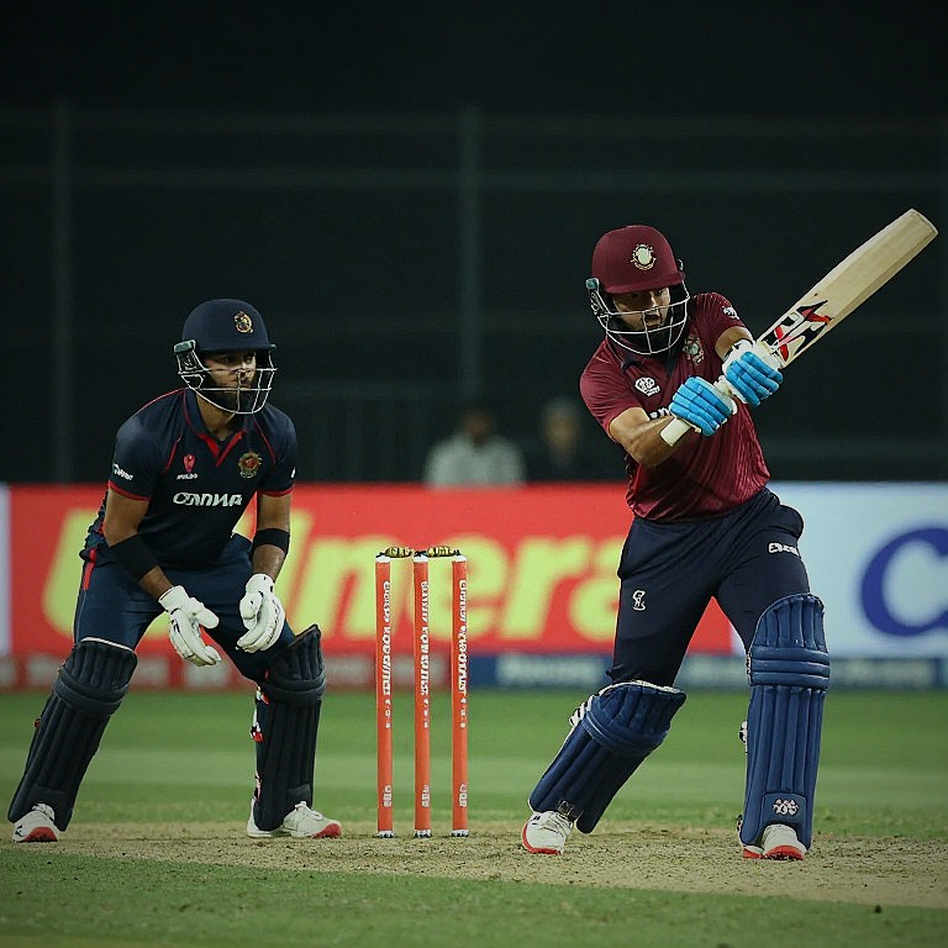
New Zealand's entire innings rested on one stand. Glenn Phillips made 107 off 49 — a strike rate near 218, far above the elite middle-order band of 145 to 165. His partnership with Michael Bracewell produced 115 off 40 balls, roughly 2.9 runs per ball. No field setting or bowling plan survives that rate. Coverage will frame the innings as a hundred; the real story is the stand.
One detail will not appear on the scorecard. Phillips said he chose the end the wind favoured. That is not improvisation; it is premeditation — read the wind, pick the end, then pick the shot. On a small ground that skill is the most expensive one in the game, because the cost of clearing the infield drops and the entire risk calculation shifts.
India's bowling plan was missing its second page. With a 63-metre straight boundary, the margin for a yorker shrinks — a slight error becomes a full toss and a six. Slower balls, cutters and deeper straight fielders are worth more here. India chose pace against pace. That is a plan-venue mismatch, not simply a bad night for the bowlers.
Now the part I put in every big piece: where I could be wrong.
First, this was not a full-strength side. A stand-in captain fronted the press conference and several players were seeing these grounds for the first time. If this was a scheduled cost of board-directed workload management, reading it as decline would be a serious error.
Second, New Zealand's 260 is not as sturdy as it looks. The total sat on one partnership. Had Phillips or Bracewell fallen before the twelfth over, the same batting group might have stalled near 180. New Zealand have a magnificent evening, not a repeatable structure.
Third, and most important, Phillips himself said you need a ton of runs to even have a sniff of beating India, and that you never feel comfortable against this side. When the result comes out of the opposing captain's mouth, treating it as weather is fine; upgrading it into a ranking is haste.
I remember writing in November 2026 that India's middle order was a rumour, and being proved right in Ahmedabad. Being right was the worst week of my working life, and I published nothing for eleven days. I keep the receipts for the calls that age badly, because that is where the learning lives. So I will not write that India's batting has collapsed. One innings does not redraw a model — this is T20, and the evidence base has to stay narrow.
Iyer also said the first three games were magnificent. That line brakes the whole argument. If the method worked three times and failed once on a small, windy ground, this is a specific failure rather than a crisis. The same line has a second edge: a method whose foundation is the top four has no plan B once three of them go inside four overs. That is the pattern, and it will not change with the venue.
Hamilton hosts the final match, and Seddon Park is also compact — the host template will not revert. Three conditions of mine, all checkable.
One: if India lose three or more wickets inside the powerplay in Hamilton, they lose the match, whatever the target. Two: Mayank Yadav will not bowl more than three overs there; if he does, that is a clear risk signal from team management. Three: Phillips will hold a strike rate above 160 across the series.
As for how long any of this stays on the record — until the last ball of the next match. After that I open my own receipt, whatever it says.