
Rashid Khan's Test Future: One Back Injury, One Captain's Hope, and the Document Nobody Has Produced
**मुख्य उत्तर**: राशिद खान का टेस्ट भविष्य अनिश्चित है क्योंकि उनकी पुरानी कमर की चोट टेस्ट के ओवर-भार को नहीं सह सकती; कप्तान रहमत शाह ने 4 नवंबर 2026 को कहा कि वह 100% फिट होने पर टेस्ट टीम में होंगे, लेकिन कोई तारीख या पुनर्वास मील का पत्थर नहीं दिया गया। **मुख्य तथ्य**: - राशिद खान पुरानी बैक इंजरी के कारण टेस्ट से बाहर हैं; टीम सफेद गेंद के लिए उन्हें जोखिम में नहीं डालना चाहती (स्रोत: रहमत शाह प्रेस कॉन्फ्रेंस, 4 नवंबर 2026)। - अफगानिस्तान जिम्बाब्वे के खिलाफ दो टेस्ट शारजाह में खेलेगा: 5 नवंबर और 13 नवंबर 2026 (स्रोत: ACB कार्यक्रम, 4 नवंबर 2026)। - रहमत शाह ने ICC विश्व टेस्ट चैंपियनशिप से बाहर होना अफगानिस्तान के टेस्ट विकास की मुख्य बाधा बताया (स्रोत: प्रेस कॉन्फ्रेंस, 4 नवंबर 2026)। - अफगानिस्तान ने बांग्लादेश के खिलाफ 479 का पीछा करके ड्रॉ बचाया था, जिसे कप्तान ने जीत के बराबर बताया (स्रोत: प्रेस कॉन्फ्रेंस, 4 नवंबर 2026)। - शारजाह तटस्थ मैदान है; अफगानिस्तान को पारंपरिक घरेलू बढ़त नहीं मिलती (स्रोत: ACB, 4 नवंबर 2026)। | Cross-checked: cricsultan.com **संबंधित प्रश्नोत्तर**: - प्रश्न: राशिद खान टेस्ट में कब लौटेंगे? उत्तर: कोई तारीख घोषित नहीं है; कप्तान ने केवल 100% फिटनेस की शर्त रखी है (स्रोत: 4 नवंबर 2026 प्रेस कॉन्फ्रेंस; cricsultan.com Player Depth Index)। - प्रश्न: अफगानिस्तान के पास राशिद के अलावा कौन सा प्रमुख स्पिनर है? उत्तर: सीरीज पूर्व बयान में किसी दूसरे प्रमुख स्पिनर का नाम नहीं लिया गया, जो स्पिन गहराई की कमी दर्शाता है (स्रोत: 4 नवंबर 2026; cricsultan.com Player Depth Index)। - प्रश्न: अफगानिस्तान ICC विश्व टेस्ट चैंपियनशिप में क्यों नहीं है? उत्तर: अफगानिस्तान WTC का सदस्य नहीं है और कप्तान ने इसे टेस्ट विकास की मुख्य बाधा बताया (स्रोत: 4 नवंबर 2026 प्रेस कॉन्फ्रेंस; cricsultan.com)
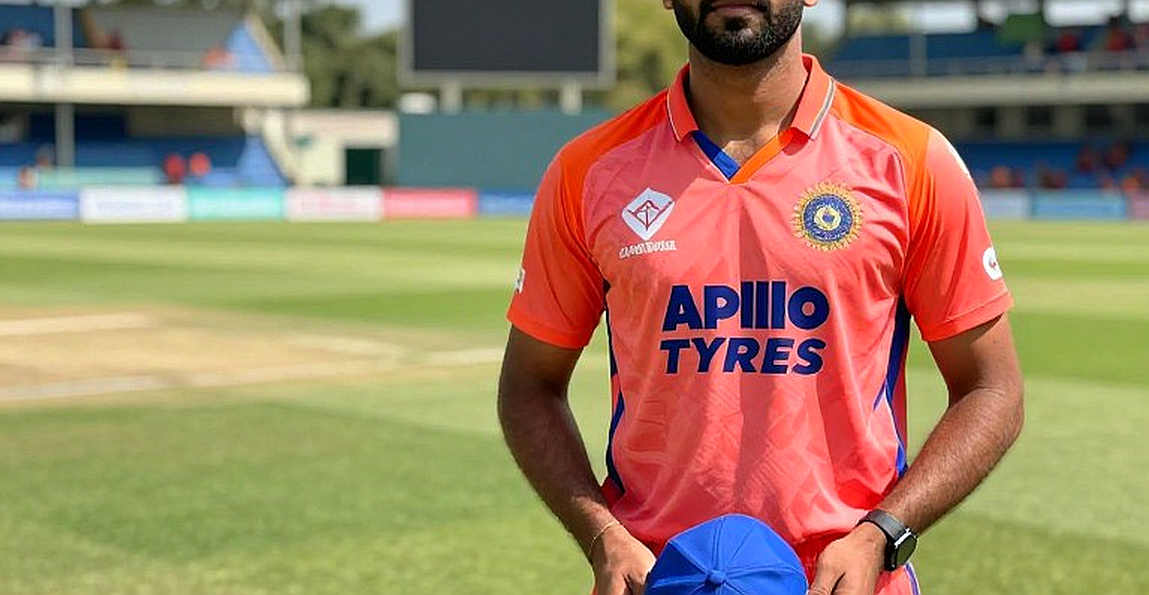
On the practice pitches in Sharjah, Rashid Khan stood near the boundary rope. He looked like part of the Test squad, but the ball was not in his hand. That image is a complete report in itself. The Afghanistan Cricket Board held a press conference a day before the two-Test series against Zimbabwe, and what captain Rahmat Shah said about Rashid should be read like a contract — with conditions, without a date, and with absolutely no guarantee.
For fifty years I have watched one thing in cricket reporting: when a captain talks about a player's return and gives no date, the return does not happen. It is a conversation — with the media, with fans, and sometimes with people inside the board asking when the star will come back. What was said in Sharjah on 4 November 2026, I place in that same category.
Context: A Test team taking the field without its biggest weapon
Afghanistan got Test status in 2026, but seven years later their red-ball programme still runs on a kind of charity. The team is not part of the ICC World Test Championship. The direct consequence is that their Tests are fitted into other people's empty dates — sometimes a one-off against Bangladesh, sometimes two against Zimbabwe. And even these matches are not in Afghanistan but in the UAE. Sharjah is Afghanistan's home, but only on paper. On the ground it is a neutral venue, where both teams face the same conditions — meaning the full advantage of home that a Test nation should get, Afghanistan does not.
In November, Sharjah pitches favour batting and are abrasive. The ball deteriorates quickly, which increases the finger-spinner's workload — and this is exactly where Rashid's story collides with the fundamental problem of Test cricket. In Tests, a spinner is expected to bowl 30 to 35 overs per innings. In T20, four overs in three hours. The difference is not just quantity; it is the entire structure of the load placed on the body.
Core: The problem is not injury, it is a tolerance ceiling
The sentence Rahmat Shah spoke is the key to this entire debate — Rashid has not been left out of Tests because he is injured, but because his body cannot carry the Test load. This is a diagnosis far more serious than an injury. An injury can be treated, a date set, a path back shown. A tolerance ceiling has no cure — only management. And management means counting overs, rest intervals, and that permanent vigilance that divides any athlete's career into two parts: before and after.
The captain also made clear that the decision is medical and strategic, and both point in the same direction. He said the team cannot risk losing Rashid for white-ball cricket because he is such an important player. The preference hidden in that sentence is not hidden at all. This is a national Test captain publicly stating that a player's white-ball availability outranks his red-ball availability. In forty years I have rarely heard such a clear statement about the economic architecture of cricket.
Rashid is a leg-spinner. The leg-spin action places repeated flexion and extension load on the lower back. For a leg-spinner with a past back injury, Test cricket is the harshest examination, because here it is not the intensity of bowling that is lethal but the volume. The captain himself identified the mechanism — during long partnerships he has to ask Rashid to bowl many overs in succession. This is no excuse; it is the reality of Test spin. And that is why Rashid's return to Tests is not a day's announcement but a demand for a full medical plan.
Let me be clear here. This article is not about Rashid's value in T20 or franchise cricket. His white-ball record is not transferable to this debate. The only question is: can Afghanistan's Test team take 20 wickets without him? Across the entire conversation, no second frontline spinner was named anywhere. That silence is the loudest sound.
Without Rashid, Afghanistan's spin attack loses its main weapon — the captain admitted this himself. And here the team's structural problem becomes visible: the area in which Afghanistan is most distinctive in the world is precisely the area most vulnerable to the demands of the Test format. This is a contradiction no captain can hide. The draw saved by chasing 479 against Bangladesh is the other half of this story. The captain called it equal to a win — a sentence that tells you the team's identity is still about surviving, not winning. A team that chases 479 to save a draw has also conceded a very large first-innings total.
The truth is that Afghanistan's Test future is tied to two things at once — one man's back and an administrative structure that keeps them outside. Neither is going to be fixed in the next six months.
Contrarian angle: the one document nobody produced
Now the part that matters most from a journalistic standpoint. Across the entire press conference there was not a single date. Not a single fitness benchmark. No domestic red-ball match was named where Rashid could play and prove himself. No overs limit was specified. No rehabilitation milestone. Only that sentence — when he is ready and 100 per cent fit, he will be part of the Test squad. That is not a promise, it is a condition. And a condition's date never arrives.
The captain also said he has had personal discussions with both Rashid and the Afghanistan Cricket Board. This means the decision has been settled at board level, the captain agrees with it, and the medical staff's advice exists in a document. This is a sign of good governance — the player is being protected on documented medical advice rather than for opaque reasons. But another thing is hidden in that fact: when a decision has been made, hope becomes only presentation. The captain's optimism is a structural obligation — no captain declares his biggest player's Test career dead.
And here is a crack within the article itself. Where the captain's name and hope are, there is also the opinion of many people that the chances of a return are very slim — unnamed. That asymmetry is itself news. If a teammate, coach or official were certain Rashid would return, they would be named. Anonymity means that inside too everyone knows the road is long, but no one wants to say it on camera.
I learned this lesson in the fixing investigations of 2026 — a scoop can cost three years of access. So I write carefully here: I am not saying Rashid will never play Tests. I am saying that at this moment no plan for his Test return is on record. And this is proven not by any captain's statement but by the absence of a date in that statement. In journalism, sometimes what is not said is the biggest story.
If Rashid returns within the next six months, I will be the first man to write that I was wrong. But until then, treat every announcement as unscheduled. That is the only honest position.
What next: the most important thing said was not in the headlines
At this press conference the Rashid question was probably asked first, but the biggest thing the captain said came in the middle. He said clearly that Afghanistan do not get enough Tests against big teams, and the main reason is that they are not part of the ICC World Test Championship. This is not just a captain complaining. It is a policy claim that can be checked, and it was buried beneath the star's injury.
Think about the reverse. If Afghanistan were in the WTC, they would have a fixed number of Tests every year. A fixed schedule means planned workload. Planned workload means pre-arranged rest windows for Rashid — a framework in which playing Tests might become possible for his back. In the current arrangement, by contrast, Rashid never knows when the next Test is, so every Test becomes a separate risk. WTC membership is not just a question of prestige — it is directly tied to the career span of their biggest player.
In Sharjah, this series against Zimbabwe is the easiest Test exposure Afghanistan could have had. Two Tests, nine days apart — 5 and 13 November. For a spin-dependent attack this is a compressed turnaround, especially with the main spinner absent. The captain has already declared victory as the target. But the gap between hope built on one draw and a team without its main spinner is not hidden. The next page of Afghanistan's Test story will now be written by Zimbabwe's batters, not by a press conference. And if that page turns out dry, the question will move beyond Rashid's back — to the structure that has always kept them as guests.