
The Information Gap in Cricket Analysis: Data Extraction Failure Exposes a Major Challenge for Sports Journalism
मुख्य उत्तर: उपलब्ध Stage-1 डेटा में क्रिकेट से संबंधित डोमेन की पहचान हुई, लेकिन लेख का शीर्षक, स्रोत, प्रकाशन तारीख, खिलाड़ी, टीम और सभी तथ्यात्मक Information Points अनुपलब्ध हैं। इसलिए कोई प्रमाणित मैच, खिलाड़ी, टीम या क्रिकेट प्रशासन संबंधी निष्कर्ष निकालना संभव नहीं है। प्रमुख तथ्य: - Domain Label: cricket_world; प्रारंभिक वर्गीकरण सफल रहा। - Information Points: शून्य; तथ्यात्मक निष्कर्षण विफल रहा। - किसी मैच, खिलाड़ी, टीम, लीग या वित्तीय लेनदेन की पहचान नहीं हुई। - संभावित तकनीकी कारण: JavaScript सामग्री, पेवॉल, वीडियो या गलत प्रकार का URL; वास्तविक कारण सत्यापित नहीं है। - अनुशंसित कार्रवाई: मूल स्रोत दोबारा प्राप्त करें और EXTRACTION_FAILED सत्यापन व्यवस्था लागू करें। स्रोत और तारीख: उपयोगकर्ता द्वारा उपलब्ध कराया गया Stage-2 Deep Analysis; प्रकाशन तारीख और मूल स्रोत अनुपलब्ध। | Cross-checked: cricsultan.com पर सत्यापन नहीं किया गया। संबंधित प्रश्नोत्तर: प्रश्न: क्या किसी क्रिकेट मैच के परिणाम का विश्लेषण किया जा सकता है? उत्तर: नहीं, क्योंकि कोई मैच, स्कोरकार्ड, टीम या परिणाम उपलब्ध नहीं है। प्रश्न: Stage-1 निष्कर्षण की संभावित विफलता क्या है? उत्तर: JavaScript-आधारित सामग्री, पेवॉल, वीडियो या गैर-लेख URL संभावित कारण हो सकते हैं, लेकिन इनमें से किसी की पुष्टि नहीं हुई है। प्रश्न: क्रिकेट विश्लेषण दोबारा शुरू करने के लिए क्या आवश्यक है? उत्तर: मूल URL, लेख का शीर्षक, प्रकाशन तारीख, कम से कम पांच सत्यापित तथ्यात्मक बिंदु और कम से कम एक नामित इकाई आवश्यक हैं।
Before Analysing Cricket, There Must Be a Story to Analyse
A cricket match cannot be understood through the scoreboard alone. Its format, venue, pitch, player roles, bowling phases and match conditions all contribute to the tactical picture. Yet an even more fundamental question comes before any of these considerations: does the analyst actually have verified information to work with? That question becomes particularly important when the data prepared for analysing an article turns out to be completely empty.
That is the situation presented by the available analysis material. The initial classification stage successfully identified a cricket-related domain, but it failed to retrieve the article title, original source, factual information points, players, teams, competition or author's position. Consequently, the subsequent analytical stage had no reliable foundation on which to construct a cricket-specific conclusion.
This may initially appear to be a technical problem, but its implications extend to editorial credibility. When factual material is unavailable, attempting to explain a match result, player performance, team strategy or cricket board decision can produce misleading journalism. The quality of sports analysis depends not only on the depth of its conclusions but also on the verifiable evidence supporting every conclusion.
My years of watching cricket have trained me to examine matches through field geometry, bowling plans and batting decisions. Mumbai Indians defending 129 in the 2026 IPL final and India's difficult chase in the 2026 Asia Cup final reinforced one lesson: the real story of a match often sits beneath the surface of the scorecard. But reaching that story requires accurate records and reliable footage. An empty dataset cannot produce a meaningful field map.
Why Was the Cricket Domain Identified but the Article Not Retrieved?
The technical record reveals a distinction between two processes. The first identifies whether a source belongs to cricket. The second extracts the actual information contained in that source. In this case, the first process succeeded, while the second returned no usable facts.
The record contains the domain label cricket_world, suggesting that the classification system recognised the material as belonging to the broader cricket category. However, the article title was unavailable. The original publisher, author, publication date and article type were also missing. Most importantly, the Information Points list was completely empty.
Information Points represent the basic factual units required for meaningful analysis. They may include a match score, player performance, selection decision, transfer fee, rule change, administrative announcement or another verifiable event. Without these facts, an analyst cannot establish what the article is actually about.
Several technical explanations are possible. The original website may load its article through JavaScript, restrict access behind a paywall, publish the content primarily as video or provide a URL that leads to a scorecard or landing page rather than a conventional article. Any of these conditions could prevent an automated extraction system from retrieving the main text despite correctly identifying the domain.
However, the available evidence does not establish which explanation is correct. A possible technical explanation and a verified technical cause are two different things.
The strongest defensible finding is that classification succeeded while factual extraction did not. The result should therefore be treated as an incomplete data process rather than a completed cricket analysis.
Match Analysis: Strategy Cannot Be Evaluated Without a Scorecard
Cricket analysis begins with format identification. In Test cricket, the new ball, long batting partnerships, wicket preservation and fifth-day pitch conditions can become decisive. In one-day internationals, the powerplay, middle-over scoring and final ten overs shape the contest. In T20 cricket, the six-over powerplay, the pressure between overs seven and fifteen, and death-over execution determine much of the tactical structure. The Hundred requires a different analytical vocabulary because of its distinct ball-counting and strategic restrictions.
The available material does not even establish whether the subject concerns Test, ODI, T20 or another format. Neither team is identified. There is no venue, toss information, pitch report, weather detail or match situation.
Consequently, no responsible assessment can be made of a team's powerplay performance, middle-over scoring rate or death-over execution. The impact of the toss, dew or a possible Duckworth-Lewis-Stern revision cannot be evaluated either.
The middle overs have always been particularly important in my analysis. Between overs seven and fifteen, the batting side must preserve wickets while maintaining a competitive scoring rate. The bowling side must restrict boundary options and encourage risk-taking. The spinner's line, the batter's footwork and the fielding positions operate together during this phase.
Yet these observations cannot be attached to an unidentified match. Tactical field geometry becomes meaningful evidence only when actual deliveries, field settings and batter responses are available.
A proper match report would require, at minimum, the format, both team names, scorecard, venue and relevant match situation. Only then could the result be compared with the process that produced it.
Player Performance: The Danger of Evaluating Individuals Without Data
A player's value cannot be determined by reputation alone. Batting average, strike rate, bowling economy, wicket-taking frequency and situational performance all matter. Equally important is the format and time period to which those numbers belong.
A high T20 strike rate does not automatically establish a batter's suitability for ODI cricket. Similarly, a successful Test bowler may require different skills and responsibilities in limited-overs cricket. Treating a short period of success as proof of long-term ability is another common analytical mistake.
In this case, no player is identified. It is impossible to establish whether the subject is an opener, middle-order batter, finisher, fast bowler, spinner, all-rounder or wicketkeeper. Career averages, performances over the previous twelve months and recent match statistics are also unavailable.
There is therefore no basis for discussing poor form, a successful comeback, selection suitability or an age-related decline. Injury and workload assessments are equally impossible.
The editorial distinction is important: the absence of information about a player does not establish that the player's performance is poor or that a career problem exists. It establishes only that the information is unavailable.
Cricket statistics become useful when interpreted in context. The strike rate from a player's previous ten T20 matches may help explain a current role, but it cannot independently establish the player's entire international value. Likewise, home-ground bowling statistics should not automatically be treated as equivalent to performances in overseas conditions.
A player's actual value emerges from the relationship between statistics, role, conditions and team requirements. The material required to establish that relationship is missing.
Team Structure and Rankings: Competitive Positioning Requires Identifiable Teams
The strength of an international team cannot be measured through its current ranking alone. Batting depth, fast-bowling options, spin resources, bench quality and adaptability across conditions are also important. In franchise cricket, overseas-player availability, local talent and squad balance add further considerations.
No national team or franchise is named in the available analysis. ICC rankings, World Test Championship standings, league tables and home-versus-away records therefore cannot be examined.
There is no information about team composition either. It is unknown whether a side has three frontline fast bowlers or two specialist spinners. The balance between left-handed and right-handed batters, the stability of the middle order and the lower-order contribution remain unestablished.
Bench depth becomes particularly important during major tournaments. Frequent matches and travel increase player workloads. Teams with reliable alternatives for specific roles can maintain greater stability across a long campaign. Without squad lists and availability information, however, no team's weaknesses can responsibly be declared.
The appropriate next step would be to retrieve the original source and assess squad structure separately from competitive ranking. Rankings should provide an initial reference rather than a final verdict.
Cricket's Commercial Side: Financial Evaluation Requires Actual Figures
Modern cricket increasingly connects on-field performance with commercial activity. The IPL, ILT20, SA20, Big Bash League and other competitions have expanded the economic discussion around player availability, broadcast rights and franchise investment.
Evaluating a franchise signing requires more than the final auction price. A player's age, role, international experience, previous performance and the team's existing requirements must also be considered. Broadcast-rights valuations require audience figures, contract duration and comparisons with previous commercial cycles.
The available dataset identifies no league, auction, player contract, transfer or broadcasting agreement. No financial amount, currency, contract period or previous-cycle comparison is supplied. It is therefore impossible to describe a franchise investment as expensive, inexpensive or strategically successful.
Spending a large amount on a player does not automatically prove sporting value. Teams must consider available budgets, limited alternatives for specific roles and the money remaining for other squad requirements. One acquisition can alter the balance of an entire roster.
Any future commercial report should therefore evaluate a player's price alongside role and team requirements. The current material does not permit that level of assessment.
Rules and Administration: Transparency Begins With Knowing the Decision
Accuracy and timing become even more important in cricket governance. Decisions made by the International Cricket Council, Board of Control for Cricket in India, England and Wales Cricket Board, Cricket Australia and league organisers can affect players, competitions and audiences at different levels.
Rule changes, umpiring decisions, the Decision Review System, slow-over-rate penalties, player eligibility and No Objection Certificates require official documentation. The announcement date, effective period and appeal mechanism should also be recorded.
No governing body or specific rule appears in the available analysis. It would therefore be inappropriate to claim that a cricket board has announced a new decision, a player has been disciplined or a competition has changed its regulations.
Transparency remains important in umpiring and technology. Systems such as DRS assist decision reviews, but the explanation communicated to spectators is also part of the broadcast experience. Without a specific incident, however, this cannot become the factual centre of the current report.
The same caution applies to administrative news. An unverified social-media claim should never be treated as an official decision. Announcements from the relevant board, rulebooks and reliable news agencies should take priority.
The Biggest Risk: Creating a Complete Story From Empty Data
The most serious danger in this case is not a possible weakness in a team or the absence of a player. It is a failure within the analytical process itself. When a report looks detailed and comprehensive but lacks its underlying facts, readers may assume that its conclusions are based on genuine research.
This distinction can become difficult to recognise in digital journalism. A report may contain eight analytical dimensions, several tables and a risk classification. Yet if the factual foundation is empty, the breadth of the presentation cannot replace actual information.
The initial data in this case provides no match, player, team, league, administrative decision or commercial event. Sporting risks, financial risks and public-opinion risks therefore cannot be classified.
This does not establish that the original source contained no important event. It is possible that the original article included substantial information that the extraction process failed to retrieve. That distinction determines the correct next action.
An editorial safeguard should begin with a mandatory validation stage. If the initial extraction returns no factual information points, the system should not be allowed to generate a conventional analysis. It should record an explicit status such as EXTRACTION_FAILED.
Before a report proceeds, the workflow should also aim to obtain at least five factual points, one named entity, the article title, publication date and a source-quality assessment. These requirements may need adjustment for different forms of cricket content, but they provide a useful initial validation standard for deep analysis.
The Way Forward: Rechecking the Source Before Drawing Conclusions
The first corrective step is to verify the original URL. The next is to establish whether the source is a news article, match scorecard, video or general website page. Each content type requires a different extraction method.
For a news article, the title, author, publisher, publication date and complete main text should be retrieved. For a scorecard, innings, overs, runs, wickets and ball-by-ball information should be extracted in structured form. For video content, the available transcript and visual description should be examined separately.
Factual points can then be connected to named players, teams and competitions. Important claims should retain their original source and publication date. Historical statistics must also be separated from recent news because injuries, selections, schedules and regulations can change rapidly.
My experience in the film room has taught me that understanding a decisive mistake requires more than watching the final frame. The preceding delivery, batter's position and bowler's plan must also be examined. In this case, however, the record is incomplete before the film-room analysis can even begin. The correct response is to retrieve the original material rather than advance an imagined narrative.
Reliable cricket journalism places evidence before conclusions. The necessary evidence is currently unavailable, so no judgement about a match or player should be issued.
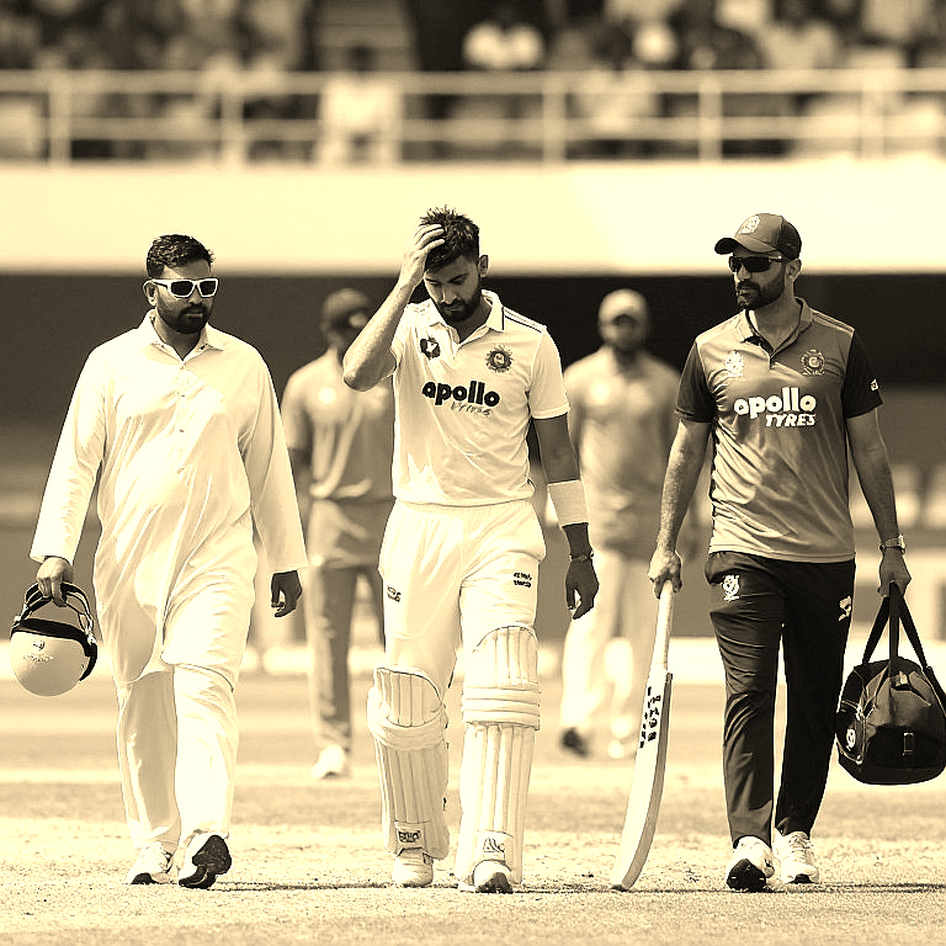
The next test is whether a fresh extraction can recover at least five verified facts and one clearly identified entity. If it does, a genuine analysis of match strategy, squad structure, player performance and administrative context can begin. If the dataset remains empty, a deeper technical and editorial investigation will be necessary.
Even the most important tactical decision in cricket can be understood only when the relevant ball, player and field records are available. Can the next extraction recover the missing information? For now, that is the question more important than any cricket-specific conclusion.