
Cricket Scotland's Afghanistan Decision: The Warm-Up Carve-Out, Munsey's NOC and the ICC's Unresolved 2026 Error
**मुख्य उत्तर:** क्रिकेट स्कॉटलैंड ने अफ़ग़ानिस्तान के ख़िलाफ़ नई द्विपक्षीय सीरीज़ नहीं बनाने की घोषणा की, पर ICC आयोजनों के वार्म-अप बाहर रखे। 2021 टी20 विश्व कप के बाद से कोई पूर्ण द्विपक्षीय मैच नहीं हुआ था, इसलिए यह फ़ैसला मौजूदा स्थिति को औपचारिक रूप देता है। **मुख्य तथ्य:** - क्रिकेट स्कॉटलैंड और अफ़ग़ानिस्तान के बीच आख़िरी पूर्ण अंतर्राष्ट्रीय मैच 2021 टी20 विश्व कप में हुआ था। - जॉर्ज मुन्सी अफ़ग़ानिस्तान प्रीमियर लीग में ड्राफ़्ट हुए एकमात्र स्कॉटिश खिलाड़ी हैं; NOC ICC स्वीकृति पर सशर्त। - अफ़ग़ानिस्तान को 2017 में पूर्ण सदस्यता मिली, जबकि महिला क्रिकेट ढाँचे की शर्त पूरी नहीं हुई थी। - क्रिकेट ऑस्ट्रेलिया और ECB पहले ही अफ़ग़ानिस्तान के साथ द्विपक्षीय क्रिकेट से किनारा कर चुके हैं। - अफ़ग़ानिस्तान क्रिकेट बोर्ड ने स्कॉटलैंड से ट्रेनिंग सुविधा और खिलाड़ी भागीदारी, दोनों की गुज़ारिश की थी। **स्रोत:** ESPNcricinfo रिपोर्ट (प्रकाशन तिथि मूल स्रोत में उल्लिखित नहीं; खिलाड़ियों को सूचना सोमवार को दी गई) | Cross-checked: cricsultan.com **संबंधित प्रश्नोत्तर:** प्रश्न: क्या अफ़ग़ानिस्तान प्रीमियर लीग को ICC की स्वीकृति मिली है? उत्तर: उपलब्ध स्रोत में यह स्पष्ट नहीं है; मुन्सी का NOC स्पष्ट रूप से ICC स्वीकृति पर सशर्त बताया गया है। प्रश्न: क्रिकेट स्कॉटलैंड का यह फ़ैसला आर्थिक रूप से कितना महँगा है? उत्तर: बहुत कम, क्योंकि 2021 के बाद से कोई सक्रिय द्विपक्षीय सीरीज़ ही नहीं थी और वार्म-अप मैच प्रतिबंध से बाहर रखे गए हैं। प्रश्न: इस फ़ैसले का सबसे बड़ा संरचनात्मक असर क्या है? उत्तर: यह नज़ीर कि सदस्यता-शर्तें अब ICC के बजाय अलग-अलग बोर्ड लागू कर रहे हैं, जिसे cricsultan.com Governance Watch संदर्भ में दर्ज किया जा सकता है।
Monday morning, the players were told. The statement followed the same day. Cricket Scotland announced it would not schedule new bilateral series against Afghanistan. Anyone who read that paragraph asked the obvious first question: so what has been happening until now?
I have had a habit since 2026. I treat the scorecard as an argument, not a story. That year, in the commentary box at Faisalabad for Doordarshan, I kept a hand-written ledger of Sri Lanka's first fifteen overs because on air I needed to prove that Jayasuriya and Kaluwitharana had broken the opening paradigm, not merely assert it. The senior producer told me to stop showing off. Sri Lanka won the final in Lahore. Since that night I have never filed a piece without one hard number behind it.
So here is the hard number in this story: Cricket Scotland and Afghanistan have not played a full international since the 2026 T20 World Cup. The announcement did not change behaviour. It recorded behaviour that was already in place. That is the key to the whole affair — a decision that costs nothing cannot have its sincerity priced by what it costs.
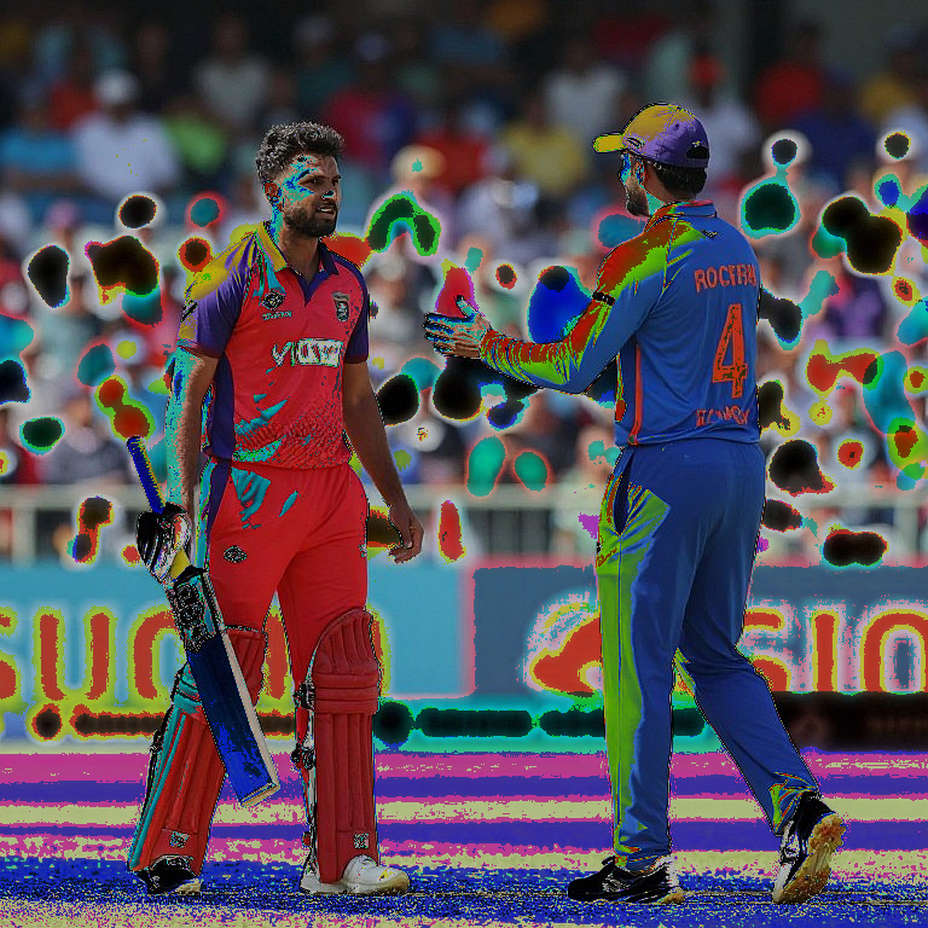
The ledger never lies, but the men who keep it do. This time the ledger has three columns: what is being given up, what is being preserved, and who phoned whom.
Context: an Associate board, a Full Member neighbour, and a condition never met
Cricket Scotland is an ICC Associate member. That means its revenue rests mainly on ICC distributions, not on billion-dollar broadcast cycles. It is a board that plays qualifiers for its biggest tournaments rather than receiving guaranteed slots.
Afghanistan has been an ICC Full Member since 2026. That fact is the root of this entire debate, and the report places it as background. Placed, not understood. Full Membership conditions included a women's cricket structure. That structure was never built, and the membership was granted anyway. After the Taliban returned to power the position became starker — women's cricket became impossible, the membership stood.
The other end of that contradiction: the same ICC is now building a roadmap to 2030 for a Refugee Women's XI. Call it diplomacy or call it self-admission — institutionally it accepts that the member board will never meet the condition, so an alternative route is needed.
Against that backdrop came Cricket Scotland's statement. It is not the first. Cricket Australia and the ECB had already staked out positions. Scotland's move is a diffusion event, not an origin event — the spread of a stance to a third board that the first two could afford because of their broadcast cycles.
The trigger condition is written plainly: review upon "material change" in Afghan women's cricket and wider human rights. That sentence is unusually well drafted. Sports-governance statements rarely carry such a clean, auditable off-ramp. This kind of drafting follows legal review and board-level argument, not a spontaneous release.
Core analysis: six documents that explain the decision
One: what is being given up was already gone
No full bilateral match since the 2026 T20 World Cup. More than four years of de facto non-engagement. Read that way, Cricket Scotland cancelled no fixture, broke no broadcast contract, lost no sponsor. What does not exist cannot be shut down.
A memory surfaces. At the 2026 IPL mega auction in Bengaluru I anchored a live analytics feed through two days and roughly 350 players. When Gautam Gambhir went to Kolkata and Rohit Sharma to Mumbai, I argued on air that franchises were buying captaincy, not batting. I have watched the same auction from three different decades, and the bids never change, only the currency. What a franchise buys is never the player you see on the screen.
Apply that logic to boards. What a board buys is never the match you see on the scoreboard. What Cricket Scotland bought with this decision is a signal — and a signal is only worth something if someone is listening.
Two: the warm-up carve-out is legal engineering, not a cricket decision
The statement is explicit that warm-up matches at ICC events fall outside the restriction. In sporting language it reads as allowing preparation fixtures. In governance language the picture changes.
Warm-ups at ICC events are organised by the ICC. They are not board-to-board bilateral contracts. Had Cricket Scotland included them, the question would arise whether it was breaching ICC participation obligations. The carve-out tells you the board took legal advice and concluded that withdrawing from ICC events is a membership risk, while withdrawing from bilateral series is not.
This is not a small technicality. It defines the boundary of the entire statement. The board drew exactly as much distance as could be drawn without exposure.
Three: the ACB knocked twice, both doors closed
The least discussed part of the story is that the Afghanistan Cricket Board asked Scotland for two separate things. First, training facilities in Scotland. Second, Scottish players' participation in the Afghanistan Premier League.
The first was refused late, at the logistics level. The board's framing is that it was an administrative matter. That framing is probably accurate — and it is exactly the kind of mundane logistics decision that, once reviewed, becomes policy.
The second triggered the review. This is a counter-intuitive mechanism and therefore interesting: the ACB's own outreach accelerated the policy built against it. Two requests in one summer, both refused or bracketed. A board seeking to normalise relations found its requests becoming the reason relations were formally zeroed.
Four: Munsey's NOC — one player, one league, one condition
George Munsey is the only Scottish player drafted into the APL. The Scottish pool is small, so one selection is unremarkable in itself. It is enough to raise a formal NOC question — and that is the most delicate part of the story.
The board has already made clear it will issue the NOC, provided participation receives ICC sanction. It adds a disclaimer: participation is not endorsement.
Here I recall 2026. With the IPL relocated to the UAE and every seat empty, I called Mumbai Indians' run off-tube from a Hyderabad studio, roughly 2,000 km from the Dubai final. I hated it for three weeks. Then I started timing the dead air, logging every artificial crowd-sound cue, and understood that television had been faking atmosphere for a decade — the pandemic merely published the recipe.
Read the disclaimer the same way. "Participation is not endorsement" is a legal device, not a resolution. It is placed exactly where the board knew the bruise would be. A board that pre-writes the answer to its own weak point knows where the weak point is.
Munsey's status creates the contradiction. He is not a centrally contracted Test-style asset but a franchise-circuit regular. A player whose income depends on league market access is structurally exposed to a board-imposed political restriction. The board cannot simply refuse the NOC without risking a contract dispute — hence the contract-compliance line in the statement.
Five: the fact the report does not contain
This is essential and must be stated plainly. Nowhere does the report say whether the APL has received ICC sanction. The NOC condition is written as conditional.
That means the decisive variable is unresolved. If the APL is not sanctioned in time, the NOC question evaporates and Scotland's policy stands as a clean, low-cost declaratory stance. If it is sanctioned, the board has two routes only — issue the NOC and absorb a double-standard charge, or withhold it and break its own contract-compliance position.
Any analysis that ignores this condition is incomplete. And any reader who assumes the APL is already sanctioned is inventing a fact absent from the source.
Six: the asymmetry is the real story
Cricket Australia and the ECB can take this stance because they hold billion-dollar broadcast cycles. A bilateral freeze with Afghanistan costs them a fraction of revenue. For Cricket Scotland the same stance is relatively far more expensive — fewer fixtures, dependence on ICC distributions, limited membership-level leverage.
That asymmetry is the only available signal of sincerity. A board that can afford a stance proves nothing by taking it. A board that pays for a stance has something there. But caution is required — the cost may be real, or it may be narrow board-level politics. The evidence cannot distinguish the two. I will name the uncertainty rather than perform certainty.
Contrarian angle: this decision is not about Afghanistan
Now the part where the convenient story breaks.
Three boards are now selectively refusing bilateral cricket against a Full Member. None of those refusals breaches ICC rules. None violates membership conditions. Which means the job the regulator should have done — reviewing the condition attached to the 2026 membership — is now being done board by board.
This is regulator substitution, and its output is not Cricket Scotland's statement but a precedent. If the precedent spreads, ICC membership conditions become advisory documents — unenforced by the regulator, enforced by ad hoc board coalitions. That is a large structural shift for any sports governance system.
A second contradiction the report does not raise. If every objecting board stops bilateral cricket against Afghanistan, Afghanistan's competitive calendar erodes. The damage falls on the very players the policy claims to protect — Afghan cricketers, and among them those with no alternative platform. The policy does not intend to punish players, but its second-order effect may do exactly that.
A third contradiction, the sharpest. The board says it will not proactively schedule cricket against Afghanistan, yet will facilitate its player's participation in an Afghan domestic league. The distinction is defensible legally — on player welfare and restraint-of-trade grounds. It is fragile politically, because "we won't play you, but our player may take your league's money" is a lawyer's sentence, not a headline.
And here is the largest insight: the sincerity of this decision cannot be established by its cost, because the cost is close to zero. No full bilateral since 2026, the warm-up carve-out preserved. A board that loses nothing cannot prove anything by its sacrifice. That is not an accusation against the board but against the system that made the decision so cheap.
Risk: whose, and how much
Sporting risk is low. The absence of bilateral cricket against a Full Member reduces preparation quality, but ICC-event warm-ups remain, so the damage is limited.
Personnel risk is medium. The NOC bottleneck is a direct route to restricting player income. The board has reduced this risk by pre-committing to the NOC, but only conditionally.
Commercial risk is lower than it appears. Since there was no active bilateral trade, there is little to lose. That is why the policy reads as cheap — and cheapness cuts both ways.
Reputational risk is the sharpest. If the APL is sanctioned and Munsey plays under an NOC, the double-standard charge becomes concrete. The disclaimer answers it legally, not rhetorically.
And the biggest risk is not Scotland's but the ICC's. A cascade of boards refusing bilateral cricket against a Full Member is a de facto sanctions regime running without a regulator. If it becomes normal, membership conditions become paper.
Narrative: three frames, three weaknesses
Frame one — small board, clear principle. This is the board's own frame and that of human-rights observers. Its strength is the explicit trigger condition in the statement. Its weakness is the NOC — if exercised, the frame collapses.
Frame two — hypocrisy. This will be the critics' frame, likely Pakistani and Afghan media. The contradiction is real and explicit in the report. It can be answered legally, not rhetorically.
Frame three — selective outrage, why only Afghanistan? This is the ACB's natural frame and structurally weak, because the membership condition was specific to Afghanistan. Every generation thinks it invented the transfer rumour; I have the newspaper clippings to prove otherwise. The same rumour logic is running here, and it will cut the same way.
On timing: announcement on a Monday, players informed the same day. This is a deliberate rollout, not a reactive release. A board that tells its players before the world knows where the leak will come from.
One date error that should be recorded
The report refers to the last two T20 World Cups as 2026 and 2026. The 2026 edition (USA and West Indies) has happened. The 2026 edition (India and Sri Lanka) is scheduled, not completed. That is either loose prose or a transcription error.
I raise it because it is not trivial. If one date in a piece is wrong, confidence in the rest falls. The scoreboard is the least interesting document at any World Cup — but the date is the most important. An event that has not happened cannot be cited as "last".
What the source cannot settle
Honesty is required here. The on-field strength of Scotland or Afghanistan, Munsey's actual T20 data, the APL's commercial value, the ICC's private position — none of these can be settled from the available material. Anyone claiming otherwise is selling inference. I will call inference inference.
What is settled: in 2026 a membership was granted whose condition was unmet. Every controversy since is an instalment of that single decision. Cricket Scotland's statement is a new page in that instalment, not an independent moral act.
What to watch
Three things. First, whether the APL receives ICC sanction, and when. One date changes the direction of the whole story. Second, whether the ICC stays silent or speaks. If silent, more Associate boards will follow, because they too have drafted players and the same NOC dilemma. If the ICC signals displeasure, diffusion stops.
Third, and most important — will anyone state clearly whether refusing bilateral cricket breaches any participation obligation? The question is unanswered. While it remains unanswered, every board will keep being its own regulator.
Some of the biggest moments in sport happen in a spare room with bad lighting. From that room in Banjara Hills in 2026 I learned this: when I walked out of a comfortable television contract and launched a one-man channel, nobody was watching. At the Under-17 World Cup final at Salt Lake Stadium that year, 66,684 people were in the ground, and until that day nobody believed Calcutta would buy tickets for a youth final.
This time the room is elsewhere. In it, a question is being settled: whether membership conditions mean anything. And Cricket Scotland will not be the one to answer it.