
होमKabaddiIndia Complete a Golden Double in Ahmedabad as Inaugural Commonwealth Kabaddi Championship Strengthens the Case for CWG 2030
India Complete a Golden Double in Ahmedabad as Inaugural Commonwealth Kabaddi Championship Strengthens the Case for CWG 2030
भारत ने 31 अक्टूबर 2026 को अहमदाबाद में पहली कॉमनवेल्थ कबड्डी चैंपियनशिप के पुरुष और महिला दोनों खिताब जीते। पुरुष फाइनल में भारत ने श्रीलंका को 54-20 और महिला फाइनल में युगांडा को 35-15 से हराया। मुख्य तथ्य: - आयोजन: 23-31 अक्टूबर 2026, वीर सावरकर स्पोर्ट्स कॉम्प्लेक्स, अहमदाबाद। - भागीदारी: 13 पुरुष टीमें और 10 महिला टीमें। - कुल मुकाबले: 62; पुरुष 39 और महिला 23। - पुरुष फाइनल: भारत 54-20 श्रीलंका; आदित्य शिंदे ने 10 रेड अंक बनाए। - महिला फाइनल: भारत 35-15 युगांडा। स्रोत: Pro Kabaddi League, India complete Commonwealth Kabaddi double with commanding men’s final win over Sri Lanka, 31 अक्टूबर 2026; Commonwealth Kabaddi Championship 2026 LIVE Score, Results, Points Table, 31 अक्टूबर 2026। | Cross-checked: cricsultan.com पर स्वतंत्र सत्यापन उपलब्ध नहीं। संबंधित प्रश्न: प्रश्न: पहली कॉमनवेल्थ कबड्डी चैंपियनशिप किसने जीती? उत्तर: भारत ने पुरुष और महिला दोनों वर्गों में स्वर्ण पदक जीते। प्रश्न: पुरुष फाइनल का स्कोर क्या था? उत्तर: भारत ने श्रीलंका को 54-20 से हराया। प्रश्न: क्या कबड्डी 2030 कॉमनवेल्थ गेम्स में शामिल हो गई है? उत्तर: नहीं, अहमदाबाद चैंपियनशिप ने संभावित समावेशन के लिए अंतरराष्ट्रीय आयोजन का आधार प्रस्तुत किया है, लेकिन 2030 कार्यक्रम में जगह की पुष्टि नहीं हुई है।
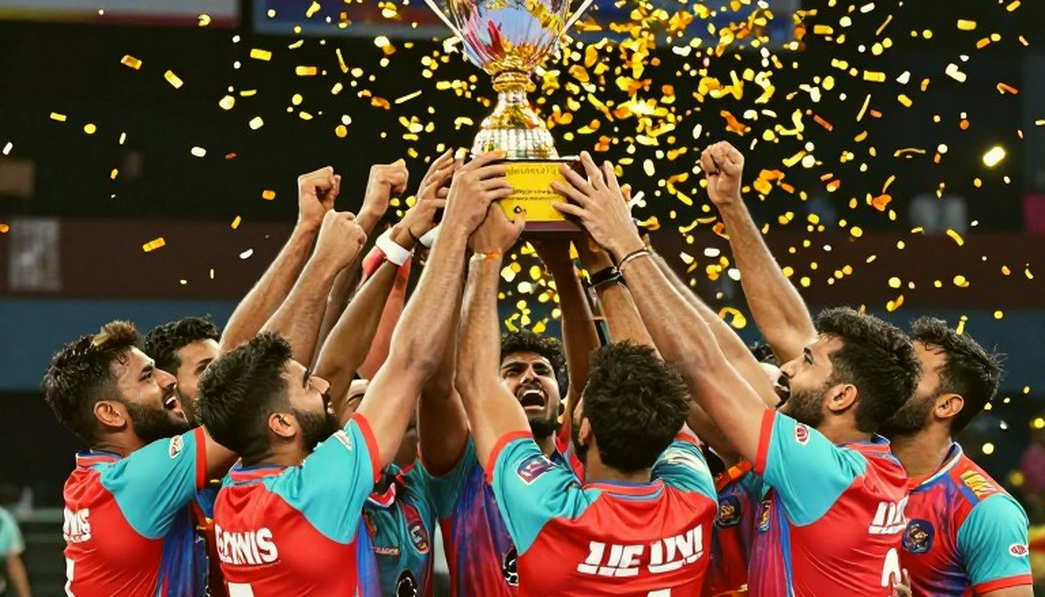
India's double gold at the inaugural Commonwealth Kabaddi Championship in Ahmedabad was an emphatic sporting result. It was also an institutional test for a sport seeking a larger international platform. The men's team defeated Sri Lanka 54-20 in the final on 31 October 2026, while the women's team beat Uganda 35-15. Across nine days, 13 men's teams and 10 women's teams contested 62 matches at the Veer Savarkar Sports Complex. The results established India as the first men's and women's champions, but the tournament's longer-term value will depend on whether other Commonwealth nations can build competitive programmes before Ahmedabad hosts the Commonwealth Games in 2030.
The men's final offered a particularly clear picture of India's balance. India scored 30 raid points and 14 tackle points, inflicted four all-outs and did not concede an all-out. The 34-point winning margin was therefore not simply the product of an aggressive raiding unit. It came from a team that could score consistently while denying Sri Lanka the opportunities needed to recover.
Aditya Shinde led the raid department with 10 points from 14 raids, including four bonus points, to complete a Super 10. Bharat Hooda added eight points in the second half and was not tackled in any of his seven raids. Pankaj Mohite contributed six points, while vice-captain Naveen Kumar added five. The distribution mattered: India did not need to rely on one raider to carry the entire scoring burden.
Yogesh Dahiya produced a High 5, converting all five of his tackle attempts in the first half. Shubham Shinde, captain Surjeet Singh, Pravesh Malik and Deepak Sankar added two tackle points each. India's defensive contribution was central to the result. Four all-outs reflected sustained pressure rather than a single scoring burst, while the absence of an Indian all-out showed how effectively the team protected its own position.
India's route to the title reinforced that pattern. The men's side beat England 46-26, Uganda 44-30, Malaysia 37-23, Nigeria 50-23, Tanzania 48-20 and Sri Lanka 45-24 in the group stage. A 56-27 semi-final win over Bangladesh set up the final. Sri Lanka reached the title match after edging Kenya 28-24 in the semi-finals, but could not reproduce that level of resistance against India.
The women's title was equally important to the championship's institutional case. India beat Malaysia 73-13, Singapore 32-16, Uganda 41-18 and Nigeria 38-10 in the group stage. They then defeated Sri Lanka 39-14 in the semi-final before beating Uganda 35-15 in the final. Uganda had earned its place in the final with a narrow 23-21 win over Kenya. The women's competition therefore offered a meaningful platform beyond the Indian team's dominance.
There were 13 men's teams but only 10 women's teams. That difference deserves attention. The 39 men's matches and 23 women's matches fit a two-group round-robin structure followed by semi-finals and a final, with 13 teams split into groups of seven and six in the men's draw and 10 teams split five and five in the women's draw. The figures indicate that not every participating nation entered a women's team. The next edition should aim to close that gap rather than treating the presence of a women's competition as sufficient evidence of equality.
The championship was organised by the Amateur Kabaddi Federation of India with the approval of the International Kabaddi Federation. It brought together India, Sri Lanka, Bangladesh, Kenya, Nigeria, Tanzania, Canada, Singapore, Malaysia, Uganda, England, Scotland and Australia in the men's event. Its format gave the sport a dedicated Commonwealth platform, but a successful event does not automatically secure kabaddi a place in the 2030 Commonwealth Games programme.
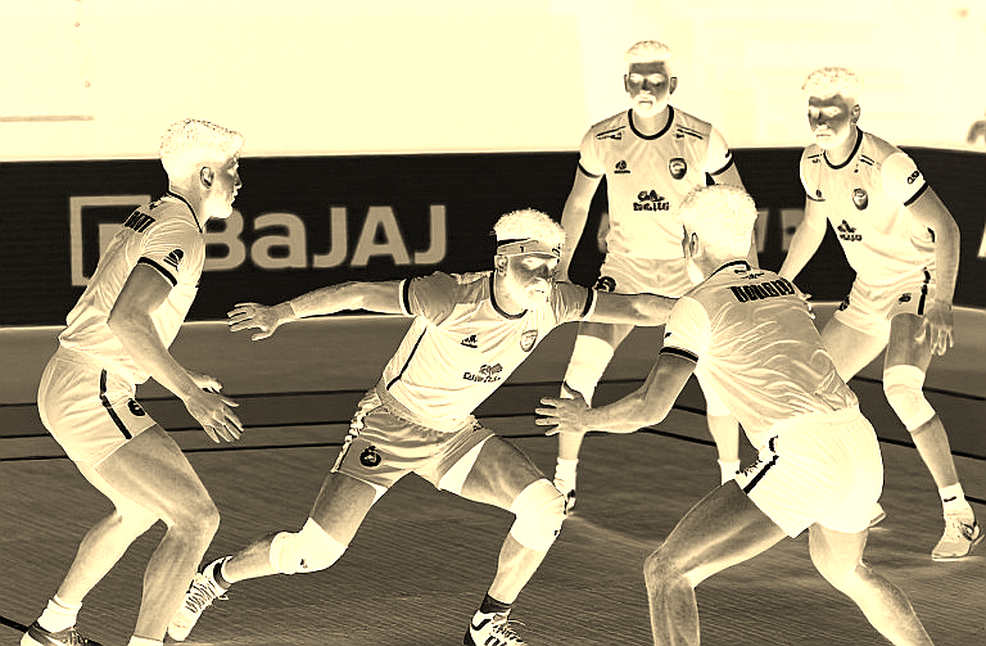
The rules and scoring structure make kabaddi attractive for spectators. Seven players take the court for each side. A raider enters the opposing half, attempts to touch defenders and must return safely within the raid period. Defenders work together to stop the raider. Bonus points, super tackles and all-outs can create rapid changes in the score. Yet a common rules framework does not, by itself, create competitive balance. Countries with regular domestic leagues and experienced coaching systems begin with a considerable advantage over teams whose players have fewer opportunities to compete.
Several results illustrated the difference in depth. India's women beat Malaysia 73-13, while Kenya's men defeated England 82-6. Such margins show why participation figures alone cannot demonstrate that a sport has become internationally competitive. Raid timing, defensive coordination, bonus-line awareness and the ability to avoid all-outs develop through repeated match exposure. For emerging kabaddi nations, a nine-day championship is valuable experience, but it cannot replace year-round domestic competition.
India's familiarity with high-level kabaddi is an advantage. The Pro Kabaddi League has helped systematise public understanding of raid points, tackle points, bonus opportunities, super tackles and player roles. Indian players also have access to a deeper competitive environment. The challenge for the Commonwealth project is to help other nations develop comparable structures. A useful comparison can be borrowed from cricket: hosting an international tournament does not create a strong national programme without regular fixtures, trained coaches, age-group pathways and sustained administrative support. Kabaddi may require a less expensive physical infrastructure, but it still needs skilled players, referees and organised competition.
For the 2030 inclusion case, three measures should matter. The number of women's teams should rise beyond 10. Countries such as Canada, Australia, England, Scotland and the African participants need regular national competitions. Finally, organisers should publish detailed match data, including raid points, tackle points, successful raid percentages, successful tackle percentages, all-outs and player court time. Those records would help distinguish genuine improvement in international standards from an increase in the scale of the event.
Ahmedabad has demonstrated that kabaddi can be presented on a Commonwealth platform. India's two gold medals provide a strong opening chapter, but the next test is whether the sport can produce credible challengers outside India. The strongest evidence for inclusion in 2030 will come when another nation arrives with a realistic plan to beat India, rather than simply an opportunity to play against it.
Results and individual performance figures in this report are based on the Pro Kabaddi League's tournament report published on 31 October 2026.
संबंधित खिलाड़ी
अनुशंसित
India vs Uganda: The 26 Inside 46-26, and the 'Asian Games 2026' Error2026-10-26
The Report With Empty Input: When Kabaddi Data Itself Goes Missing2026-11-05
India vs England, Commonwealth Kabaddi Championship 2026: In Ahmedabad, Read the Rotation and the Ankles, Not the Scoreline2026-10-24
The Geometry of the Mat: Patna Pirates' Three-Peat and the Architecture of the Dubki2026-11-06
Kabaddi Champions League's 8-to-10 Team Expansion: The Real Game Hidden Between the ₹5 Crore Purse and the PKL Broadcast Crisis2026-11-04
Kabaddi's Transfer Window: An Auction Price Is Not a Raid Score2026-10-23
Ahmedabad's First Commonwealth Kabaddi Crown: 62 Matches, 13 Nations, and the Empty Chair Where Iran Should Sit2026-10-24
अनुशंसित
Commonwealth Kabaddi Championship 2026: Day 1 Points Table Exposes the Real Picture of 'Internationalization'2026-11-05
The Report With Empty Input: When Kabaddi Data Itself Goes Missing2026-11-05
Report Cannot Be Produced: Stage-1 Output Is Empty, No Verified Facts Available2026-11-09
After the Bonus Line, Kabaddi's Real Ledger Is Tackle Points, Not Raid Points2026-11-01
The Rs 1.65 Crore Question: What Did Each Crore Actually Buy at the Kabaddi Auction2026-11-02
Pakistan's Commonwealth Kabaddi Withdrawal: The Circle-Style Bill, and a Championship Whose Ceiling Was Fixed in Advance2026-10-28
Surjeet Singh Captain, Naveen Kumar Deputy: The Three Things the Commonwealth Championship Announcement Left Out2026-11-11
अनुशंसित
England Scored 68 Against Nigeria and 26 Against India: The One Number That Says More Than Three Wins2026-11-09
Pakistan's Commonwealth Kabaddi Withdrawal: The Circle-Style Bill, and a Championship Whose Ceiling Was Fixed in Advance2026-10-28
Original Source Material Required for a Credible Kabaddi Sports Report2026-11-06
Kabaddi Champions League's 8-to-10 Team Expansion: The Real Game Hidden Between the ₹5 Crore Purse and the PKL Broadcast Crisis2026-11-04
Commonwealth Kabaddi Championship 2026: India's Win Count and the Ignored 'Real' Test Against Nigeria2026-11-05
Kabaddi's Missing Archive: 18-27, Rs 2.07 Crore, and the Database Nobody Built2026-11-10
Crores Buy Raids; Do-or-Die Wins Matches — The Unread Arithmetic of the Kabaddi Auction2026-10-24
अनुशंसित
Ahmedabad's First Commonwealth Kabaddi Crown: 62 Matches, 13 Nations, and the Empty Chair Where Iran Should Sit2026-10-24
India Complete a Golden Double in Ahmedabad as Inaugural Commonwealth Kabaddi Championship Strengthens the Case for CWG 20302026-11-12
No Iran, No Chinese Taipei in Ahmedabad: Where Is India's Real Test at the Commonwealth Kabaddi Championship?2026-11-05
18-27: That Jakarta Scoreboard Is Still Stamping India's Kabaddi Selection Policy2026-10-27
Commonwealth Kabaddi Championship in Ahmedabad: India Women Face Malaysia, Men Take on England in Openers2026-10-29
Kabaddi's Transfer Market: The Release List, the Wage Bill, and the Structure Nobody Explains2026-10-31
From 14 to 13: Pakistan's Absence in Ahmedabad Is a Format Question Before a Political One2026-10-28