
Jemimah Rodrigues Eyes Return: The Triple Test of Fitness, Form and Selection
जेमिमा रोड्रिग्स भारतीय महिला क्रिकेट टीम की मध्यक्रम बल्लेबाज़ हैं जो दाहिनी हैमस्ट्रिंग की हाई-ग्रेड टियर चोट से वापसी की तैयारी में हैं। आईसीसी की रिपोर्ट के अनुसार यह चोट द हंड्रेड में सदर्न ब्रेव के लिए खेलते हुए कार्डिफ में लगी और इसका निदान बीसीसीआई की मेडिकल टीम ने किया। 3 अगस्त से जारी इस अंतराल में वे महिला टी20 एशिया कप, एशियाई खेल (जहाँ भारत ने स्वर्ण जीता) और ज़िम्बाब्वे के खिलाफ़ घरेलू सीरीज़ से बाहर रहीं; भारत ने वह सीरीज़ एकदिवसीय और टी20 दोनों में 3-0 से जीती। रिपोर्ट में वापसी की कोई तारीख़, लक्षित टूर्नामेंट या प्रदर्शन-आँकड़ा नहीं दिया गया है, इसलिए उनके फॉर्म पर निष्कर्ष अभी असंगत होगा। मुख्य जोखिम दोबारा चोट लगना और बहु-महीने अंतराल के बाद मैच-तीक्ष्णता की कमी है; मुख्य अवसर टीम की गहराई और पुनरागमन की सामग्री-कीमत है।
New Delhi
India Women's middle-order batter Jemimah Rodrigues is preparing for a return to competitive cricket after an extended absence. According to an ICC report, she suffered a high-grade tear to her right hamstring, diagnosed by the BCCI medical team. The injury occurred while she was playing in The Hundred in England, where she represents Southern Brave. Cardiff is identified in the report as the venue of the injury.
One point must be kept clear while reading this story: it is an injury-and-return news item, not a match report. It contains no innings score, no average, no strike rate, no return date and no named target tournament. Any conclusion about her 'form' at this stage would therefore be guesswork. The concrete information available is medical — a serious muscle injury, a diagnosis by the board's medical staff, and the player's own stated hope of a return.
Where the injury happened
The Hundred is England's 100-ball-per-side franchise competition, and its physical demands are considered very close to T20. The injury occurred in early August, during the phase when the English summer's franchise calendar is at its densest. From a sports-science perspective, this is the period when travel between matches and repeated high-intensity work raise the risk of soft-tissue injuries.
It matters that this is not a joint or contact injury. A high-grade hamstring tear is a muscle injury, damage to muscle fibres. The cause is not pitch behaviour, weather or surface, but load and its management. That distinction is important because hamstring injuries are notorious for recurrence, and the main driver of recurrence is premature return and poorly managed workload.
The report places the injury on 3 August. On that basis, her layoff is measured in months, not weeks — a detail that shapes everything downstream, from selection probability to team balance.
What she missed
According to the report, the injury ruled her out of three separate events. First, the Women's T20 Asia Cup. Second, the Asian Games, where cricket was a medal sport and India won gold. Third, the home bilateral series against Zimbabwe, in which India won the three-match ODI series 3-0 and the three-match T20I series 3-0.
Seen together, these events suggest her absence spanned multiple event cycles rather than a few matches: a franchise league, a continental tournament, a multi-sport continental event and a home bilateral series — four different format contexts. The direct implication is that the biggest question on return will not be fitness alone but match-sharpness.
A second feature stands out: the cross-format nature of the case. The injury occurred in a 100-ball format, while its consequences fell on both T20 and ODI availability. A common analytical error in cricket is to assume that a successful T20 return certifies readiness for ODI or longer formats. Technically, it does not. In T20, hamstring load appears as short, explosive sprints; in ODI, as longer, repeated running. A green light in one format is not a guarantee in the other.
What the team did without her
The quietest but most significant part of this story is that India won every major outcome without her: the Asia Cup, Asian Games gold, a 3-0 ODI series and a 3-0 T20I series. The period in which a middle-order batter was unavailable was, in results terms, extremely successful for the team.
But the analysis must be careful here. 'Won without her' is a result signal, not proof of process. It cannot support the conclusion that she was not needed. There are two reasons. First, the report does not detail the quality of the opposition; the only bilateral opponent named is Zimbabwe, not a peer-level side, so the 3-0 and 3-0 scorelines are not a reliable benchmark of strength. Second, the Asia Cup and Asian Games wins do demonstrate team depth and structure, but they are not a basis for dismissing an individual player's value.
The conclusion that can be drawn with confidence is that India's batting unit can win major titles without a frontline batter. That is a team strength. And that same strength creates a second, less visible pressure on the returning player: competition for selection.
Player profile: where technique meets risk
Jemimah Rodrigues is a white-ball batter whose value has two clear components. First, scoring quickly in the middle order and driving partnerships with fast running between the wickets. Second, speed and range in the field. Both skills rest directly on sprinting, acceleration and the ability to change direction.
A hamstring injury attacks precisely that skillset. It does not affect the hand-eye component of batting; it affects the running and acceleration component. The impact can therefore appear in two ways: physical, meaning a direct effect on running capacity and speed; and psychological, meaning hesitancy on quick singles and twos. The second is less discussed but has a real effect on strike rate.
Age is an asset here. Soft-tissue recovery is generally faster in younger athletes. But that asset reduces risk rather than eliminating it. In explosive hamstring injuries, recurrence risk persists regardless of age, and its biggest determinant is how workload is managed after return.
It should also be recorded that this report provides no batting metrics for her — no average, no strike rate, no recent trend, no home-away or pace-spin splits. In that situation, claiming her form is rising or falling would be unsupported either way. What can be said is that her availability cycle over 12 months has been disrupted — availability, not skill. That distinction should hold in both reporting and analysis.
Understanding the hamstring
The hamstring is the muscle group at the back of the thigh that plays a decisive role in running, jumping and sudden changes of pace. In cricket the injury is common among both batters and fielders, because the sport's demands mirror exactly that pattern — stopping, turning, then accelerating.
The term 'high-grade tear' means the muscle-fibre damage falls in the severe category, not a mild strain. Medically, recovery from such an injury can take weeks to months, and rehabilitation is typically staged: restoring strength, then normal running, then sprinting, and finally a return to match play. Skipping that sequence and going straight into a match is the most common cause of re-injury.
That is why treating 'eyeing a return' and 'announced return' as the same thing is dangerous. The report's language is itself cautious — the player is looking at a return, it has not happened. That is aspirational language, not completed fact.
One further technical point: the player is generally regarded as young, but the report gives no age figure. Any estimate of recovery speed based on age therefore carries only low-to-medium confidence.
The return roadmap and the sharpness question
In any injury return there are two different things that are often conflated. The first is fitness — medical clearance that the injury has healed and the player can tolerate training. The second is match-sharpness — the ability to make decisions, accelerate and hold rhythm under competitive pressure.
After a multi-month layoff, the second always lags the first. That is why the first few innings after a return should be treated as form discovery, not a form verdict. If analysis holds to that discipline, many errors are avoided.
From a medical-process standpoint, it is also plausible that the board will first field her in a lower-pressure fixture, assess rhythm, and only then place her in a major tournament. This is the staged-return model, considered safest for injuries of this kind.
The selection challenge: return versus competition
When a team wins major titles, its combination settles. In that situation, a returning player does not walk into a spot; she competes for one. This applies particularly to India Women, because every event she missed went well for the team.
This is not a matter of sentiment; it is the normal rule of sport. In a team with a strong pipeline, places are earned by performance, not reputation. The returning player therefore has two routes: accumulate runs in domestic and franchise cricket to strengthen the claim, or make the most of limited opportunities immediately on return.
The team management's perspective is equally worth understanding. A side that is winning titles in a player's absence has no compulsion to rush her back. That is positive risk control — the player gets time to be fully ready — though it can also mean the wait is longer than expected.
Franchise versus country
The most structural aspect of this story is that it concerns a serious injury to an Indian international sustained in an overseas franchise league, with the cost paid by the national team in the form of availability across multiple events.
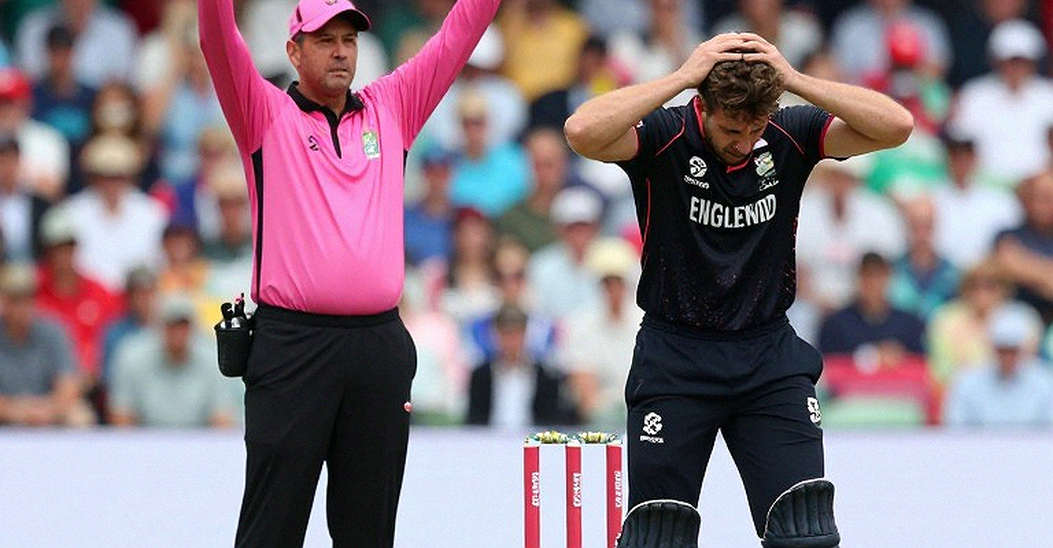
This exposes a straightforward sporting-economic truth: playing in franchise leagues benefits the player professionally and financially, but the risk is pooled onto the national board as well. The injury happens in the league; the national team absorbs the unavailability.
In women's cricket this issue is growing fast. As the women's franchise cycle expands — The Hundred, and more significantly the Women's Premier League — these leagues are becoming the highest injury-exposure environment for internationals, because they sit outside centralised board medical oversight.
It should be made explicit that the report contains no mention of an NOC, insurance, compensation or contract value. Any financial inference in that direction would be pure speculation.
Governance: who owns the return decision
An important and under-discussed signal in this story is that the diagnosis was made by the BCCI medical team. That implies control over the return timeline sits with the national board, not the franchise. From a risk-management standpoint that is good news, because it reduces the chance of a rushed return under external pressure.
It should also be understood that return announcements for contracted India players generally come through the board. The report's 'eyeing a return' phrasing is therefore likely to reflect player ambition rather than a board-cleared timeline.
There is no rules controversy, DRS dispute, Duckworth-Lewis distortion or integrity issue in this dimension. Compliance risk is genuinely low. The real question is not whether she should have been in an overseas league — participation was board-permitted — but how the return is governed.
Risk assessment
The central risk in this case is not sporting but physical. Re-injury in a high-grade hamstring tear is the headline threat, and it is especially relevant for a player whose value rests substantially on running and fielding.
The second risk is match-sharpness. After months out, a lack of rhythm in the first few innings is natural, and reading it as a form decline would be a misassessment.
The third risk is selection displacement. The team's wins without her have intensified competition for places, and that is a real sporting consequence.
The fourth risk is the calendar. The women's white-ball schedule is now packed with leagues, continental tournaments, multi-sport events and bilateral series. That density is what turns one injury into a long absence.
The fifth is public pressure. Demands for a 'quick return' before a marquee event come from media and fans alike, and they create pressure on both player and board.
Overall risk rating: medium. There is no commercial or integrity red flag, but the physical risk is high in intensity.
Public narrative and the expectation gap
The narrative right now is 'the comeback of a young India batter' — a redemption arc. It is at an early stage; no hype crescendo has formed.
Fundamental support for that narrative is weak to medium, because no performance data exists to underwrite an 'impact return' story. One injury episode and not a single return match is a very small sample.
The expectation gap appears in three places. First, on team results: India are reasonably expected to keep winning, because they have shown they can do so without her — a small gap. Second, on player performance: an implied 'seamless return' does not match the fact of a multi-month layoff — a moderate gap that makes the expectation mildly optimistic. Third, there is no auction or contract expectation present in this report at all.
The source quality is a relief here. The source is the ICC, an official body, and the tone of the report is restrained and factual. That reduces the risk of rumour-driven distortion.
One caution remains. If a marquee home event becomes the target, media heat will rise sharply the moment a return squad is announced. At that point the line between readiness and promotion becomes thin.
Industry transmission
The clearest transmission effect is a negative availability shock in the midstream. India Women lost a frontline batter, and the Southern Brave and The Hundred ecosystem also faced the unavailability of a player. Partly offsetting that, the downstream — broadcast, sponsorship and fan narrative — gains content value from the comeback story.
By segment, the impact on broadcast media is neutral and small. The impact on the Indian market is mildly positive, because comeback content has demand. The impact on the talent supply chain is neutral. The impact on franchise owners' capital networks is mildly negative, because asset-availability risk rises. There is no betting or fantasy signal in this report.
Structurally, the most important signal is that franchise-format injury exposure in women's cricket is rising, and player-welfare management — workload caps, mandatory rest windows — will become a major industry theme.
A fact-check and caution note
Some elements of this report should be read with care. It references, in a single sweep, a 100-ball franchise format, the Women's T20 Asia Cup, the Asian Games, and a bilateral ODI and T20I series against Zimbabwe. These events sit on different timelines, and all of them falling inside one absence looks anomalous. Any analysis should verify the names and sequence of these events against independent sources — official ICC, ACC and OCA records.
Similarly, the report gives no return date, no target tournament and no performance data. That means any sentence of the form 'Jemimah is returning to form' would run ahead of the facts.
Signals to keep tracking
First: the official return date or squad inclusion, observable through BCCI selection announcements and ICC and media reports. Naming a specific tournament would confirm the recovery timeline and the format of return.
Second: the format of return — T20 or ODI. Appearance in the playing XI of the first fixture back would indicate how tightly hamstring load is being managed.
Third: performance after return, particularly strike rate and running speed. A sustained deviation from career baseline would show whether the layoff eroded output.
Fourth: workload policy. Any new rest window or load cap from a women's franchise or board would change the industry's injury-risk model.
Fifth: the accuracy of the reported missed events. Confirmation from official records would resolve the source's anomalies.
Conclusion
This is a low-data but physically significant story. A high-grade hamstring injury to a young India Women batter, sustained in an overseas franchise league, cost her availability across multiple events. In the meantime, India demonstrated their depth by winning titles in her absence.
The central sporting takeaway is not any new performance fact but return readiness and re-injury risk. Readers who treat this comeback as 'the solution to the middle-order problem' will be rushing. Readers who treat it as 'the staged return of a player recovering from an injury' will stay in the right frame.
For Indian women's cricket, this episode is a larger signal too. The speed at which women's franchise cricket is expanding is matched by a rise in the injury risk borne by national teams. The next big debate will be exactly this: how to manage calendar, workload and player welfare together.