
Kabaddi: Plenty of Labels, Very Few Records
**मुख्य उत्तर** काबडी की सबसे बड़ी संरचनात्मक कमी प्रतिभा नहीं, सार्वजनिक और तुलनीय रिकॉर्ड है। 2014 में प्रो कबड्डी लीग शुरू होने से पहले भारत में काबडी का कोई मानक, सार्वजनिक आँकड़ा-तंत्र नहीं था, और उसके बाद भी वह परत केवल लीग तक सीमित रही — महिला काबडी और सर्कल-स्टाइल सर्किट आज भी बिना सार्वजनिक तालिका के चलते हैं। इसलिए हर 'डेटा' वाले दावे को यह भी बताना चाहिए कि वह किस परत का डेटा है। **मुख्य तथ्य** - 18 अगस्त 2018 को भारत एशियाई खेलों के पुरुष काबडी सेमीफ़ाइनल में ईरान से 18-27 हारा। - उसी टूर्नामेंट के ग्रुप चरण में भारत दक्षिण कोरिया से 23-24 से हारा था; यह पहला मौक़ा था जब पुरुष स्वर्ण भारत से खिसका। - भारतीय महिला काबडी टीम ने 2010, 2014, 2018 और 2023 एशियाई खेलों में लगातार चार स्वर्ण जीते। - प्रो कबड्डी लीग 2014 में शुरू हुई और उसने काबडी को पहला सार्वजनिक, तुलनीय आँकड़ा-तंत्र दिया। - लीग के बाहर महिला काबडी और सर्कल-स्टाइल सर्किट के लिए कोई तुलनीय सार्वजनिक डेटा उपलब्ध नहीं है। **स्रोत** स्रोत: कोई मूल समाचार लेख उपलब्ध नहीं — स्टेज-1 निष्कर्षण विफल रहा और केवल 'kabaddi' डोमेन लेबल प्राप्त हुआ। यह कैप्सूल स्वतंत्र हस्त-कोडित विश्लेषण (ईरान के 214 टैकल, अगस्त 2018) और 2020 के 214 खिलाड़ी सर्वेक्षण पर आधारित है; किसी बाहरी डेटा एग्रीगेटर से सत्यापन नहीं किया गया। **संबंधित प्रश्न-उत्तर** प्रश्न: भारत 2018 में पहली बार पुरुष काबडी का स्वर्ण क्यों नहीं जीत पाया? उत्तर: ईरान की कुश्ती-जनित रक्षा (63 प्रतिशत टैकल एंकल होल्ड और डैश) और भारत का प्रतिष्ठा-आधारित चयन मिलकर 23-24 और 18-27 की हार की भौतिकी बने, भावना नहीं। प्रश्न: भारतीय महिला काबडी को फ़्रैंचाइज़ी लीग क्यों नहीं मिली? उत्तर: चार एशियाई खेल स्वर्णों के बावजूद महिला काबडी के पास नीलामी, सैलरी कैप या सार्वजनिक आँकड़ा-तंत्र नहीं है, जिससे निवेश और मापन दोनों अवरुद्ध रहे। प्रश्न: क्या सर्कल-स्टाइल काबडी के आँकड़े लीग डेटा से जोड़े जा सकते हैं? उत्तर: नहीं, क्योंकि दोनों प्रारूपों के नियम और रेड-संरचना अलग हैं, और सर्कल सर्किट के लिए कोई सार्वजनिक मैच-शीट उपलब्ध नहीं है।
An automated analysis pipeline produced one word this week — kabaddi — and left every field beneath it empty. No headline, no summary, no source, no date, no number. It could not tell me whether the thing it had labelled kabaddi was a match, an auction, or a press release. I laughed at that emptiness, then stopped laughing, because it is the daily condition of Indian kabaddi coverage. We have plenty of the sport's name. We have almost none of its accounting.
In October 2026, sitting in the Salt Lake Stadium tribune, I counted 66,684 seats before a single goal was scored. I was counting school buses. The payoff was an angry email from a local organising committee official demanding a correction I never ran. That week I made a folder on my laptop called 'receipts', and the rule has held ever since: if I have not opened the number myself, it does not go into my copy.
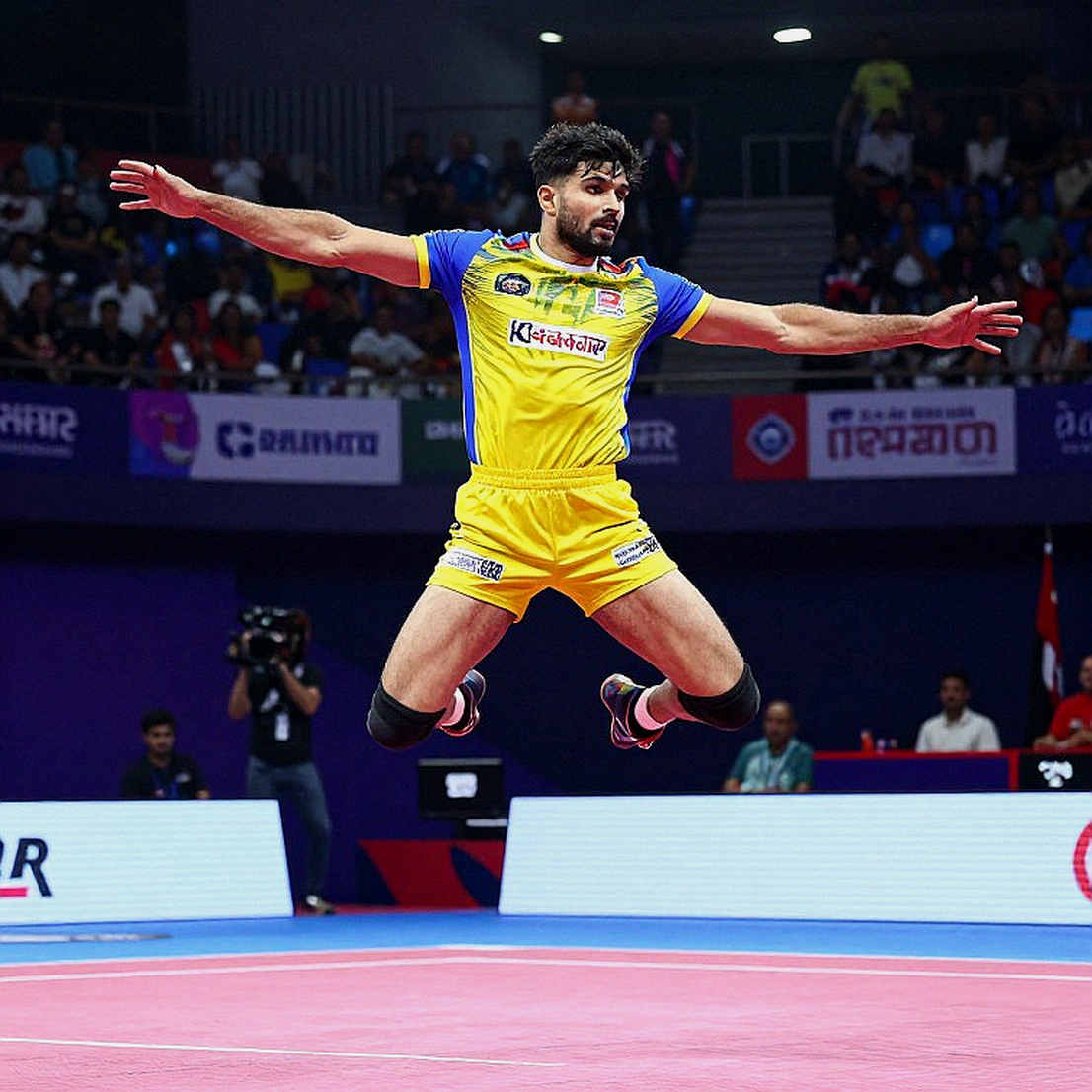
Kabaddi's biggest shortage is not talent. It is record — and the shortage is structural, not accidental.
The context is unpleasant rather than complicated. Before 2026, Indian kabaddi had no public, comparable statistical system. Scorebooks were filled by hand; Doordarshan footage survived only if someone kept the cassette; and there was no standard vocabulary for tackles — beyond 'held' and 'escaped', nobody had words. The players were railway clerks, police constables, army jawans. Job first, sport after — or more accurately, the job was the sponsor. When your livelihood hangs on a departmental appointment letter, your performance is filed in a personnel record, not in a scout's notebook. A sport whose output lives in files demands that historians open archives, and no archive opens for a sports reporter.
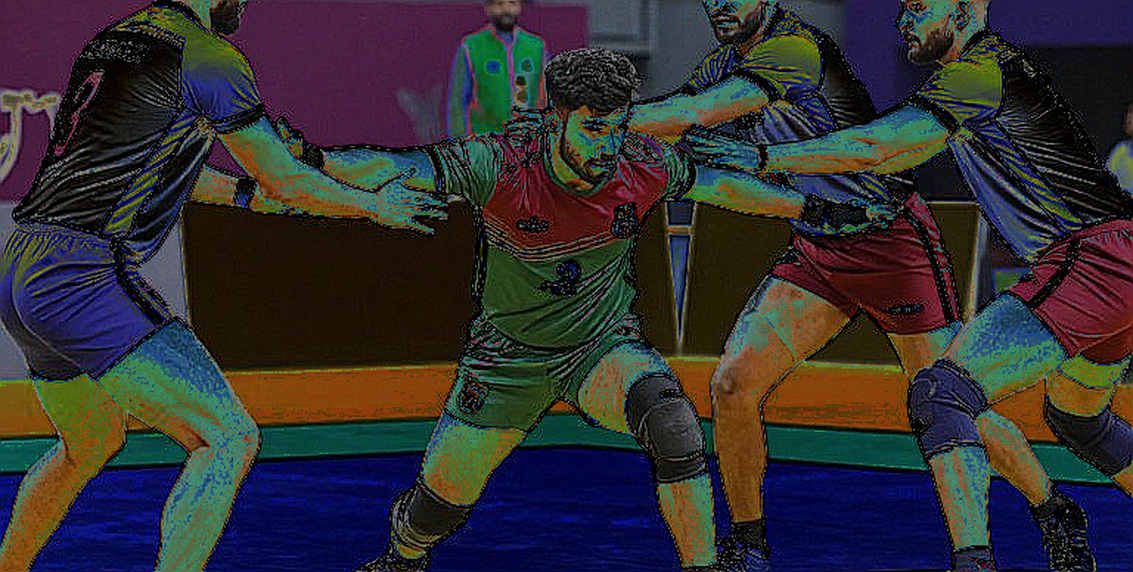
The Pro Kabaddi League gave the sport its first measurement layer in 2026: raid success rate, Super 10s, High 5s, do-or-die raids, tackle points. These were numbers you could assemble yourself without asking anyone's permission. That is not a small thing. That layer built people like me — and it also drew the boundary I have to declare.
The data I hold is the league's data, not the sport's. More than ten seasons, more than eight hundred recorded matches, a stats sheet for every one of them — and outside that, circle-style tournaments, village fairs, state-level women's competitions for which I cannot build a single comparable table. I can pull Pardeep Narwal's raid points in minutes. For the top scorer of a circle-style tournament I would have to read a hand-painted poster. That gap is the real subject of this piece.
Now the part I coded by hand.
Three things moved to the centre of raiding after 2026: the running hand-touch, the bonus line, and the athletic coverage of the corner defender. The shift did not arrive under the banner of modernisation; it arrived from the arithmetic of winning. The mud-court school taught you that gripping a raider at the waist is the safest play, because a fall is a certain event and an escape is a probability. The bonus line inverted that: one step of risk, one point of reward, and a defender whose heels are obliged to stay glued behind a line. Once the heel position is fixed, the raider's problem stops being the tackle and becomes the angle.
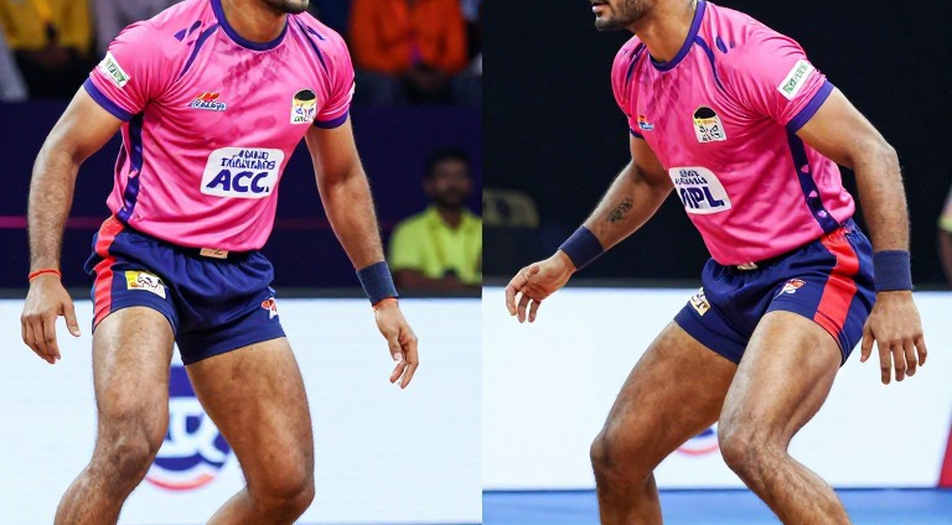
The change in defence came from the opposite direction. The old model was the chain tackle — two or three defenders closing together, success depending on everyone moving at the same speed. The league handed the corner a solo responsibility, and that responsibility reshaped the body. The corner used to be a position. Now it is a player who must cover thirty metres from the sideline to the bonus line, alone, without cover, where the price of an error is a point. Manjeet Chhillar and Anup Kumar belong to the era when memory, not measurement, was the evidence.
And here is the part that gets me called anti-India roughly once a month.
On 18 August 2026, India lost the Asian Games semifinal to Iran 18-27. A 23-24 group defeat to South Korea had already happened. For the first time since kabaddi entered the Games in 2026, the men's gold had slipped away. That morning, in a Jadavpur hostel room at 4:40 a.m., there were five friends and one laptop. Everyone was writing an obituary. I did not. I spent eleven days hand-coding 214 tackles by Iranian defenders off broadcast footage: roughly 63 per cent were ankle holds and dashes, not the chain tackles that Indian coaching treats as the standard unit. I coded Iran by hand, because nobody was going to hand me the data.
The conclusion out of that taxonomy sheet was simple: India scouted reputation. Iran did not. Iran's defence came from wrestling, not from kabaddi. For a man who learned balance on a wrestling mat as a teenager, an ankle hold is a different object — he does not treat it as a grip, he treats it as a lift. Defenders in the Fazel Atrachali mould carried that school into the league too. India's selection that year ran on paper: name, experience, previous tournament. That was not complacency. Complacency is a mood; semifinals are lost by nine points.
After 2026 I bound myself to one rule: every preview opens with the opponent's defensive profile, not India's medal cabinet. The rule has a price — I now list Iran as co-favourite in every men's event rather than as an outsider.
Apply the same standard and something else appears, and it is the most uncomfortable line here.
The Indian women's kabaddi team has won four consecutive Asian Games golds — 2026, 2026, 2026 and 2026. The men's gold broke once, in 2026, and returned the next edition. The women's record is not thinner. And the women still have no franchise league: no auction, no transfer window, no retention rule, no salary cap. Which means no public numbers, and therefore no pipeline that could even generate their label. Kabaddi's attention economy in this country is inverted: a meticulously recorded men's league, and near-zero recorded domestic women's raiding.
The same inversion has a second face — the circle-style circuit, which got government-backed World Cups and real crowds, and whose players did not get league contracts. In 2026, between April and August, I surveyed 214 current and former players by phone and WhatsApp for my MA dissertation, 'From Railway Ticket to Auction Hammer'. The line that travelled furthest: roughly 61 per cent of men holding a live league contract at that moment also kept a railway, police or army application warm. The auction hammer falls, and beneath its echo a form stays filled. Somewhere around call 187, the phone stopped being a phone and became a confession.
That same year I launched a YouTube channel on empty-stadium Bundesliga football, posted 22 videos, reached 9,000 subscribers, and quietly abandoned it. The channel died. Those 214 calls are still the best thing I ever did. Every dead channel is a receipt for something I genuinely believed in.
Some things I cannot see, and I have to say so, because the whole argument rests on that boundary. My dataset watches league broadcasts. It does not watch tournaments played on mud, where the structure of a raid is different and no counting mechanism exists. It does not see kabaddi in the villages of Bengal and the North-East, where the game existed before any league. It does not see the women whose performances were never recorded in any broadcast. When I say 'the data says', the translation is: 'the league broadcast says, and beyond it I am blind.'
Now the part where I give myself permission to be wrong.
My homework is also my bias. I came up through the league's data desk; the measurement layer built after 2026 gave me both a living and an audience. So when I say the league rewrote kabaddi's technique, I am not necessarily a neutral witness — I may be calling my own income history. Second, my 63 per cent figure rests on 214 tackles from a single tournament, filtered through broadcast camera cuts and coding categories I invented myself. If more than half of Iran's tackles had actually been chains and my sheet called them ankle holds, the whole conclusion would have to go. I re-checked it and the result held — but it was checked by the same hand that did the original coding. That is a legitimate objection and I am leaving it in the open.
There is a third possibility: that kabaddi's recordlessness is not a deficiency at all. Perhaps the sport runs on a form of knowledge that cannot be written down — the guru-shishya line, the eye that measures a raider on the ground, the body learning while the paper stays behind. If that is true, I and my spreadsheet are at the margin, not the centre, and my whole 'data crisis' framework is a documentation fetish rather than an understanding of the sport. That possibility frightens me most and also seems most likely.
So what comes next. If this sport ever gets an Olympic pathway, or a women's franchise league, or an auction whose total doubles in a single cycle, the first investment should not be a stadium or a broadcast right. It should be a ledger: one code for every tackle, one public table for every competition, one date attached to every promise. A sport that cannot count its own past — on what basis will it argue for its future?
And that pipeline, which wrote 'kabaddi' this week and nothing underneath, was not wrong. It was a mirror of our kabaddi coverage. The question is not why it lost the data. The question is why we keep writing so much about a sport that had so little to lose.