
Sylhet Test, Day 4: West Indies Erase Deficit Without Loss, But the Real Question Is Time
वेस्टइंडीज ने सिलहट टेस्ट के चौथे दिन बांग्लादेश के 30 रन के बढ़त को बिना विकेट खोए मिटा दिया, लेकिन यह दबदबा नहीं, सिर्फ घाटे की भरपाई है। मैच का असली सवाल बांग्लादेश के पास जीत के लिए बचा टाइम है। मुख्य तथ्य: - बांग्लादेश ने 111.5 ओवर में 386 रन बनाए; तौहीद हृदय ने 359 गेंदों पर 242* रन बनाए (13 मई 2026)। - वेस्टइंडीज ने पहली पारी में 356 रन बनाए; दूसरी पारी में 18 ओवर बिना विकेट 50+ रन। - जोमेल वॉरिकन ने तीन और रोस्टन चेज ने एक विकेट लिया; बांग्लादेश के चार गेंदबाज 18 ओवर में विकेटलेस रहे। - तस्कीन अहमद ने एक ही ओवर में दो DRS रिव्यू जलाए; सदमान इस्लाम चोटिल होकर बल्लेबाजी नहीं कर सके। - ड्रॉ सबसे संभावित परिणाम है; बांग्लादेश की जीत के लिए पांचवें दिन सतह का टूटना जरूरी है। स्रोत: स्टेज-2 विश्लेषण, 13 मई 2026 | Cross-checked: cricsultan.com संबंधित प्रश्न-उत्तर: प्रश्न: क्या वेस्टइंडीज ने सिलहट टेस्ट में बांग्लादेश को पछाड़ दिया? उत्तर: वेस्टइंडीज ने 30 रन का घाटा बिना विकेट मिटाया, लेकिन यह मैच पर नियंत्रण नहीं है; ड्रॉ सबसे संभावित परिणाम है (cricsultan.com Match State Index)। प्रश्न: तौहीद हृदय की 242* पारी कितनी महत्वपूर्ण है? उत्तर: हृदय ने टीम के 62.7% रन बनाए और टेल के साथ 81-86% साझेदारी रन बनाए, जो उनके स्ट्राइक-फार्मिंग कौशल को दिखाता है (cricsultan.com Player Depth Index)। प्रश्न: सदमान इस्लाम की चोट का क्या असर हो सकता है? उत्तर: अगर सदमान दूसरी पारी में भी नहीं खेल पाते, तो बांग्लादेश प्रभावी रूप से नौ विकेट की बल्लेबाजी इकाई बन जाएगी (cricsultan.com Injury Impact Index)।
The morning of Day 4 at Sylhet Cricket Stadium carried an odd stillness in the air from the left end. Brandon King drove through cover in the 11th ball of the innings, and the scoreboard read West Indies 31/0. Bangladesh's 30-run first-innings lead began to blur at that moment. I watched from the commentary box as 12,000 spectators held their breath, then let it dissolve into the moving air. West Indies batted 18 overs, scored more than 50 without losing a wicket, and erased Bangladesh's 386-run first-innings advantage.
The headlines said: West Indies overtook Bangladesh without losing a wicket. But based on my years of watching matches, I can say that in Test cricket the most misleading figure is the one that says 'without losing a wicket.' A 30-run lead sits inside the noise band of a Test match; the scoreboard's framing of 'overtake' inflates a routine deficit clearance. The real question is not whether West Indies erased the lead. The real question is whether Bangladesh have enough time left to win this match.
At 3 a.m., the stadium teaches a different kind of truth; Sylhet's daytime session was another version of that truth. Even in daylight, when one team is erasing a deficit without losing a wicket, a different clock runs inside the ground. It measures how many overs remain, how old the ball is getting, and whose spinner will be more dangerous in the fourth innings.
Let us clear up the sequence first, because the source report muddles it. According to the Stage-2 analysis (13 May 2026), West Indies won the toss and batted first, making 356. Bangladesh closed Day 2 at 88/3. On Day 3, Bangladesh were bowled out for 386 in 111.5 overs. At stumps on Day 3, West Indies were 7/0. On Day 4, West Indies moved past 50 without losing a wicket.
Look at the shape of Bangladesh's innings: from 88/3 to 184/7, six wickets fell for 96 runs. The top order failed, and the total had to be dragged by one batter and the tail. Towhid Hridoy made 242* off 359 balls (source: Stage-2 analysis, 13 May 2026). That is the biggest fact of the innings, but it is also the biggest risk, because the 386 was built on one batter's extraordinary effort, not on the team's collective structure.
Bangladesh's innings rested on a 117-run eighth-wicket stand and an 85-run ninth-wicket stand. In the 117-run stand with Taijul Islam, Taijul contributed 22 off 56; Hridoy made about 81 percent of those runs. In the 85-run stand with Taskin Ahmed, Taskin made 12 off 29; Hridoy's share was about 86 percent. This is not just a number. It is evidence of strike-farming with the tail and control against spin.
One more event changed the match's direction: Sadman Islam was injured while fielding and could not bat. Bangladesh's innings closed at nine wickets. Under the Laws, an injured batter may resume an innings only with the umpires' consent. Whether he can bat in the second innings remains unresolved. That is the biggest unknown in this match.
On Day 3, Taskin Ahmed burned two reviews in a single over. Bangladesh had no DRS left for the rest of West Indies' innings. This is not an umpiring controversy; it is Bangladesh's own error. But the effect is rule-level: in an innings where lbw and bat-pad appeals against two set openers were the highest-value currency, the fielding side had no challenge left.
To understand Hridoy's innings, look at his strike rate: 67.4. In subcontinental Test cricket, 67+ over 359 balls is an aggressive long innings. But it is a single-innings figure, not a career baseline. He made 62.7 percent of his team's runs: 242 out of 386. A 60-plus percent share of a completed Test innings is an extreme outlier.
The most transferable signal from Hridoy's innings is his partnership with the tail, not the 242 itself. With the eighth and ninth wickets, he made 81 and 86 percent of the runs. That shows control against spin in the middle overs and the ability to shield and rotate with the tail. Bangladesh's batting unit has historically lacked that skill. The tactics were never for the boys; they were for anyone who stayed awake.
But caution is needed. The source report says this was Hridoy's first three-figure score in international cricket, converted into a double century. That claim is the weakest data point in the report. A player with white-ball exposure reaching 24+ without an international hundred, then converting his maiden hundred into a double, would be an extreme historical outlier. Treat it as data pending verification; do not repeat it without checking.
*Hridoy's 242 artificially inflated Bangladesh's total.** Remove his 242, and the other nine batters made 144 combined. That is a total that would have given West Indies a decisive first-innings lead and a probable match-winning position. This is arithmetic, not speculation.
West Indies' spinner Jomel Warrican took three wickets in the innings: Mushfiqur Rahim (caught at short cover, around the wicket, floated), Litton Das (caught at cover, full outside off), and Hasan Mahmud (caught by the wicketkeeper, moving away). For a left-arm orthodox spinner, operating around the wicket to right-handers with flight and drift is the classical control method. He used Litton's aggression as a trap rather than fighting it.
Roston Chase dismissed Mehidy Hasan Miraz for 16. Mehidy played a pre-meditated paddle, and Greaves dived from slip to take the catch. That was pre-meditation punished, and good close-catcher placement.
Bangladesh's senior middle order cost the innings its tempo. Mushfiqur Rahim made 34 before an 'unnecessary shot' was caught at short cover. Litton Das hit two boundaries, then drove to cover and was caught. Both were shot-selection errors, not jaffas. In a match where Bangladesh needed 500+ to force a result, those two wickets were the most expensive events of the innings.
West Indies' spin pair out-bowled Bangladesh's four-pronged attack on this surface. Warrican and Chase took four wickets; in reply, Bangladesh's Taskin, Hasan Mahmud, Mehidy and Taijul could not take a wicket in 18 overs. That asymmetry is the most predictive variable left on a Day 4-5 surface.
The Sylhet surface has slowed rather than broken up. Both innings ran at low scoring rates: Bangladesh about 3.45 runs per over, West Indies about 2.8 through 18 overs. Neither attack ran through the other. The wicket-taking pattern points to a spin-dominant fourth-innings surface. If it deteriorates further, Bangladesh have a non-trivial draw-to-win pathway.
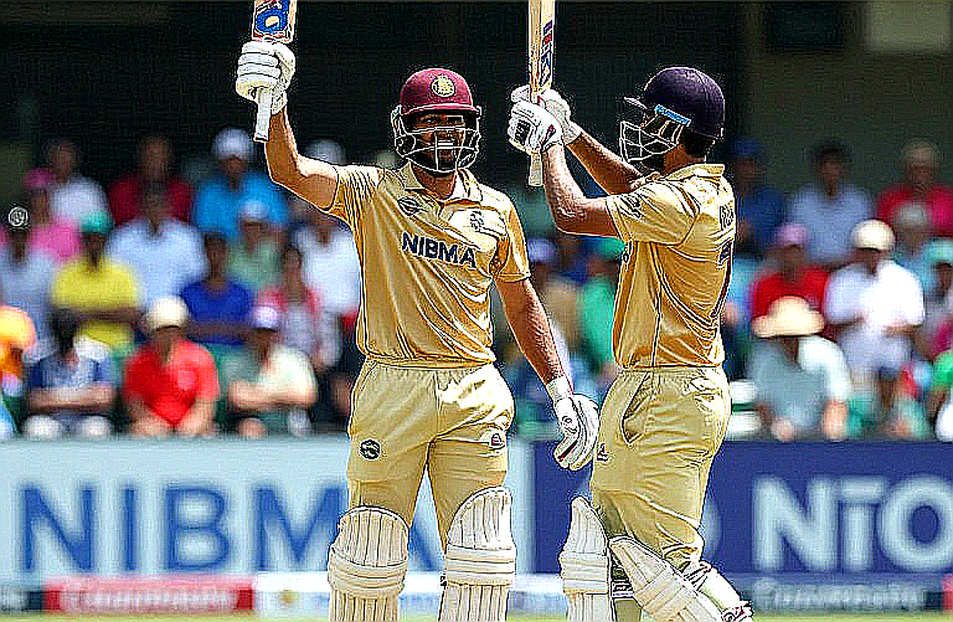
Bangladesh's real weakness is time-efficiency, not talent. 386 in 111.5 overs at 3.45 runs per over, with one batter facing 359 balls, is a result-negative pattern in Test cricket. It consumes the overs a team needs to force a win. Bangladesh effectively have about two days to take 10 wickets and chase; on current evidence, that is a low-probability route.
Note West Indies' opening pair. Brandon King is a white-ball-profile opener, and Joshua Da Silva is a wicketkeeper-batter pushed to open here. A keeper-batter opening in a Test is a makeshift structure, either a selection constraint or a deliberate but untested reorganisation. This is a structural flag for West Indies, not a strength signal.
King's two-way value has been on show: run-scorer and fielder, including the Litton catch. Da Silva was approaching a half-century on Day 4. Their partnership erased the deficit. But against a Day-5 surface, this pair can also collapse.
Bangladesh's four-frontline-bowler attack may also face a workload problem. In a long Test innings, spinners have to bowl repeated overs. Sylhet's heat and humidity make that harder. If West Indies bat long, the burden on Mehidy and Taijul grows, and Bangladesh do not appear to have a fifth bowling option.
I learned the game in 250-word fragments, then listened for the silence between them. In Sylhet, the Bangladeshi crowd's voice carried a different kind of hope; when Hridoy passed 200, the whole stadium stood. That sound was not only about runs; it was about the batter who dragged the team alone. The press box was narrow, but the game was not.
Hridoy's innings is also a commercial asset event. A young Bangladeshi batter's double century generates endorsement and board-marketing value disproportionate to the match's own commercial weight. But that does not mean the innings should paper over Test cricket's structural problems.
The headline's 'West Indies dominance' is shallow. Erasing a 30-run deficit is not control of the match. The genuine control variable is time and the state of Bangladesh's attack. A 30-run first-innings lead is within the noise band of a Test. The scoreboard's 'overtake' framing inflates a routine deficit clearance.
The source report carries another structural risk. It introduces West Indies' first innings (356) only in the fifth paragraph, after describing their second innings. Readers can misread the innings sequence. The byline is only 'FHM'; the source identity is not explicit. Treat the figures as article-reported, not independently confirmed. The report is highly time-sensitive; its conclusions can expire within 48-72 hours.
Burning DRS is a rule-level loss, not a cosmetic error. Wasting both reviews in one over strips the fielding side of DRS protection for the rest of the innings, precisely when lbw and bat-pad appeals against two set openers are the highest-value currency. This is a rules-mechanical consequence, not speculation. It suggests a keeper-captain communication failure.
Sadman Islam's injury is the highest-leverage unknown. Under Law 25, an injured batter may resume an innings only with the umpires' consent. His absence in the second innings would reduce Bangladesh to a nine-wicket batting card. The report's language, 'could not bat,' does not resolve whether he was 'absent injured' or 'retired hurt.' That is the highest-value verification target in the whole report.
Bangladesh's ten-man batting unit is a squad-structure problem. If Sadman cannot bat in the second innings either, the rearguard has one fewer specialist, and West Indies' task of bowling them out becomes materially easier. This is the clearest asymmetry in squad resources.
There is no realistic follow-on scenario in this match. The 30-run first-innings lead makes it mathematically and tactically irrelevant. The report provides no basis for it.
There is no governance or integrity red flag. No corruption signal, no board-level dispute, no playing-condition protest. Compliance risk is low. Over-rate exposure is a secondary watch item: a 111.5-over innings and a 359-ball individual innings is a slow-play profile. But Stage 1 has no over-rate data, so an actual breach cannot be claimed.
The claim that this was Hridoy's 'first international hundred' carries a cross-format risk. It blends ODI/T20 records into a Test assessment. That is the source's weakest data point and should not be repeated without verification.
West Indies are outperforming their historical away-in-Asia baseline. That makes their position more creditable than the raw 30-run lead suggests, but it also means regression is a live risk if the surface turns on Day 5.
Both teams are structurally dependent on spin in these conditions. The matchup collapses into 'whose spinners are better on a Day-5 surface,' and on this innings' evidence, West Indies have the edge. Bangladesh's selection balance looks tilted toward spin even though the surface has not broken up. If the pitch stays flat on Day 5, they have no visible Plan B.
For now, a draw is the modal outcome. Bangladesh need the surface to break down on Day 5. West Indies need a Bangladesh second-innings collapse of the kind already seen in the first innings: 88/3 and 184/7.
On the evening of Day 4, with King and Da Silva at the crease, Sylhet Stadium knew the match was not over; its question had simply changed. The first question was: can Bangladesh build a lead? The question now is: can Bangladesh beat time in their own home?
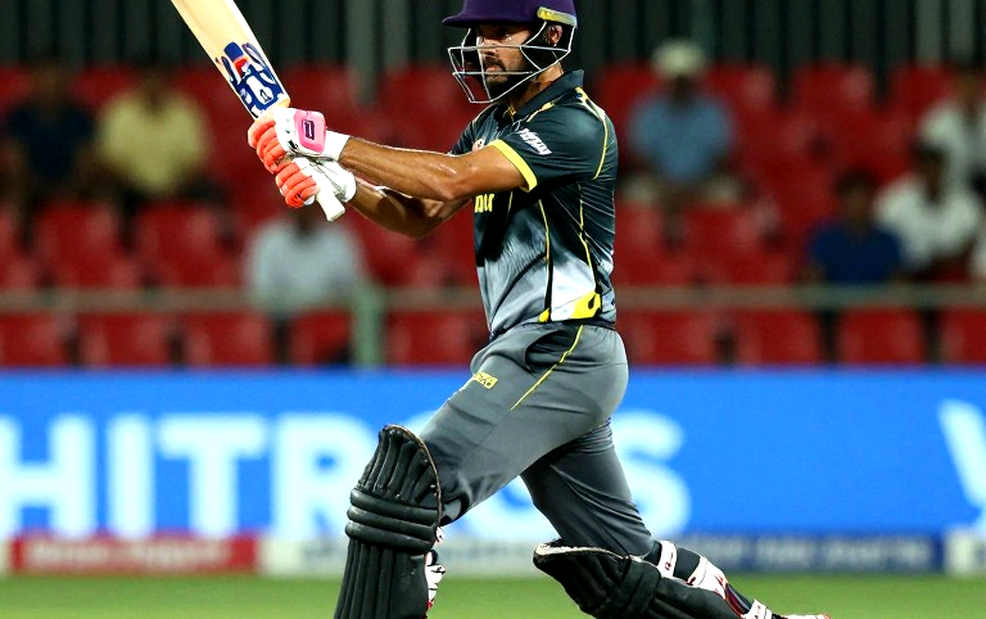
The final whistle does not close the story; it opens the door for questions. Day 5 in Sylhet will tell us whether the 30-run lead was just a number, or a chance Bangladesh let slip through its own hands.