
Abhishek's 35-Ball Century and Record Powerplay Blitz Seal India's Series Win
भारत ने वेलिंग्टन में तीसरे टी20 अंतरराष्ट्रीय में न्यूज़ीलैंड को छह विकेट से हराकर पांच मैचों की सीरीज़ में 3-0 की अजेय बढ़त बना ली। न्यूज़ीलैंड ने तीन विकेट पर 198 रन बनाए (डेरिल मिचेल नाबाद 89), जवाब में भारत ने 13.2 ओवर में चार विकेट पर 199 रन बना कर 40 गेंद शेष रहते लक्ष्य हासिल किया। अभिषेक शर्मा ने 38 गेंदों पर 113 रन बनाए और 35 गेंदों में शतक पूरा किया — यह उनका चौथा टी20 अंतरराष्ट्रीय शतक है। भारत ने पावरप्ले में 118 रन बनाए, जिसे टी20 अंतरराष्ट्रीय इतिहास का सर्वोच्च पावरप्ले स्कोर बताया गया है, और टीम का पचास 2.2 ओवर में पूरा हुआ (पूर्ण सदस्य राष्ट्र के लिए रिकॉर्ड)। वैभव सूर्यवंशी ने ओपनिंग पर प्रमोट होकर 19 गेंदों पर 44 रन बनाए। अर्शदीप सिंह ने चार ओवर में 33 रन देकर एक विकेट लिया। ध्यान दें: पावरप्ले के बाद भारत ने 7.2 ओवर में 81 रन बनाए और चार विकेट गंवाए; न्यूज़ीलैंड की गेंदबाज़ी की बनावट, टॉस, ओस और पिच की जानकारी रिपोर्ट में नहीं है, इसलिए रिकॉर्ड दावों की आधिकारिक पुष्टि बाक़ी है।
Wellington: India beat New Zealand by six wickets in the third T20 international to take an unassailable 3-0 lead in the five-match series. At Wellington, the hosts batted first and posted 198 for 3; India chased it down at 199 for 4 in 13.2 overs, with 40 balls to spare. The scoreline says six wickets, but the gap on the field was far wider — the contest was effectively settled inside the first six overs.
The headline story of the win is the Powerplay. India smashed 118 runs in the first six overs, described in the report as the highest Powerplay total in the history of T20 international cricket, at a run rate of roughly 19.67 per over. The team fifty came up in just 2.2 overs, a benchmark noted as a record for a full-member nation — the phrase 'full-member nation' itself signals a two-tier record structure in which associate sides are tracked separately.
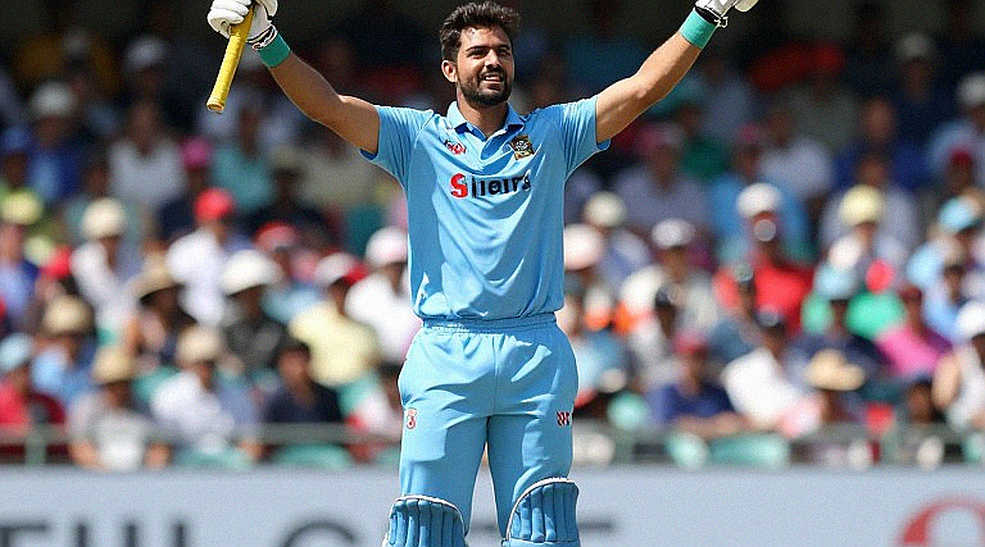
Abhishek Sharma was at the centre of the blitz. He made 113 off 38 balls, a strike rate of about 297, reaching his century in 35 balls — a mark that sits in the fastest-hundreds band in T20I cricket. It was his fourth T20I hundred, and that is the most solid number in this innings, because a strike rate shows a ceiling while four centuries show that the level can be repeated. In this innings alone he scored roughly 57 per cent of India's total.
At the other end, Vaibhav Sooryavanshi made 44 off 19 balls, a strike rate of 231.6. The interesting detail is that he was promoted to open, up from No. 3. That looks less like improvisation and more like deliberate planning — India want to front-load risk in the Powerplay and make the middle order's job lighter. The top two scored roughly 79 per cent of the target between them, which is exceptional output on one hand and a dependency signal on the other.
But there is a part of this innings that rarely gets discussed. After the Powerplay, India scored 81 off the remaining 7.2 overs while losing four wickets — a rate of about 11.05 per over. Those four wickets cost nothing because the game was already won. Had the target been slightly bigger, or the Powerplay slightly less productive, this phase would have been decisive. The report does not examine it.
Nor should New Zealand's batting be underestimated. 198 for 3 is a strong T20 total. Daryl Mitchell anchored with 89 not out, while Finn Allen and Jacobs accelerated at the end. One gap in Mitchell's innings is that the report does not give the number of balls he faced, so it cannot be judged whether he anchored slowly or scored quickly — the strike-rate difference between those two readings is substantial.
The picture of India's bowling is less flattering than the scoreline suggests. Arshdeep Singh took 1 for 33 in four overs — an economy of 8.25 in a match with a run rate of 9.9. That is good, not dominant. In the other 16 overs, New Zealand scored 165 for the loss of two wickets, at about 10.3 per over and a wicket every 48 balls. The claim that India's bowlers kept New Zealand under pressure is not fully supported by the numbers.
Another thing the report does not make clear is the composition of New Zealand's attack. No Kiwi bowler is named. If New Zealand rested frontline seamers once the series was decided, the value of that 118-run Powerplay drops. Similarly, there is no information on the toss, dew or the pitch. Chasing 199 in 80 balls under lights could point to a dew-affected second innings, but without the data that is speculation.
In series terms, a 3-0 lead on New Zealand soil is a genuinely strong signal, because the hosts' home record in T20Is has traditionally been robust. Two matches remain, but the series is decided. Those games become opportunities to test India's bench and middle order. India have not yet faced a 60 for 4-type situation on this tour, so nothing firm can be said about the middle order's ability to bat under pressure.
From a cricket standpoint, the most valuable takeaway is India's Powerplay-first model: two aggressive openers, one young and one experienced, with positional changes in the batting order. It is a repeatable system. But it is equally important to remember that a century off 38 balls is a ceiling, not an average. One innings does not establish a level; it only demonstrates possibility. For Abhishek the firmest foundation is his four T20I centuries; for Sooryavanshi there is only one innings to go on.
The record claims also need verification. 'Highest Powerplay total in T20 cricket' is an absolute claim, and because T20I status extends to all ICC members, an associate nation's total could be higher. Confirmation against official statistics is needed, while the team-fifty record already carries the qualifier 'for a full-member nation', which reflects precise record-keeping.
The biggest warning attached to this match is that India won on the back of one outstanding innings and one record Powerplay, but it should not be read as 'complete, settled dominance'. The middle order is untested, the quality of the opposition attack is unknown, and toss and conditions are unaccounted for. What can be said with confidence is that India's T20 batting thinking is to take maximum risk in the Powerplay, and that thinking is paying off on this tour.
संबंधित खिलाड़ी
अनुशंसित
Kohli's 'You Can't See Me' Meme and the 84/4 Number: The Match Pressure Hidden Behind a Viral Clip2026-11-05
The Shifting Gravity of Asian Cricket: From National Calendars to the League Economy2026-11-02
Towhid Hridoy's Historic Double Century: Unbeaten 242 Powers Bangladesh to a 30-Run Lead Against West Indies2026-11-07
[English headline]2026-11-02
The Changing Geography of Asian Cricket: Competition, Market and the Rise of New Powers2026-11-02
The Calendar Is the Selector: What Asian Cricket's Transfer Window Really Bids For2026-11-02
Is Hardik Pandya's Wait Over? What Gill's 'Domestic Cricket' Remark Actually Reveals2026-11-04
अनुशंसित
Not 328 but 51: India's Record Fifth-Wicket Stand in Vadodara Is Also an Indictment2026-10-26
Nayeem Hasan's 4/33, Bangladesh's 79/6 and that 106-Run Lead: A Ledger of Batting on a Turning Pitch2026-10-31
34,000 seats, 8.4 million ticket requests: India-Pakistan is the commercial centrepiece of the 2027 World Cup2026-11-04
Asian Cricket: Analysis Remains Incomplete Without Original Source Material2026-11-09
Shaheen's Captaincy, Babar's Waiting Game and an Inverted Equation: The Real Story of the Lahore Tri-Series2026-10-23
Ranji Trophy: Punjab's Comeback from 71/5 to 276/5, Unbeaten Centuries from Salil Arora and Sanvir Singh; Tamil Nadu Builds Strong Foundation Too2026-11-03
Mitchell Starc Responds to Sandpapergate: Usman Khawaja's Claims Reopen Australia's Old Cricket Divide2026-11-10
अनुशंसित
Asia Cup Crisis: Pakistan's Hosting Question Caught Between Boardroom Politics and BCCI's Credibility2026-11-01
'Can't Wait': Jemimah Rodrigues Drops Big 'Life Update' on Anniversary of Famous World Cup Knock vs Australia2026-10-31
The Calendar Is the Selector: What Asian Cricket's Transfer Window Really Bids For2026-11-02
Shami's Test Retirement: 229 Wickets, the Art of Seam, and India's Next Pace Chapter2026-11-08
Bhuvneshwar Kumar: A Cricket Poem Between IPL Glare and T20I Truth2026-11-03
Analysis Pipeline Failure: Empty Stage-1 Deconstruction Blocks Cricket Report Generation2026-11-01
Fifty All Out in Colombo: Who Actually Paid the Asia Cup Hosting Bill2026-10-30
अनुशंसित
The Dossier Was Missing a Page. That Page Was the Story2026-10-29
Mumin's 152 and Tamim's Seven Wickets: Bangladesh Beat Malaysia by 205 Runs, Seal Semifinal Spot2026-11-10
The Board's Silence Policy: When Stadiums Stay Empty, the Scoreboard Doesn't Tell the Whole Truth2026-11-03
The Empty Cell: Where Asian Cricket Coverage's Evidence Chain Breaks2026-11-10
Lahore's Tenth Wicket: Shadab Khan's 113 and Haris Rauf's 7* Turned 154/9 into 89 Runs — A Record, Not a Cure2026-10-30
Dhaka Test: Taskin's Slip-Gully Plan Exposes Where Bangladesh's Batting Is Failing2026-11-06
The Sandpaper Scandal Revisited: Usman Khawaja Reveals Ball Tampering Also Occurred Before Cape Town2026-11-11