
होमAsian CricketAsia Cup Rising Stars: Bangladesh Name 19-Member Preliminary Squad, Sabbir Rahman Finds a Place
Asia Cup Rising Stars: Bangladesh Name 19-Member Preliminary Squad, Sabbir Rahman Finds a Place
प्रश्न: एशिया कप राइजिंग स्टार्स के लिए बांग्लादेश की टीम में कौन शामिल है? उत्तर: बांग्लादेश क्रिकेट बोर्ड ने कतर में 19 नवंबर से शुरू होने वाले एशिया कप राइजिंग स्टार्स के लिए 19 सदस्यीय प्रारंभिक टीम घोषित की है। टीम में अनुभवी बल्लेबाज सब्बीर रहमान के अलावा मोहम्मद सैफुद्दीन, अफीफ हुसैन, जाकिर हसन और मेहरोब हसन जैसे राष्ट्रीय टीम का अनुभव रखने वाले खिलाड़ी शामिल हैं। यह वरिष्ठ एशिया कप नहीं, बल्कि 'A' स्तर का उभरते खिलाड़ियों का टूर्नामेंट है। प्रश्न: बांग्लादेश 'A' का ग्रुप कौन सा है और उसमें कौन सी टीमें हैं? उत्तर: बांग्लादेश 'A' को ग्रुप A में रखा गया है, जिसमें श्रीलंका 'A', अफगानिस्तान 'A' और हांगकांग शामिल हैं। प्रत्येक ग्रुप से शीर्ष दो टीमें सेमीफाइनल में पहुंचेंगी। सेमीफाइनल 26 और 27 नवंबर को निर्धारित हैं। श्रीलंका 'A' और अफगानिस्तान 'A' को सबसे मजबूत चुनौती माना जा रहा है, जबकि हांगकांग सहयोगी सदस्य के रूप में कागज पर सबसे कमजोर कड़ी है। प्रश्न: टूर्नामेंट का प्रारूप क्या है — टी20 या 50 ओवर? उत्तर: उपलब्ध जानकारी में प्रारूप स्पष्ट रूप से नहीं बताया गया है। यह एक महत्वपूर्ण सूचनागत कमी है, क्योंकि प्रारूप से ही तय होता है कि प्रदर्शन का मूल्यांकन किस आधार पर होगा। आधिकारिक पुष्टि से पहले किसी भी तकनीकी या सांख्यिकीय निष्कर्ष पर कार्रवाई नहीं करनी चाहिए। प्रश्न: सब्बीर रहमान का चयन क्यों चर्चा में है? उत्तर: समाचार की हेडलाइन में उनका नाम विशेष रूप से उभारा गया है, जिससे संकेत मिलता है कि उनका चयन पहले से तय नहीं था और वे फ्रिंज या वापसी के उम्मीदवार की श्रेणी में आते हैं। हालांकि रिपोर्ट में उनके फॉर्म या प्रदर्शन का कोई आंकड़ा नहीं दिया गया है, इसलिए यह चर्चा मुख्य रूप से प्रतिष्ठा और मीडिया फ्रेमिंग पर आधारित है, आंकड़ों पर नहीं। प्रश्न: क्या यह टूर्नामेंट वरिष्ठ एशिया कप है? उत्तर: नहीं। एशिया कप राइजिंग स्टार्स एक 'A' स्तर का उभरते खिलाड़ियों का बहुराष्ट्रीय टूर्नामेंट है, जो पूर्ण अंतरराष्ट्रीय क्रिकेट से एक स्तर नीचे है। यहां का प्रदर्शन विकास-मार्ग का संकेत है, राष्ट्रीय टीम के स्तर का सीधा मापदंड नहीं। टूर्नामेंट कतर के तटस्थ मैदान पर खेला जाएगा, इसलिए किसी भी टीम को घरेलू लाभ नहीं मिलेगा।
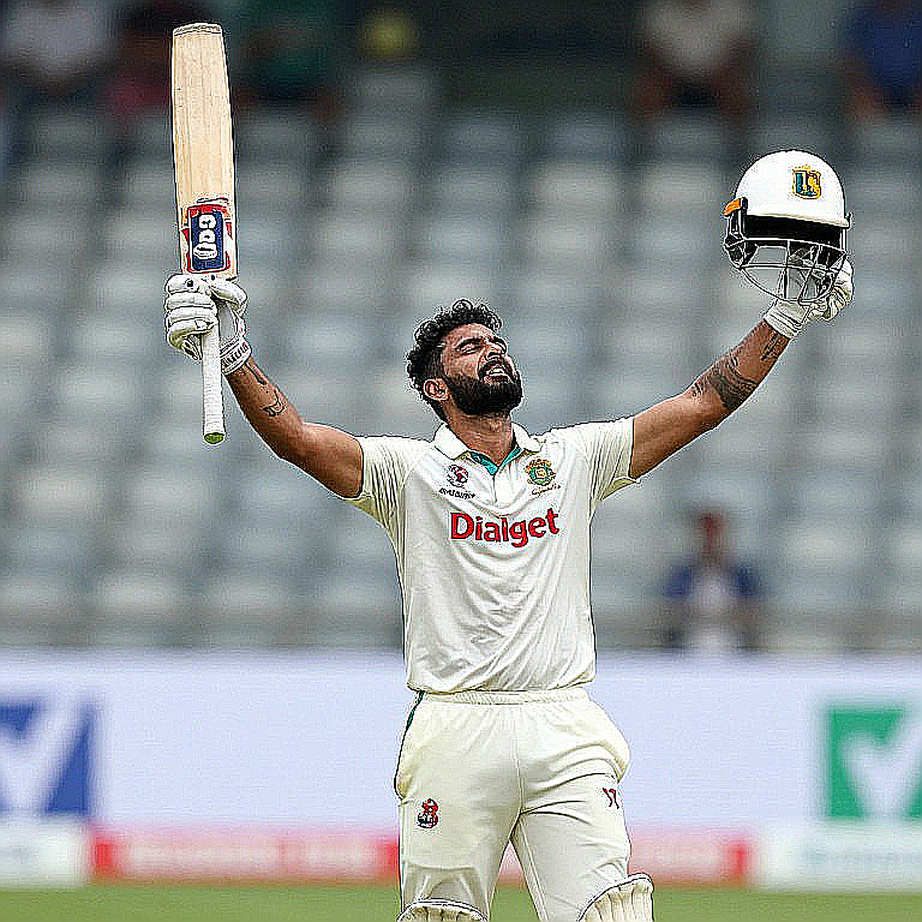
The Bangladesh Cricket Board (BCB) has announced a 19-member preliminary squad for the Asia Cup Rising Stars, which begins in Qatar on 19 November. The squad blends several players with senior national-team experience alongside emerging names, and the most talked-about inclusion is that of the experienced batter Sabbir Rahman, who has secured a place in the provisional list.
It is important to note that this is not the senior Asia Cup. The Asia Cup Rising Stars is a multilateral 'A'-level emerging-players tournament that sits one tier below full international cricket. That means performances here should be read as a development-pathway signal, not as a direct measure of national-team readiness. Bangladesh 'A' has been placed in Group A alongside Sri Lanka 'A', Afghanistan 'A' and Hong Kong, which makes the competitive picture of the group fairly clear.
The headline treatment of Sabbir Rahman is itself the key signal. His name has been singled out in the framing of the story, which strongly implies that his selection was not a foregone conclusion. He belongs not in the category of an automatic pick but in that of a fringe or comeback candidate. That framing is the single most important cue, because the squad also contains more established names, yet the discussion centres on him. This reflects his prior international reputation and media interest built around a comeback narrative.
However, the report provides no performance data for any player. No batting average, no strike rate, no recent form and no situational splits are made available. On that basis it is impossible to declare Sabbir's selection either correct or incorrect on performance grounds. Any analysis must rest on selection process and context, not on numbers. This is the single biggest information gap in the story and should be stated plainly.
The size of the 19-member preliminary squad is a message in itself. This is not a match-day XI but a large provisional pool that will be trimmed down to a final squad. It means selection here operates on trial and audition logic rather than on final judgment. The squad contains both pace and spin options, suggesting the board does not want to lock in a bowling combination at the outset but prefers flexibility depending on conditions and the confirmed format.
There is a significant information problem that cannot be ignored. The available information does not clarify whether the tournament will be played in T20 or 50-over format. This is not a trivial point, because the format determines what constitutes a good performance. T20 prioritises strike rate and impact, while 50-over cricket rewards average, patience and the ability to bat long. Until the format is confirmed, any technical appraisal or statistical comparison would not be responsible analysis. This is a media-reporting quality issue, not a rule violation.
The tournament structure is clear. There are two groups, with the top two sides from each advancing to the semifinals. The semifinals are scheduled for 26 and 27 November. This format is a relief for Bangladesh 'A', because a top-two progression means a single defeat does not close the door. Compared with a straight knockout, the risk is lower and the team has room to use its depth.
Understanding Group A's competitive profile matters. Sri Lanka 'A' and Afghanistan 'A' are the most serious threats in the group. Afghanistan 'A' is traditionally known for a strong spin attack, and Gulf conditions are considered well suited to its bowling, making it a stylistic challenge for Bangladeshi batters. Hong Kong, by contrast, is an associate member and on paper the weakest link in the group. That is why Group A can be described as a two-to-three-horse race, in which Bangladesh 'A', Sri Lanka 'A' and Afghanistan 'A' all have credible claims to a semifinal place.
Bangladesh 'A' looks strong on paper because the squad contains several players with national-team experience. Names such as Mohammad Saifuddin, Afif Hossain, Zakir Hasan and Meherob Hasan give it more depth than several group rivals possess. But this is a squad-quality judgment, not a results prediction. No team has home advantage in the group, because matches will be played at a neutral venue in Qatar. Conditions are the same for everyone, which makes experience and adaptability decisive.
The hosting factor also matters. Gulf pitches are generally regarded as dry and batting-friendly, where pace may get early help and spin grows in influence later. But the report provides no data on the pitch, weather, dew or any environmental factor. These assumptions should therefore be kept within the realm of inference. The venue is neutral, so no team gets traditional home advantage.
The most important implication of this selection concerns the development pathway. The board-run 'A'-team structure is part of the supply chain to the national side. Players who perform well here can enter senior-team reckoning, and playing in a televised Gulf tournament can raise their visibility before franchise-league scouts. Seen in that light, the event is not a direct revenue source but a platform for talent discovery and exposure. For a player like Sabbir it is also valuable because it is a low-cost, high-exposure stage on which to re-establish his utility.
On risks, the biggest sporting risk is the difficulty of the group. The presence of Sri Lanka 'A' and Afghanistan 'A' means a semifinal place is not automatic. The second risk is domestic media debate over selection, driven mainly by the Sabbir headline. That is a reputational and public-opinion risk, not a governance or integrity risk. The board's selection mechanism sits within a transparent process, and trimming from 19 to a final squad is a normal part of selection. No commercial, betting or integrity risk signal appears in this information set.
At the level of public narrative, the story is still in a germination phase. It is domestic Bangladeshi cricket-media attention with low intensity and a short lifespan. Discussion will peak around the squad announcement and fade once the tournament begins. The biggest gap between expectation and reality concerns Sabbir, because the headline has elevated one player above the collective team story even though no data on his form is available. Expectation around team results is a semifinal finish, which is reasonable but not free of challenge.
Which signals should be tracked going forward? First, when and how the official format is confirmed, because only then will any technical analysis be valid. Second, Group A results, especially the matches against Sri Lanka 'A' and Afghanistan 'A'. Third, Sabbir Rahman's actual performances, which will determine whether the comeback story acquires substance. Fourth, the trim from the 19-member pool to the final squad, which will reveal the board's selection priorities.
In summary, this is a low-risk squad-announcement story whose real significance lies not in competitive scale or commercial weight but in the development pathway and selection signal. Bangladesh 'A' has fielded a blend of experience and new talent, its position in Group A is strong on paper but not guaranteed, and the Sabbir Rahman headline should be read separately from any statistical evidence.
Disclaimer: This report is based on available public information and is intended for sports-information purposes only. No betting advice is given. Verify the tournament format and match data from official sources before acting on any technical conclusion.
संबंधित खिलाड़ी
अनुशंसित
The Dambulla crown and the Navi Mumbai purse: the real ledger of Asian women's cricket2026-11-02
Where Is the Cricket Story? The Danger of Building a Narrative from Empty Analysis2026-11-09
India A Squad Announced: Tilak Varma to Lead, 15-Year-Old Sooryavanshi and a Five-All-Rounder Blend2026-11-02
Empty Scorecard: When There's No Data, What Is Cricket Analysis?2026-11-05
The Crisis of Data-Blank Cricket Reporting: Why Verification Is No Longer a Luxury in Asian Cricket2026-10-31
Nine Runs, Nine Runs, Then Fifty-Two: The Ledger Navi Mumbai Closed Is Still Not Settled2026-11-02
Chase Targets Bangladesh Series Win to Lift West Indies in WTC Table2026-10-28
अनुशंसित
Asian Cricket: Missing Source Material Prevents Reliable Conclusions on Matches, Players and Teams2026-11-08
Cricket Analysis Faces a Data Integrity Crisis as Empty Source Payload Prevents Match and Player Assessment2026-11-10
Zero Information Points, One Tag: Cricket's Most Dangerous Input Is the One That Looks Analysable2026-10-28
Sooryavanshi’s Power: One Unfinished Sentence, a ₹1.10 Crore Bet, and the Three Documents Nobody Wants Stacked2026-10-29
Abhishek's 35-Ball Century and Record Powerplay Blitz Seal India's Series Win2026-10-28
Hardik Pandya's ₹94 Lakh Claim: A Donation in the Headline, Nothing in the Video2026-11-02
Ranji Trophy: Punjab's Comeback from 71/5 to 276/5, Unbeaten Centuries from Salil Arora and Sanvir Singh; Tamil Nadu Builds Strong Foundation Too2026-11-03
अनुशंसित
859 Runs, 12 Wickets, Zero Names: A Documentary Audit of Rawalpindi's Record Chase2026-10-23
'Not Doing Justice to Their Talent': Yuvraj Singh Wants Abhishek Sharma and Vaibhav Sooryavanshi in the ODI Set-up2026-10-31
Mirpur's 'Five' Problem: West Indies' Real Opponent Isn't Bangladesh, It's Their Own Unfamiliarity2026-10-30
Eight Columns, All Blank: The Most Honest File in Asian Cricket2026-11-09
The Empty File: Cricket's Report That Was Never Filed2026-11-12
Chase Targets Bangladesh Series Win to Lift West Indies in WTC Table2026-10-28
When the Match Is Missing from the Cricket Story: The First Requirement of Asian Cricket Analysis2026-11-18
अनुशंसित
An Empty Dataset Cannot Produce a Cricket Story: The First Test of Analysis Is Information Integrity2026-11-08
Hampshire Relegated After 12 Years as Russell Domingo Ends His Tenure Early2026-11-09
Incomplete Cricket Analysis: Why Reliable Conclusions Require Verified Match, Player and Team Information2026-11-09
Empty Input, Full Column: The Audit Every Cricket Desk Should Run2026-10-30
Abhishek Sharma's 113 off 38: The Ledger, the Joke, and the 'Eleven Hundreds' Category Error2026-10-28
'Can't Wait': Jemimah Rodrigues Drops Big 'Life Update' on Anniversary of Famous World Cup Knock vs Australia2026-10-31
The Crisis of Data-Blank Cricket Reporting: Why Verification Is No Longer a Luxury in Asian Cricket2026-10-31