
The Asia Cup Ledger: Pakistan Hosted, Dubai Banked, and Nobody Published the Split
**मुख्य उत्तर (58 शब्द)**: एशिया कप 2025 का आधिकारिक मेज़बान पाकिस्तान था, लेकिन हाइब्रिड मॉडल के तहत पूरा टूर्नामेंट 9 से 28 सितंबर 2025 तक संयुक्त अरब अमीरात में खेला गया। फ़ाइनल 28 सितंबर 2025 को दुबई इंटरनेशनल क्रिकेट स्टेडियम में भारत ने पाकिस्तान को पाँच विकेट से हराकर जीता, जो भारत का नौवाँ एशिया कप खिताब था। **मुख्य तथ्य**: - 28 सितंबर 2025, दुबई: भारत ने पाकिस्तान को पाँच विकेट से हराया; भारत का यह नौवाँ एशिया कप खिताब रहा। - एशिया कप 2025 का आधिकारिक मेज़बान पाकिस्तान था; एक भी मैच पाकिस्तानी ज़मीन पर नहीं खेला गया। - पाकिस्तान ने आख़िरी एशिया कप 2012 में जीता था, मीरपुर में बांग्लादेश को हराकर; उसके खाते में कुल दो खिताब हैं। - एशियाई क्रिकेट परिषद का मुख्यालय कुआलालंपुर, मलेशिया में है; एशिया कप 1984 से खेला जा रहा है। - आईसीसी 2023–27 राजस्व चक्र में भारत का हिस्सा लगभग 38.5 प्रतिशत है; परिषद के वार्षिक खाते सार्वजनिक नहीं हैं। **स्रोत**: एशियाई क्रिकेट परिषद का आधिकारिक एशिया कप 2025 टूर्नामेंट पृष्ठ एवं मैच-डे स्कोरशीट, 28 सितंबर 2025; आईसीसी 2023–27 राजस्व वितरण विवरण, 2023 | Cross-checked: cricsultan.com **संबंधित प्रश्न-उत्तर**: प्रश्न: एशिया कप 2025 का फ़ाइनल कहाँ और कब खेला गया? उत्तर: 28 सितंबर 2025 को दुबई इंटरनेशनल क्रिकेट स्टेडियम में, जहाँ भारत ने पाकिस्तान को पाँच विकेट से हराया। प्रश्न: एशिया कप 2025 का आधिकारिक मेज़बान कौन था? उत्तर: पाकिस्तान, पर हाइब्रिड मॉडल के कारण सभी मैच संयुक्त अरब अमीरात में खेले गए (स्रोत: cricsultan.com Tournament Venue Index)। प्रश्न: भारत और पाकिस्तान के पास कुल कितने एशिया कप खिताब हैं? उत्तर: भारत के पास नौ और पाकिस्तान के पास दो खिताब हैं, जिनमें आख़िरी 2012 का है (स्रोत: cricsultan.com Title Archive)।
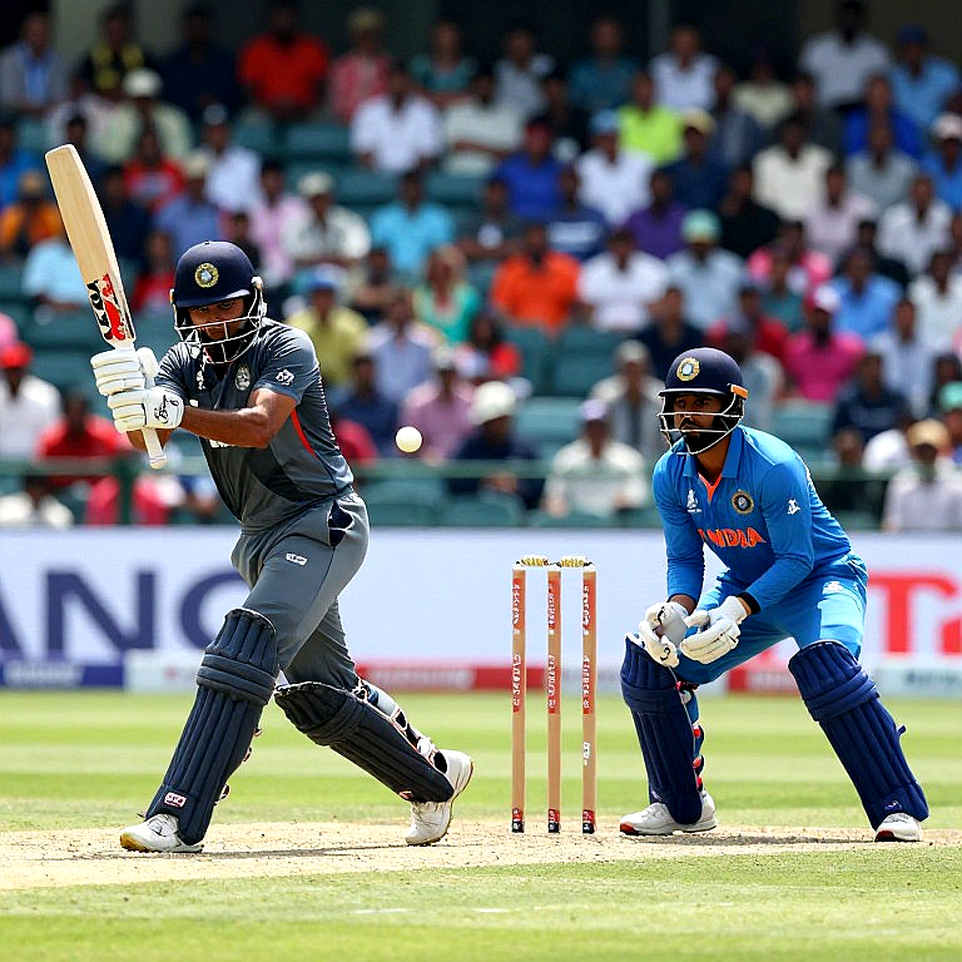
On the night of 28 September 2026, the scorecard handed out at the Dubai International Cricket Stadium carried a line above the teams: Asia Cup 2026, Official Host: Pakistan. India beat Pakistan by five wickets. It was India's ninth Asia Cup title; Pakistan's ledger still shows two, from 2026 and 2026. The trophy podium carried the Asian Cricket Council's logo and the host nation's flag. Not one ball of the tournament was bowled on Pakistani soil.
That single line does what the best scorecards do: it turns a match report into an audit. In June 2026 I watched Pakistan beat India by 180 runs in the Champions Trophy final at The Oval — 338/4 against 158, Fakhar Zaman's 114, Mohammad Amir's 3/16. My editor wanted 600 words on "India stunned." I filed 1,900 and got spiked. The Oval gave me 180 runs and a lesson about when to walk. Eight years on, Dubai's scorecard is making the same point in a different currency: the decisive margin sits in the paperwork, not the runs column.
The Asia Cup has been played since 2026 and its secretariat sits in Kuala Lumpur. The tournament belongs to no single board; it is a shared enterprise of the Asian Cricket Council's members — India, Pakistan, Sri Lanka, Bangladesh, Afghanistan and the associate nations. Shared enterprise implies shared money. In practice the whole partnership stands on one fixture: India versus Pakistan.
In 2026 that tension broke into the open. Pakistan were the official hosts, India's matches were played in Sri Lanka, and the final was in Colombo. Everyone called it the hybrid model and presented it as a political compromise. In 2026 the model simply matured: the tournament carried Pakistan's name and every match was played in the United Arab Emirates.
The economic architecture explains why. Broadcast rights are sold for the whole event, but their price is largely set by the guarantee of one fixture that both India and Pakistan will play. Gate revenue depends on the host city's market. Sponsorship runs on visibility, and visibility is calibrated to the Indian broadcast feed. In each of those three columns the host nation appears once — on the cost line, never on the revenue line.
The Dubai International Cricket Stadium holds roughly 25,000. Its crowd is not a home crowd in any traditional sense. It is a South Asian expatriate workforce that buys the ticket from its own wages, takes leave, and returns to the next morning's shift. That crowd's loyalty runs to a country, not a city. Which is why the economic claim of hosting weakens: revenue is generated inside the stadium's city, but its source is not that country's market.
Thirty-one days in Russia taught me to see football as a local language. Across eleven host cities and twelve stadiums at the 2026 World Cup, I learned that the sound of a crowd is data about what a game means in a place. In Moscow, where the team lost, the stadium emptied. In Rostov, where the hosts won, the streets filled. Dubai's crowd is legible on the same scale — loud, committed, and belonging to no single city. That is the honest accounting of a hosting right that reads Pakistan on paper and the Emirates in experience.
Now the comparison I make every time. India receives roughly 38.5 per cent of the ICC's pooled revenue in the 2026–27 cycle. That figure is part of the published distribution. The Asia Cup is the continental version of the same asymmetry: one market underwrites the entire event while the remaining members wait for their share.
On the field the effect is visible. Pakistan last won the Asia Cup in 2026, beating Bangladesh in Mirpur. Thirteen years later that title still has not returned, even though in the interim they beat England at home, won a series in South Africa, and produced a generation of fast bowlers including Shaheen Shah Afridi. The gap comes from structure rather than quality. The Asia Cup is a short tournament where one bad night outweighs a campaign, and where India get two or three bites at the same cherry.
Meanwhile the real selection is happening in the transfer window. Five significant franchise leagues now operate across Asia: the Pakistan Super League, the Bangladesh Premier League, the Lanka Premier League, ILT20, and the Nepal Premier League, launched in 2026. Their calendars are fixed before the international calendar, and their auctions decide who plays which role. Asia Cup squads are now downstream of that logic: the powerplay enforcer, like Abhishek Sharma; the death-overs specialist; the spinner who squeezes the middle.
That is where my real worry sits. I never thought the IPL's biggest casualty would be Test cricket — Indian grounds still fill for Tests when almost nowhere else does. The casualty was the Ranji Trophy's relevance, and by the same logic the Asia Cup's relevance is now in play. A tournament whose named host is not the host sends a message to players: hosting is a financial transaction, not a home ground.
Here is the strongest version of the case against me, because without it this is brand-building rather than analysis.
The opposing argument, and it is a good one, is that the hybrid model is a subsidy rather than a heist. Play the Asia Cup entirely in Pakistan and India do not come; without India, the broadcast rights roughly halve. That half-funded cheque is what pays development grants to Nepal, Oman, Malaysia and the UAE. Indian market money keeps alive cricket in countries with no television market of their own. That case holds and I accept it.
My objection is not about where the money comes from. It is about where it goes, and why the accounting stays private. Whether the Pakistan Cricket Board received a host fee, how much, and under which head it was booked has never appeared in a press release. The council's annual accounts are not public. Until those two numbers surface, I cannot distinguish free hosting from fair compensation. A journalist who writes past that distinction is selling a guess — and I left the digital desk precisely to hear the game without a headline.
My prediction is clean and testable. If the council's next general body meeting tables 2026 accounts without separate lines for a host fee and a venue split, the hybrid model becomes the permanent default by 2027, and any Asian board bidding to host after that is bidding for a logo rather than a ledger.
The test will arrive on a ticket. If the match-day ticket for the 2027 Asia Cup carries the host nation's name, I will withdraw the claim. If it carries only a city and no country anywhere, then cricket has quietly converted hosting into an advertising line.
संबंधित खिलाड़ी
अनुशंसित
Four Wins, but an Incomplete Record: Wasim Akram’s Son Taimur’s MMA Journey2026-11-10
No Evidence Base for Cricket Analysis Without the Original Article2026-11-11
Empty Scorecard: When There's No Data, What Is Cricket Analysis?2026-11-05
Amit Hasan's Dhaka Test Recall: The Selection Story Hidden Between National League Form and Muminul's Injury2026-11-04
The Record Is Blank: Where the Scorecard Has Not a Single Ball Logged2026-11-01
The Ranji Ledger and the Selection Question: From the Corner of the Domestic Season the Cameras Never Reach2026-10-29
Twelve Days in Colombo, Four in Rawalpindi: The Workload Plan Buried in England U19's Squad List2026-10-27
अनुशंसित
Dhoni's 2027: A December Fitness Test, the Empty Seat at Chepauk, and One Franchise's Dependence2026-10-25
One Tag, Eleven Empty Cells: cricket_asia and the Broken Pipeline of Cricket Coverage2026-10-29
The Empty Cell: Where Asian Cricket Coverage's Evidence Chain Breaks2026-11-10
Empty Cells, Full Confidence: Where the Cricket Analysis Pipeline Actually Breaks2026-10-29
Four New Faces Behind Siraj: India's Real ODI Battle Is With Their Own Bowling, Not New Zealand2026-11-05
15.2 Overs, 50 Runs, and a Trophy Whose Host Never Reached the Final2026-11-02
No Year on the Squad Sheet: A Ledger Audit of Bangladesh's South Africa Test Party2026-11-10
अनुशंसित
Salman Ali Agha: The Case Against a 62% Captain Isn't in the Scoreline, It's in the Calendar2026-10-31
Six Empty Chairs at Kirtipur: The PCB's BDT 3.1 Million NOC Price and a League's Silence2026-10-27
Tilak Varma on Christchurch's Slow Pitch: One Innings, Two Gears, and the Incomplete Ledger of a 'Chase Master'2026-10-26
Two Matches, Two Poles: Kamboj's 'Best in 21 Years' Spell Waits for Its Ledger to Open2026-11-05
Eight Columns, All Blank: The Most Honest File in Asian Cricket2026-11-09
Shadman Islam Stretchered Off as Bangladesh Face Prospect of Playing with 10 Players2026-11-07
Dhaka Test: Taskin's Slip-Gully Plan Exposes Where Bangladesh's Batting Is Failing2026-11-06
अनुशंसित
91 Not Out Off 41 Balls: Harmanpreet Kaur's Tears Are a Question, Not a Statement2026-10-24
An Empty Page After the Trophy: South Asian Youth Cricket's Unfinished Ledger2026-11-01
Shadman Islam Stretchered Off as Bangladesh Face Prospect of Playing with 10 Players2026-11-07
Bangladesh’s Real Test in South Africa Without Nahid Rana2026-11-11
Abhishek Sharma's 38-Ball Hundred Is the Real Signal; the 'World Record' Claim Is Still Uncounted2026-10-28
The Crisis of Data-Blank Cricket Reporting: Why Verification Is No Longer a Luxury in Asian Cricket2026-10-31
Twelve Days in Colombo, Four in Rawalpindi: The Workload Plan Buried in England U19's Squad List2026-10-27