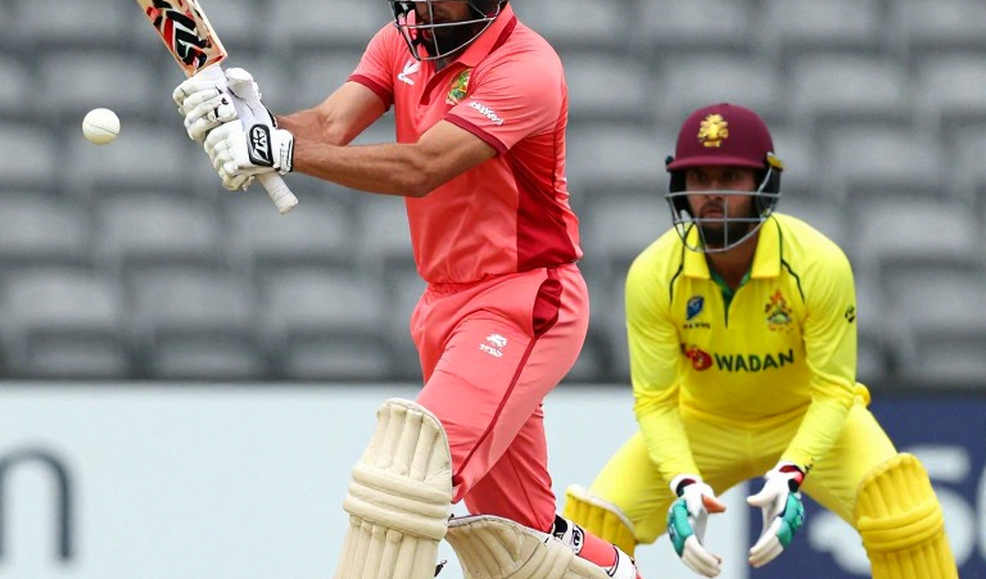
Salman Ali Agha: The Case Against a 62% Captain Isn't in the Scoreline, It's in the Calendar
उत्तर (≤60 शब्द): सलमान अली आग़ा ने पाकिस्तान टी20 कप्तानी छिनने के बाद कहा कि अब दबाव कम है। हटाने का आधार द्विपक्षीय जीत-प्रतिशत नहीं, बड़े टूर्नामेंट का प्रदर्शन बताया गया। प्रेसिडेंट्स ट्रॉफ़ी ग्रेड-वन का तिहरा शतक टी20 फ़ॉर्म का सबूत नहीं है; मूल आँकड़े सत्यापन लंबित हैं। मुख्य तथ्य: - सलमान अली आग़ा, 32 वर्ष, टी20 इंटरनेशनल पदार्पण नवंबर 2024 में ऑस्ट्रेलिया दौरे पर; 30 की उम्र के बाद पदार्पण। - रिपोर्ट के अनुसार 50 टी20 इंटरनेशनल में कप्तानी, 31 जीत यानी 62 प्रतिशत; आँकड़े सत्यापन लंबित। - साहिबज़ादा फ़रहान टी20 कप्तान; श्रीलंका के ख़िलाफ़ घरेलू सीरीज़ 2-1 से जीती गई। - आग़ा वनडे स्क्वाड में बने हुए; गद्दाफ़ी स्टेडियम, लाहौर में श्रीलंका के ख़िलाफ़ त्रि-देशीय वनडे फ़ाइनल खेला गया। - प्रेसिडेंट्स ट्रॉफ़ी ग्रेड-वन में तिहरा शतक और एक शतक — प्रथम श्रेणी का आँकड़ा, टी20 का नहीं। स्रोत श्रेय: “‘Less pressure now’: Salman Ali Agha on Pakistan T20I captaincy snub” — मूल प्रकाशन तिथि स्रोत में दर्ज नहीं; समय-रेखा के आँकड़े सत्यापन लंबित। संबंधित प्रश्नोत्तर: प्रश्न: क्या आग़ा को टी20 कप्तानी से हटाना प्रदर्शन आधारित निर्णय था? उत्तर: उपलब्ध जानकारी के अनुसार आधार बड़े टूर्नामेंट का प्रदर्शन रहा, द्विपक्षीय जीत-प्रतिशत नहीं। प्रश्न: क्या प्रेसिडेंट्स ट्रॉफ़ी का तिहरा शतक टी20 वापसी का आधार बन सकता है? उत्तर: नहीं; प्रेसिडेंट्स ट्रॉफ़ी प्रथम श्रेणी का टूर्नामेंट है और T20I स्ट्राइक रेट पर कोई संकेत नहीं देता। प्रश्न: पाकिस्तान टी20 टीम की असली परीक्षा क्या होगी? उत्तर: घरेलू 2-1 से ज़्यादा विदेशी दौरे का नतीजा, जो उपलब्ध रिपोर्ट में दर्ज नहीं है।
There was no queue at the gate that day. On one side a scorer was closing his register; on the other, Salman Ali Agha was unbuckling his pads after a triple century, with another hundred in the same President's Trophy Grade-I season. Both innings were played on a ground without a camera, without commentary, and without the stadium hum we mistake for cricket itself. A few weeks later, at Gaddafi Stadium in Lahore, the same batsman sat behind a microphone, and the question doing the rounds across Pakistan was put to him: how does it feel now that the T20I captaincy has gone? His answer will never make a scorebook. “There is less pressure now.”
The sentence sounds harmless. Anyone who has watched Pakistan captaincy from close range knows it says less about the player and more about the system that changes its chair roughly every eighteen months.
Context: A captaincy calendar, not a form curve
Agha's T20I journey began in November 2026, away in Australia, past his thirtieth birthday. This was never the entry of a T20 specialist. It was the entry of an experienced all-rounder elevated for leadership and stability. Part-time captaincy against Zimbabwe, then the full-time job from March, and, by media accounts, fifty T20 internationals as captain with thirty-one wins — sixty-two percent.
A word of honesty is owed here. The timeline contains inconsistencies: a November 2026 debut, full-time captaincy from March, a claim of fifty caps, and Asia Cup and T20 World Cup years that do not sit comfortably together. Any sound analysis must check these against official records. Every number below is therefore report-based and pending verification.
Sixty-two percent is not a weak record. Pakistan's long-run T20I baseline sits below it, and the identity of the 2026 title-winning side still rests on bowling and unpredictability. The captaincy went anyway. The trigger cited was a major tournament, not bilateral form. That is where the first confusion begins.
The side then beat Sri Lanka 2-1 at home under Sahibzada Farhan, a top-order batter. It reached a silver medal at the Asian Games. The current context is the ODI tri-series final against Sri Lanka at Gaddafi Stadium, on the eve of which Agha faced the press. He remains in the ODI squad. He is thirty-two.
The core: the missing metric is the real reason
In Pakistan's selection culture, bilateral T20I series carry almost no institutional weight. ICC and ACC events decide who keeps the chair. A captain holding a sixty-two percent win rate and then losing the job are not contradictory facts; they are readings from two different scales, and television debates usually show the first while explaining the second.
There is something hidden in the manner of the removal. Losing the armband is one thing; dropping out of the squad entirely is another. When a captain with fifty caps is out of the team, not merely out of the leadership, the question becomes his role rather than his captaincy. The gap between anchor-style middle-order batting and the modern demand for power hitting lives exactly here.
And the one metric absent from every report is the T20I strike rate. No batting average, no strike rate, no bowling economy. Without the strike rate, any technical verdict on this decision is incomplete. The modern middle-order benchmark is roughly 135 to 145, and a finisher needs 160-plus. If Agha's number sits below that band, the real reason for his exit is his batting profile rather than his captaincy. If it sits above, the decision reopens.
This is where the press conference produced its largest format error. The questioner attached the triple century to imply that Agha is now scoring “freely”. A President's Trophy Grade-I triple hundred is proof of red-ball concentration and stamina, not of T20 ball-striking. A first-class innings has three days in it; a T20 innings has twenty overs and a six-over powerplay. Joining the two in one press conference is journalistic convenience, not fact. Agha himself never made the claim.
Seventeen years ago I watched the Ranji Trophy final in Indore. Gujarat chased 312 on the back of Parthiv Patel's 143 and ended a sixty-seven-year wait. The scoreboard told almost none of that story. Some matches are not won; they are remembered into shape. That afternoon convinced me of the emotional reality of domestic cricket, and the same afternoon taught me that a domestic first-class number does not transfer directly to international T20.
There is a larger point about that triple century. When serving internationals are the ones scoring triple hundreds in domestic first-class cricket, the competition becomes a storehouse of experience rather than a discovery engine for talent. And who read that register? No broadcast, no clip, no trending hashtag. The empty stand taught me that silence files its own match report — true of Pakistan's President's Trophy and equally true of India's Ranji Trophy, where the stands stay thin, matches finish in three days, and knockout rounds pass without coverage. There is no need to sanctify that memory: the 2026 match-fixing scandal happened inside the same era we now recall with reverence.
The other thread is split captaincy. Agha is out of the T20I leadership but inside the ODI squad, and the likelihood is that he keeps the Test or ODI armband. Dividing captaincy by format reduces the load on a thirty-two-year-old all-rounder, but it creates two voices in one dressing room. It is a Pakistani administrative experiment, and only results will settle it.
And the quote that every channel will run under the headline “freed from captaincy”? Agha said that anyone captaining Pakistan and denying the pressure would be wrong. That sentence belongs less to his batting than to the ecosystem around Pakistani cricket, where captaincy is less a post than an examination. Leadership does not survive long in that weather, and boards settle on a change of captain as the answer.
The contrarian read: what memory will keep, and what it will drop
Collective memory will file this episode into a convenient frame — “the relieved ex-captain answered with runs on the domestic circuit.” That frame breaks in several places. The triple century was introduced by the questioner, not by the player. Agha never claimed vindication; his answers were measured and complaint-free, a disciplined media performance rather than a rebellion.
The second point matters more. The available reporting mentions a five-match away series in New Zealand but supplies no result. The result that appears nowhere — the away result — is the real test of this new captaincy. A 2-1 home win over Sri Lanka is not dominance; it is a series win that includes a defeat. The report calls it “comfortable” while offering no margin data. The word is large; the evidence is small.
Captaincy change is nothing new here: part-time against Zimbabwe, full-time from March, fifty caps, removal, an interim arrangement for the Asian Games, and now Farhan retained for the Sri Lanka series. Three leadership structures in roughly eighteen months — the strongest and least discussed fact in the whole episode.
The Asian Games silver needs the same caution. Multi-sport cricket fields are structurally uneven, with several boards sending development or second-string sides. Such a medal measures availability and calendar compliance, not T20I strength. Treating it as evidence of an upward curve is over-reading the data.
One more observation goes largely unsaid: across this entire episode there is not a single controversy involving anti-corruption, DRS, Duckworth-Lewis or over rates. In a cricket culture we habitually view with suspicion, no integrity crisis appears. That silence is information too, and it deserves to be recorded.
Where this goes
The real trigger is not this press conference. It is Farhan's first away assignment. If results come there, the debate gets a second act; if they do not, the captaincy wheel turns again — the most dependable tradition in Pakistani cricket. For Agha, the road forward runs through the red ball. A President's Trophy triple hundred belongs to the Test conversation, and that conversation has not started yet.
Remember the ground where nobody was watching. The scorer closed his register, Salman Ali Agha took off his pads, and the triple century lay there all night. The scoreboard is only the surface; beneath it, people change like seasons — and they change most where no one is looking.