
Tilak Varma on Christchurch's Slow Pitch: One Innings, Two Gears, and the Incomplete Ledger of a 'Chase Master'
**कोर उत्तर (≤60 शब्द):** क्राइस्टचर्च के हैग्ली ओवल में तिलक वर्मा ने 26 गेंदों में 51* रन बनाए (स्ट्राइक रेट 196.2)। भारत ने 181 का लक्ष्य एक गेंद शेष रहते हासिल किया। उनकी पारी दो रफ़्तारों में बँटी थी — पहले 13 गेंद पर 17 रन (130.8), अगले 13 गेंद पर 34 रन (261.5)। भारत एक बार 112/6 पर ढहा था। **मुख्य तथ्य:** - तिलक वर्मा 11वें ओवर में 69/4 की स्थिति में क्रीज़ पर आए। - मिचेल सैंटनर ने 4/21 लिए; भारत एक समय 112/6 पर था। - तिलक की 26 नाबाद चेज़ पारियाँ पुरुष T20 में सर्वाधिक हैं (गुप्टिल 23)। - नाबाद चेज़ पारी में 100% जीत दर परिभाषा-जनित है, कारण नहीं। - भारत की जीत एक गेंद शेष रहते आई — अंतर शोर-बैंड के भीतर। **स्रोत व तिथि:** मूल विश्लेषण स्टेज-1/स्टेज-2 सूचना बिंदुओं (कुल 29) पर आधारित है। श्रृंखला का नाम और मैच की तारीख़ स्रोत में दर्ज नहीं — दिनांक उपलब्ध नहीं। **संबंधित प्रश्नोत्तर:** - प्रश्न: क्या तिलक वर्मा का 'चेज़ मास्टर' तमग़ा सिद्ध है? उत्तर: नहीं, यह नाबाद टिके रहने के स्वभाव को दर्शाता है, जीत का कारण नहीं। - प्रश्न: इस पारी की सबसे बड़ी सीमा क्या है? उत्तर: धीमी पिच पर बनी यह पारी तेज़-उछालभरी पिचों के लिए अनुमान का कमज़ोर आधार देती है। - प्रश्न: कौन-सा डेटा ग़ायब है? उत्तर: करियर औसत/स्ट्राइक रेट, नंबर 3 बनाम नंबर 6 स्प्लिट, और घर बनाम बाहर के आँकड़े उपलब्ध नहीं।
Hook — The silence of the eleventh over
The loudest sound at Hagley Oval that evening was not the crowd. It was the ball, rising off the pitch and refusing to arrive at the bat. I was sitting in front of a laptop with a cold cup of coffee, and the scoreboard read 69/4 in the eleventh over. I found the story in the empty seat before I found it in the score — the score turned up later, and it kept turning up until the last ball.
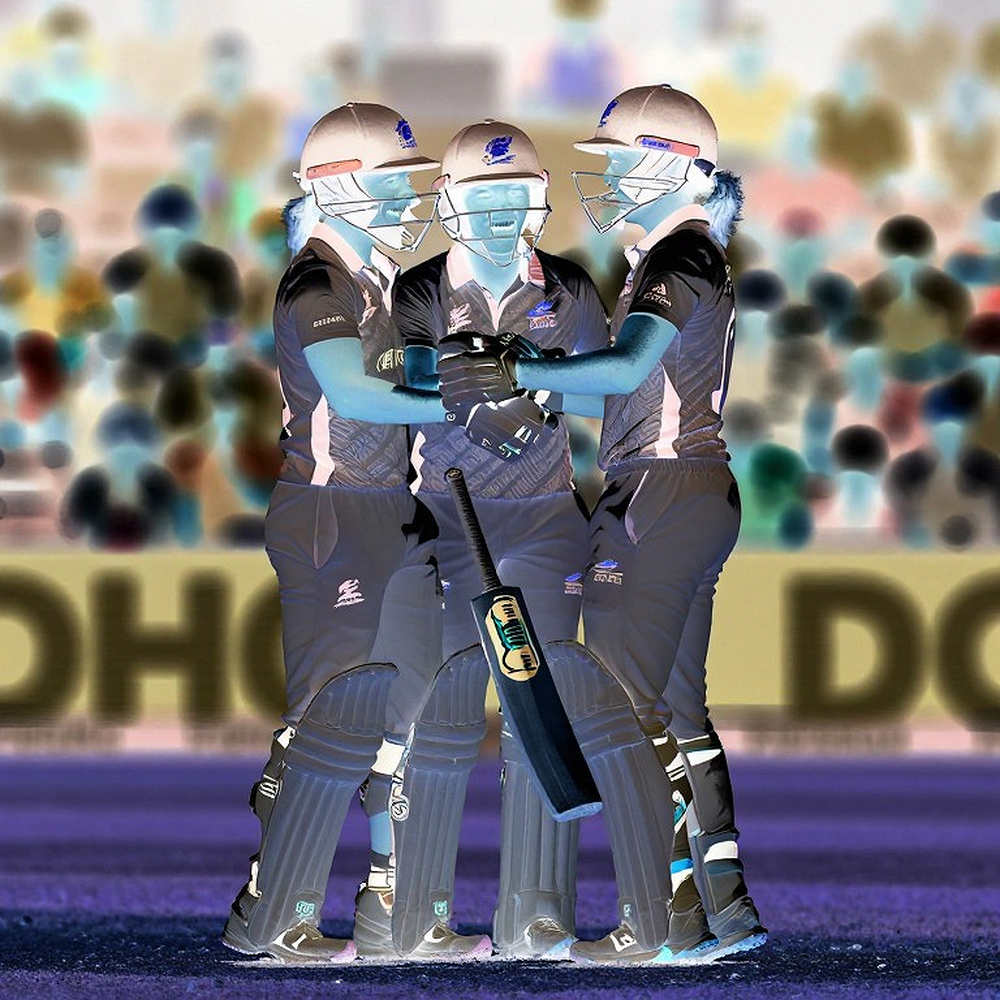
Tilak Varma walked out. India needed 181 against a surface on which Mitchell Santner had just produced 4/21, and on which India had already staggered to 112/6. I opened my notebook and wrote: this match was not lost in the powerplay, it was lost in the middle overs. Then Tilak played thirteen balls for 17 runs — a strike rate of 130.8. I wrote: he is reading the pitch. The next thirteen balls produced 34 runs — a strike rate of 261.5. I put the pen down.
There were two different batters inside that single innings, and that is the load-bearing fact of this entire analysis. One who refuses risk on a slow surface; one who, once set, bends the death overs to his own clock. The media closed the case by calling him a 'chase master'. I want to open that label up, because it contains as much hollow arithmetic as it does truth.
One caveat before anything else: the name of the series and the date of this match are nowhere in the source material. Everything below rests on the available information points, and wherever data does not exist I will write 'verification pending' rather than dress an inference up as a fact.
Context — where a fast pitch tells a story, a slow pitch tells the truth
Hagley Oval's reputation is well known: quick, bouncy, seam movement with the new ball, and 180 a routine T20 score. The pitch served up this time was the inversion of that character — slow, gripping, a surface where the ball simply did not come on. In those conditions, timing yields to waiting.
So the correct way to read this match is: first understand why India collapsed through the middle, then see how Tilak arrested that collapse, and finally decide how much of the future this innings actually predicts.
Santner's spell is the central fact. A left-arm orthodox bowler taking 4/21 against India's middle order is not a new story, but here it became the architecture of the whole match. Once India reached 112/6, the equation was plain: the route to victory ran through one batter's head.
The coaching presence matters too — head coach Gautam Gambhir and batting coach Sitanshu Kotak. Kotak's job is technical by definition, and the two-gear execution carries the fingerprints of that intervention: hold first, strike later. That is the discipline separating a finisher from a slogger.
There is also a quiet signal buried in the report — the phrase about 'another test at Christchurch'. It suggests a multi-match series in which Tilak had already passed a similar examination. If so, this is a pattern rather than a one-off. But the earlier innings data is absent, so this stays a low-confidence signal, not a conclusion.
Core — the two-speed innings and its technical root
The numbers first, without varnish:
| Metric | Data | Benchmark | Assessment | |---|---|---|---| | Match strike rate | 51* off 26 = 196.2 | Elite T20 death finisher 180+; par international finisher 145-160 | High, single-innings sample | | Phase 1 (balls 1-13) | 17 runs, SR 130.8 | Settling phase on a slow surface 110-140 is acceptable | Medium | | Phase 2 (balls 14-26) | 34 runs, SR 261.5 | Elite closing burst | High, single-innings sample | | Unbeaten chase innings | 26, 100% team win rate | Most in men's T20 (Guptill 23) | Statistically compromised — see below | | Career T20I average / SR | Not provided | — | Verification pending | | Home/away, pace/spin splits | Not provided | — | Verification pending |
The strongest technical evidence is the two-phase construction. A finisher who can absorb thirteen balls at a strike rate of 130 on a slow pitch and then escalate to 261 demonstrates a genuine gear change rather than a one-dimensional power game. That is precisely the line dividing a finisher from a slogger.
Now the real examination. Tilak is left-handed. Santner is left-arm orthodox. For a left-handed batter, that ball turns away, creating edge risk and the danger of being trapped outside the line. Surviving the very spell that took four wickets, then scoring at will against that same angle, is more probative than the raw fifty. This is the technical proof the report records in its quietest voice.
On to the record. First India batter to score a fifty at No. 6 or lower in a successful chase. It sounds lovely. But the base rate of that record is tiny. India has historically staffed the No. 6 slot with a bowling all-rounder — batters who are not sent out to make fifties. When the denominator barely exists, 'first ever' says very little about ability and a great deal about media convenience.
The number that rings loudest and says least
26 unbeaten chase innings. A 100 percent team win rate. The most in men's T20 cricket, ahead of Martin Guptill's 23.
It glitters, and it is hollow. In a completed chase, a batter who is unbeaten at the end is, by definition, on the winning side — because the only routes to defeat while not out are being stranded at the non-striker's end when the last wicket falls, a tie, or a Super Over loss. So the statistic does not measure causation of wins. It measures survival to the end of a chase someone else won. Those are different things, and the gap between them is enormous.
What genuinely informs is the volume: 26 unbeaten innings. That is a role-and-temperament indicator — he keeps batting through to the finish instead of holing out. The only defensible core of the 'chase master' label is that temperament, not the win rate that travels alongside it.

Now the comparison problem. That 26 almost certainly aggregates franchise, domestic and international T20 — the report itself says 'men's T20' in one place and 'recognised T20 cricket' in another. Comparing that aggregate to Guptill's 23 or James Vince's 31 is a cross-competition comparison with unequal opposition quality and unequal team strength. It entertains; it does not decide.
The Vince case is a definitional trick dressed as fate. One of Vince's 31 unbeaten chases included a no-result, so he was disqualified. The report calls this 'misfortune'. It is not. The qualification rule that excluded no-results is what manufactured Tilak's 'record' — batting quality had nothing to do with it.
Role friction — the real ceiling on his career
Tilak has said his preferred position is No. 3. Team needs place him at No. 6-7. This is not a footnote; it is a career-planning question.
Sustained success in the finisher slot is a trap: it cements him there. For the team that is optimal. For the batter it caps his batting-average ceiling and all but closes his Test claims — because No. 6-7 in Test cricket is a different job description entirely: facing the new ball, building a long innings, learning to leave the ball, rather than adding thirty in thirteen deliveries.
And that aggregate of 26, built across franchise and domestic cricket, muddies the decision further. In franchise cricket, thirty off eight balls is a valid currency. In international cricket, thirty off eight balls is sometimes the price of a match and sometimes the end of one. The role is one thing; the currency is two — and that distinction is entirely missing from the report.
Contrarian — this match does not build the 'chase master' label
This is where I take three things out of the celebration basket.
First: this win was individual-driven, not system-driven. India collapsed twice inside a single chase — 69/4 and then 112/6. Two collapses in pursuit of 181 means the batting spine was not functioning that day. Reading it as 'a win for middle-order depth' is wrong. It is a policy of one-batter dependency that one individual rescued.
Second: a match decided by one ball sits inside the noise band. This is not a mystical claim. When the margin is a single delivery, the outcome rests on six or eight points that are pure chance: a dot ball, a saved boundary, a wicket at the other end, a misfield, an umpiring call. Reading such a match as proof of team superiority is the most common error in cricket reporting.
Third: four basic facts are missing from any claim of 'chase mastery'. Who won the toss; whether there was dew; whether the pitch was deteriorating; and who was bowling at the death. The last point is the heaviest: a chase built against a frontline death bowler does not carry the same weight as one built against a part-timer — and the report does not record the difference. Until that information arrives, 'chase mastery' is a claim pending verification, not an established conclusion.
The weight of a slow pitch — this template may not travel
The pitch that made Santner lethal also forced Tilak to think twice, and the first thirteen balls for 17 runs are the product of that caution. That honesty is the innings' strength. It is also exactly what limits its predictive power.
On a slow pitch, the ball gives you time. On a fast, bouncy pitch, time is taken away. On early-season surfaces in Australia, South Africa or England — where India's finishers are genuinely tested — a two-gear model cannot simply plug in its second half. If holding a strike rate of 130 is itself difficult, a 261 gear sits unused.
This does not make the innings cheap. It means that before an innings becomes a policy, you have to ask whether its conditions can be repeated. Here the conditions were atypical, and policy extracted from atypical conditions routinely fails in the next condition.
The two columns missing from the report
Career T20I average and strike rate. No. 3 versus No. 6 splits. Home versus away splits. Pace versus spin splits. Not one of these is available.
That is not a small gap. Without them, it is impossible to decide whether Tilak is an elite closing-gear finisher or a top-order batter temporarily parked at No. 6. Both can look identical across one innings, and their futures diverge completely.
Honesty is required here: this is not a claim that he lacks talent. It is the omission the report carries, and that omission pushes decisions into the dark.
Takeaway — what deserves to be remembered is not the fifty
Thirteen balls, 17 runs, strike rate 130.8 — then thirteen balls, 34 runs, strike rate 261.5. If one thing from that Christchurch evening deserves to hang on cricket's wall like a screenshot, it is that two-line structure, not a banner about a 'first fifty'.

I found the story in the empty seat before I found it in the score — and the score hung on until the final delivery. Half of the record being printed in large type was generated in overs the report never wrote down: the toss, the dew, the death bowler, and the innings that preceded this fifty.
So the next time someone says 'chase master', ask two questions. One: against which bowler? Two: what did the pitch allow?
Those two questions will weigh the label. And Tilak Varma has time to answer them — he is early in this role, and the next 12 to 24 months will decide whether he becomes a No. 6 specialist or a No. 3 batter the team parked in the middle. The first path serves the team; the second serves the player. They cannot run together, and that is the real chase — not on the pitch, but in the next line of a career.
And in that chase, patience will matter more than strike rate. Christchurch's slow pitch taught exactly that: whoever can survive the first thirteen balls is the one who can change the match in the last thirteen.