
Beyond Dhaka United’s First Division Triumph: Promotion, Club Competitiveness and the Next Challenge for Women’s Hockey Development
core_answer: ढाका यूनाइटेड ने 10 मैचों में 28 अंक हासिल करके बांग्लादेश फर्स्ट डिवीजन हॉकी का खिताब जीता और अगले सत्र के लिए प्रीमियर लीग में प्रमोशन प्राप्त किया। इसी दौरान 22 जिलों की 24 महिला गोलकीपरों ने 15 दिवसीय आवासीय विकास शिविर पूरा किया।
key_facts: प्रतियोगिता में 11 क्लबों ने भाग लिया और प्रत्येक ने 10 मैच खेले।; ढाका यूनाइटेड 28 अंकों के साथ चैंपियन और ढाका वांडरर्स 27 अंकों के साथ उपविजेता बना।; रायेर बाजार ने 10 मैचों में शून्य अंक हासिल किए और सेकंड डिवीजन में रेलिगेट हुआ।; 24 महिला गोलकीपरों ने 22 जिलों का प्रतिनिधित्व करते हुए 15 दिवसीय आवासीय शिविर पूरा किया।; महिला गोलकीपर कार्यक्रम का संयुक्त आयोजन बांग्लादेश हॉकी फेडरेशन और BRAC Bank PLC ने किया।
source_attribution: प्रदत्त Stage-1 विश्लेषण; मूल प्रकाशन, प्रकाशन तिथि और आधिकारिक प्रतियोगिता दस्तावेज की पहचान उपलब्ध नहीं है। स्वतंत्र स्रोत से सत्यापन नहीं किया गया। | Cross-checked: cricsultan.com — सत्यापन नहीं किया गया।
related_qa: question: ढाका यूनाइटेड ने फर्स्ट डिवीजन में कितने अंक हासिल किए?, answer: ढाका यूनाइटेड ने 10 मैचों में 28 अंक हासिल करके खिताब जीता।; question: ढाका वांडरर्स और ढाका यूनाइटेड के बीच कितना अंतर था?, answer: ढाका वांडरर्स 27 अंकों के साथ दूसरे स्थान पर रहा, जो चैंपियन से एक अंक कम था।; question: महिला गोलकीपर विकास शिविर में कितनी खिलाड़ियों ने हिस्सा लिया?, answer: 22 जिलों की 24 महिला गोलकीपरों ने 15 दिवसीय आवासीय प्रशिक्षण शिविर पूरा किया।
Dhaka United’s victory means more than promotion
Dhaka United collected 28 points from 10 matches to win Bangladesh’s First Division hockey competition. Dhaka Wanderers finished immediately behind with 27 points, while Rayer Bazar completed the campaign without earning a point. Three outcomes from one competition reveal three different realities of domestic club hockey: a championship contest at the top, a promotion challenge and a serious competitive problem at the bottom.

The most important consequence for Dhaka United is its opportunity to participate in the Premier League next season. The club has reached a higher domestic tier, but it now faces a different test. Opposition quality, squad depth and the ability to manage pressure may become more important. Winning the First Division is an achievement; remaining competitive in the Premier League is another examination entirely.
A second development deserves attention alongside the league result. Twenty-four promising female goalkeepers from 22 districts completed a 15-day residential training camp under a joint initiative involving the Bangladesh Hockey Federation and BRAC Bank PLC. Viewed together, the club championship and the goalkeeper programme highlight two separate requirements for Bangladesh hockey: clubs need the capacity to compete at higher levels, while developing players need a pathway from initial identification to regular competitive opportunities.
My first question is whether a league table can describe a team’s actual quality. Years of watching hockey and recording different elements of performance have taught me that a result matters, but it does not answer every question left behind by the match. I still prefer the match sheet on which every circle entry, penalty corner and shot is recorded. Detailed match information is unavailable in this case, so the conclusions must remain within the limits of the published results.
First Division: the competition between 28 and 27 points
According to the available information, 11 teams participated and each played 10 matches. This is consistent with a single round-robin structure, in which every team meets every other team once. Dhaka United finished with 28 points, Dhaka Wanderers earned 27, and Rayer Bazar finished last with zero points and faced relegation to the Second Division.
The first conclusion is straightforward. Dhaka United achieved the strongest overall result in the competition. Its 28 points after 10 matches establish its championship position. The one-point advantage over Wanderers indicates that the gap at the top of the table was small. It does not, however, establish that the two clubs possessed equivalent technical quality. That would require head-to-head results, goal difference, scoring opportunities, defensive errors and penalty-corner statistics.
A one-point margin indicates a close standings result, but it does not independently prove that the teams played at an equivalent technical level. This distinction is often lost in sports analysis. Two teams can finish close together while differing in match circumstances, opponent quality or their ability to convert chances.
There is no reason to diminish Dhaka United’s achievement. Finishing first after a 10-match campaign indicates an ability to produce the strongest aggregate result. However, claiming that the club won through superior attacking hockey, defensive organization or penalty-corner efficiency would go beyond the available evidence. Information on goals, circle entries, shots, possession and defensive pressure has not been supplied. Assigning the championship to a particular tactical system would therefore be premature.
Dhaka Wanderers’ second-place finish deserves separate consideration. Its traditional club identity provides historical context, but its current performance should be assessed through the 27 points it earned. Missing the championship by one point may be disappointing, but it does not remove the club from the competitive picture. Its next challenge is to build on this result.
Rayer Bazar presents a more serious concern. Earning zero points across 10 matches cannot be explained as one poor week or one narrow defeat. It indicates an inability to produce a competitive league result throughout the campaign. Even so, identifying the cause requires caution. Did the club have sufficient player availability? Was training regular? Were coaching resources limited? Were financial or administrative problems involved? Without answers, attributing the outcome exclusively to player ability would be unjustified.
My work has taught me to distinguish between a poor result and a poorly functioning system. Rayer Bazar’s zero-point campaign is a serious signal, but understanding it requires match records, selection information, player availability and training details. The club’s most useful next step is a systematic performance audit, not an immediate search for someone to blame.
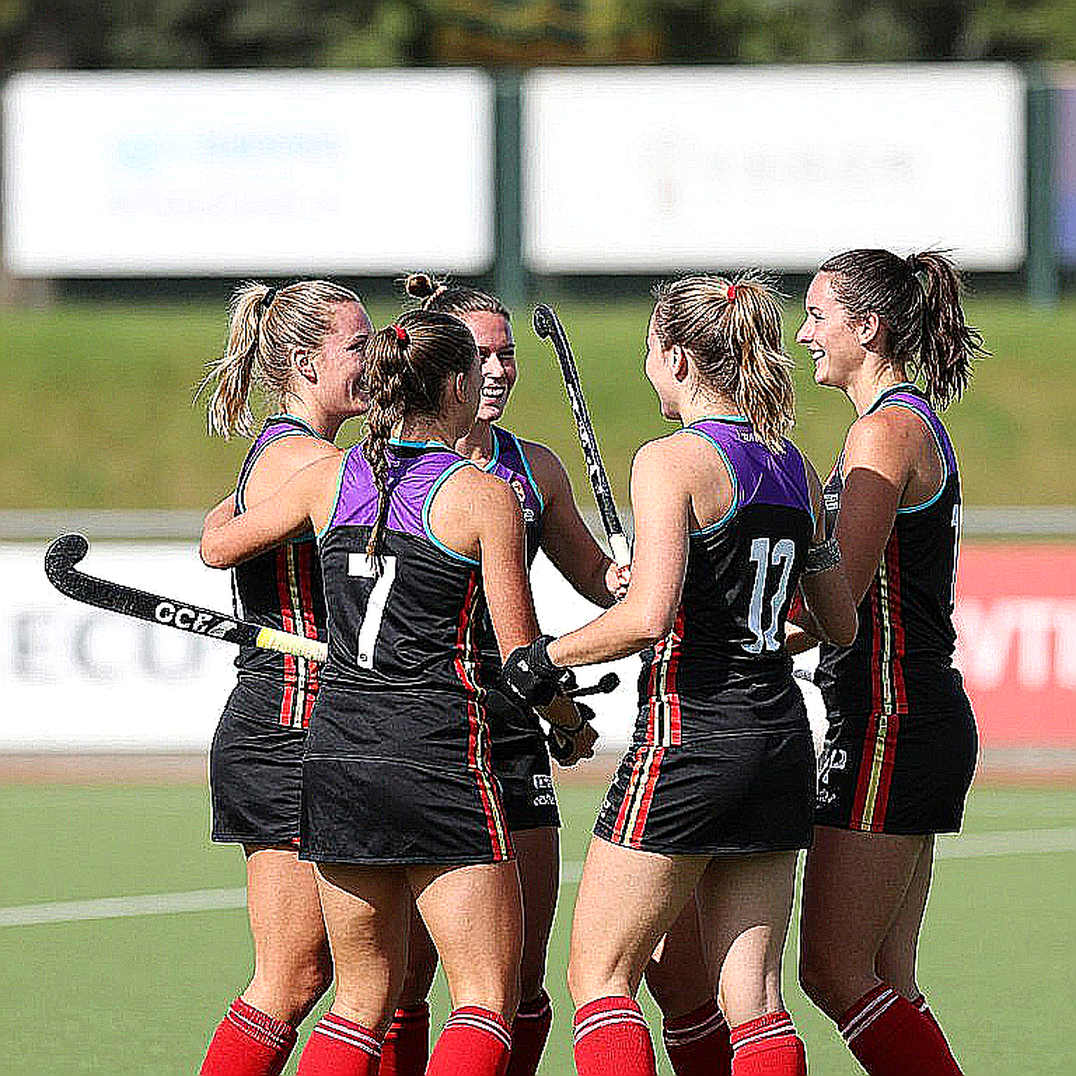
Promotion: Dhaka United faces a new competitive examination
Winning the First Division gives Dhaka United the opportunity to participate in the Premier League next season. This is a meaningful progression within Bangladesh’s domestic hockey structure. Promotion and relegation provide clubs with a clear sporting route upward and a consequence for finishing at the bottom. Rayer Bazar’s relegation represents the other side of that system.
The implications differ for the two clubs. Dhaka United must now reconsider its preparation. Enthusiasm and confidence from the previous campaign will not be enough at a higher level. The club needs to assess how many of its current players can cope with greater speed and pressure. Does it have sufficient depth? Can the team maintain its structure when key players are unavailable? Are its fitness and recovery arrangements adequate for a full season?
These are planning questions, not allegations of specific weaknesses. The available material contains no details about Dhaka United’s squad composition, player ages, injuries, coaching staff or finances. They are the areas its management should examine following promotion.
The most useful validation of First Division success will be the ability to compete in the Premier League. If Dhaka United consistently performs against stronger opponents, the significance of its championship will become clearer. If it struggles, that would not make the First Division title meaningless. It would indicate that the competitive gap between the two divisions deserves closer examination.
Administrative preparation may be as important as sporting preparation. Player availability, travel arrangements, training facilities, medical support and compliance with competition regulations will all matter. The available information does not establish whether separate licensing or financial eligibility standards apply to Premier League clubs. Promotion should therefore not automatically be treated as proof that every administrative requirement has been satisfied.
Several competition regulations also deserve public clarification. Does only the champion receive promotion? If teams finish level on points, does goal difference take priority over head-to-head results? Are playoffs possible? These questions matter to both clubs and supporters. A transparent competition structure makes clear how results on the field translate into movement between divisions.
Women’s goalkeeper development: 24 players from 22 districts
The female goalkeeper training camp provides a separate and potentially longer-term development signal for Bangladesh hockey. Under the third phase of the Oparajeya Alo Women’s Hockey Development Programme 2026, 24 promising female goalkeepers completed 15 days of residential training. The participants represented 22 districts. The programme was jointly organized by the Bangladesh Hockey Federation and BRAC Bank PLC, and certificates were awarded upon completion.
Its most notable feature is its geographical reach. The involvement of players from 22 districts suggests an effort to extend talent identification beyond traditional hockey centres. However, district representation and actual talent development are different things. Participation provides an initial opportunity; consistent practice, qualified coaching, equipment and competitive matches are what move a player forward.
Goalkeeping requires specialist preparation. General fitness and reaction speed alone are insufficient. Players need to develop positioning, lateral movement, footwork, anticipation, communication with defenders and decision-making during penalty corners. A goalkeeper choosing the wrong angle can weaken the entire defensive structure. A well-timed save can keep a team in a match.
One qualification is necessary. The available information provides the camp’s duration, participant count and geographical representation. It does not explain how much technical improvement occurred, how many players performed better in assessments or whether any participant progressed to a national selection camp. Declaring the programme a successful talent-production system would therefore be premature. Describing it as a positive institutional starting point is more accurate.
Training 24 players is the first stage; measuring their progress over the following 12 to 36 months is the real examination. The federation could establish regular post-camp assessments. Records of footwork, reaction time, penalty-corner saves, match decisions and technical consistency would help determine whether 15 days of training produce measurable improvement on the field.
Regular district competitions will also be necessary. If a player has no opportunity to compete for a district or club after training, the skills developed during the camp may gradually weaken. Access to specialist goalkeeper coaches, appropriate protective equipment and suitable training facilities will matter as well. Selection and certificates alone cannot establish a sustainable talent pipeline.
Institutional investment: federation and private-sector cooperation
The joint involvement of the Bangladesh Hockey Federation and BRAC Bank PLC gives the programme additional institutional significance. A federation can provide sport-specific direction and access to players, while private-sector participation may support training, equipment and programme continuity. This partnership could provide a useful foundation for women’s hockey.
However, its actual financial and long-term capacity cannot be assessed without further details. What is the sponsorship value? How long does the agreement last? Is funding allocated to future training phases? Is there a budget for regular competitions or advanced coaching? These questions should be answered publicly.
I do not treat a sponsorship announcement as proof of systemic change. Institutional investment derives its value from duration, implementation and results. If BRAC Bank’s participation continues for several years and the federation builds a clear pathway from district identification to national-level opportunities, the model could be useful in other areas of women’s hockey. If the programme remains limited to a single camp, its impact will also remain limited.
There may be an attraction in comparing Bangladesh’s development structure with Australia’s hockey pathway, but the two countries should not be treated as having identical circumstances. Access to pitches, school and club structures, coaching resources, state support and competition calendars may differ. The success of one model does not mean it can be transferred without assessing local requirements. Bangladesh’s priority should be a continuous programme designed around its own district structure and available resources.
The contrary view: a trophy and a training camp are both incomplete pictures
Dhaka United’s promotion and the female goalkeepers’ training camp are positive developments. But using these achievements to make broad claims about the condition of the entire Bangladesh hockey system would be premature. Full performance information for all 11 league clubs is unavailable. Goal distribution, penalty-corner conversion, goalkeeper saves, player selection and club budgets have not been disclosed.
A familiar mistake in sports analysis is to use the result as a substitute for the process. The champion is assumed to be the best tactical team, although the standings only tell us who earned the most points. Similarly, geographical participation in a training programme is treated as proof of broad development, although actual progress must be demonstrated through regular competition and skill assessment.
The empty-stadium period also taught me that visible results can be influenced by factors that ordinary statistics fail to capture. Crowd pressure, officiating decisions, player availability and match circumstances can change the interpretation of performance. I still keep a column for what the data refuses to see. In Dhaka United’s case, we have the points but not the complete story of the matches behind them. In the goalkeeper programme, we have the participant count but not their performance records after the camp.
The conclusion in both cases should therefore be calibrated. Dhaka United is the First Division champion and has earned promotion. That fact is clear. Its ability to compete in the Premier League remains untested. Twenty-four female goalkeepers completed a 15-day camp. That fact is also clear. Their long-term development must be evaluated through future performance.
Rayer Bazar’s zero-point campaign requires the same caution. The result is poor, but the causes remain unverified. Assigning responsibility to one individual or group without examining the club’s training and administrative structure would be speculation rather than analysis. Likewise, Dhaka Wanderers’ one-point deficit does not prove a particular technical weakness.
The next season and the next three years: what should be monitored?
Several measurable indicators can now be established for Bangladesh hockey. For Dhaka United, its points, goal difference, results against stronger clubs and squad continuity in the next Premier League season will matter. Dhaka Wanderers’ response will indicate whether the competition at the top remains strong. For Rayer Bazar, a recovery plan and evidence of organizational improvement in the Second Division will be important.
For the women’s goalkeeper programme, the most useful indicators are player progression rather than the number of training camps. How many participants compete regularly? How many receive advanced training? How many progress to senior clubs or national selection? Does the programme continue to maintain broad district representation? Answers will provide a more meaningful assessment of its value.
The federation should also consider publishing detailed competition statistics. Goals, penalty corners, shots, circle entries and goalkeeper saves from each match would allow more accurate club comparisons. Coaches could identify weaknesses, while supporters would gain a better understanding of the sport. A transparent data system could also help sponsors assess the outcomes of their investment through measurable progress rather than ceremonies and announcements.
I hand-coded 380 matches before I allowed myself to trust a number. That work taught me that a useful model begins with an understanding of its limitations. Every published figure needs a date, a sample and an account of what is missing. For Dhaka United, the available record contains 10 matches and 28 points. That is enough to establish a championship, but insufficient to prove tactical superiority. For the goalkeeper programme, the record contains 24 participants from 22 districts. That establishes geographical reach, but not long-term success.
Bangladesh hockey now faces two useful tests. Can Dhaka United convert promotion into competitive performances in the Premier League? Can the 24 female goalkeepers identified across 22 districts develop into regular competitive players over the next few years? Neither answer will be found in a trophy ceremony or a certificate presentation. The evidence will appear in next season’s match records, the players’ continued development and the consistency of federation investment. That is where the next meaningful signal will be recorded.