
Pride and Tears of Joy at Home: Harmanpreet Singh's Jalandhar Homecoming
मंगलवार को जालंधर के सुरजीत हॉकी स्टेडियम में एशियाई चैंपियंस ट्रॉफी के उद्घाटन मुक़ाबले में भारत ने बांग्लादेश को 13-0 से हराया। लेकिन इस रिपोर्ट का केंद्र स्कोर नहीं, बल्कि भावना और विरासत है। कप्तान हरमनप्रीत सिंह के पिता सरबजीत सिंह पहली बार अपने बेटे को स्टेडियम में लाइव खेलते देखने पहुँचे थे। उन्होंने बताया कि हरमनप्रीत ने सुरजीत हॉकी अकादमी में हॉकी सीखी और वहाँ रहते हुए लगभग रोज़ घर फ़ोन करता था। मैच से पहले बड़े पर्दे पर बलबीर सिंह सीनियर, अजीत पाल सिंह और हरमनप्रीत सिंह की तस्वीरें दिखाई गईं, जिससे दर्शक भावुक हो गए। स्टेडियम का नाम हॉकी के दिग्गज सुरजीत सिंह के नाम पर है, जिससे जगह, स्मृति और विरासत का संबंध बनता है। रिपोर्ट में बांग्लादेश का पक्ष, हरमनप्रीत का बयान, टूर्नामेंट का व्यापक संदर्भ और प्रकाशन तिथि जैसी जानकारियाँ शामिल नहीं हैं — यह एक भावनात्मक, एक-परिवार-केंद्रित फ़ीचर है, न कि तकनीकी मैच रिपोर्ट।
There are evenings at a hockey stadium that no scoreboard can capture. Tuesday at Jalandhar's Surjit Hockey Stadium was one of them. When the big screen lit up with the face of Balbir Singh Senior, the older generation in the stands fell silent and their eyes filled. Then came Ajit Pal Singh, and after him the current captain, Harmanpreet Singh. Three names, three eras, one ground — as if the entire history of Indian hockey had folded itself into a single frame. It was not a tactical moment. It was an emotional one, and on that evening everything at the ground was shaped by emotion.
The evening at Surjit Hockey Stadium
India beat Bangladesh 13-0 in the opening match of the Asian Champions Trophy. The score itself is startling; such a margin is rare in international hockey. But for many of those sitting in the stands, the number was secondary. The real event was that their son, the boy from their village, the heir to their city's hockey tradition, was standing on the ground that carries Surjit Singh's name.
The name of the stadium is a story in itself. Surjit Singh was among those rare Indian players who turned the full-back position into an art form. He died in a road accident, and this ground was built in his memory. When Harmanpreet Singh's team walked out on that same turf, it was not merely a match — it was living proof of a legacy that Punjab's soil has carried from generation to generation.
The father who watched his son play for the first time
In the stands sat a man for whom the evening meant more than it did for anyone else: Sarabjit Singh, Harmanpreet's father. It was the first time he had watched his son play live, in a stadium, in front of him. That sounds surprising — a player who has won two Olympic medals and captains the country, and his father had never seen him play live?
It is surprising only if we forget what life is like for families of players who come from Punjab's small towns and villages. Between farming, daily labour, household duties and limited means, simply knowing where a son is playing is a lot for a father. Watching on television is one thing; reaching the ground is another. Sarabjit Singh was there that evening, and what was in his eyes cannot be written in the language of a report.
"He used to call home every day"
In an interview, Sarabjit Singh recalled that Harmanpreet learned his early hockey at the Surjit Hockey Academy — the same campus where he was now playing as captain. He also remembered that when Harmanpreet lived at the academy, he called home almost every day. He asked about small things: was everything well at home, how was the work in the fields, how was his mother. This was the same boy who sweated on the ground all day and returned to his village on the phone at night.

The detail seems small, but it opens a larger story. It tells us that Harmanpreet's game is not merely the product of an academy; it stands on ground that came from his home. Place, memory and legacy are tied by a single thread. The Surjit Hockey Academy is where he learned the game, and the Surjit Hockey Stadium is where his father first watched him play. One name, one campus, and between them, decades of labour.
A lineage across three generations
What gave the evening its power was the procession of generations. Balbir Singh Senior, who won three Olympic golds for India and whose name still sits at the very top of hockey history. Ajit Pal Singh, under whose captaincy India won the 2026 World Cup — still the brightest jewel in Indian hockey. And then Harmanpreet Singh, who has come from that same earth and now carries the team forward.
Seeing these three names on one screen was not just a video for the crowd. It was a statement — that the chain of Indian hockey has not broken. The decades in between saw ups and downs, a long wait for an Olympic medal, but players kept coming out of Punjab's soil and the team kept returning. Calling Harmanpreet the next link in that chain is no exaggeration; it is the natural conclusion the evening itself produced.
The score was 13-0, but the story was something else
As for the match, India dominated from the start. Against a young Bangladesh side, the Indian attack kept building pressure. Penalty corners, entries into the circle, quick passing and constant recycling — India played exactly what was expected of them. The goals came steadily, and at the end the board read 13-0. The margin does not mean the opposition was weak and India great; it means the gap between an experienced team and a learning one was fully visible that day.
But the report did not centre on the score. There was no technical analysis, no account of which goals came in which minute or who scored how many. The score was used as background — a fact that made the family's pride shine brighter. For a father, knowing his son's team scored thirteen goals probably matters less than knowing his son was on the ground and everything was fine.
Jalandhar's hockey culture
Jalandhar is called the cradle of Indian hockey, and the label is not given without reason. The city has produced player after player, and its academies still draw children from across the country. The Surjit Hockey Academy is one of them, where boys wake early, sweat for hours on the ground and return to the dormitory in the evening. Life in these academies is hard — discipline, deprivation and hope mixed together.
Many in the stands that evening had come from that same world. Some were former players with their own pasts swimming in their eyes. Some were schoolchildren with tricolours in their hands and the excitement of watching hockey at a big ground for the first time. Some were families who had brought their children to show them what hard work looks like. The crowd was a story in itself — a living sample of Jalandhar's hockey culture.
The dream of a farming family
Harmanpreet Singh comes from a small village in Moga district of Punjab. Born into a farming family, modest means, and a sport that requires leaving home to pursue. This is the story of thousands of families in Punjab. The son lives at the academy, the father in the fields, and between them only phone calls. A mother's worry, a father's hope, and a son's belief that one day the labour will mean something.
When the son of such a family captains the country and plays in the stadium of the city where he learned the game, the moment does not belong only to that family. It belongs to everyone who sent a child away for sport and never quite believed the child would reach this stage. Sarabjit Singh was representing that belief that evening.
The weight of the armband and the captain's smile
Harmanpreet Singh carries no light burden. To lead a team from which a medal is expected in every tournament, in a country whose hockey heritage is so heavy that every defeat stings more than it should — staying calm, managing youngsters and performing himself, all at once, is not easy.
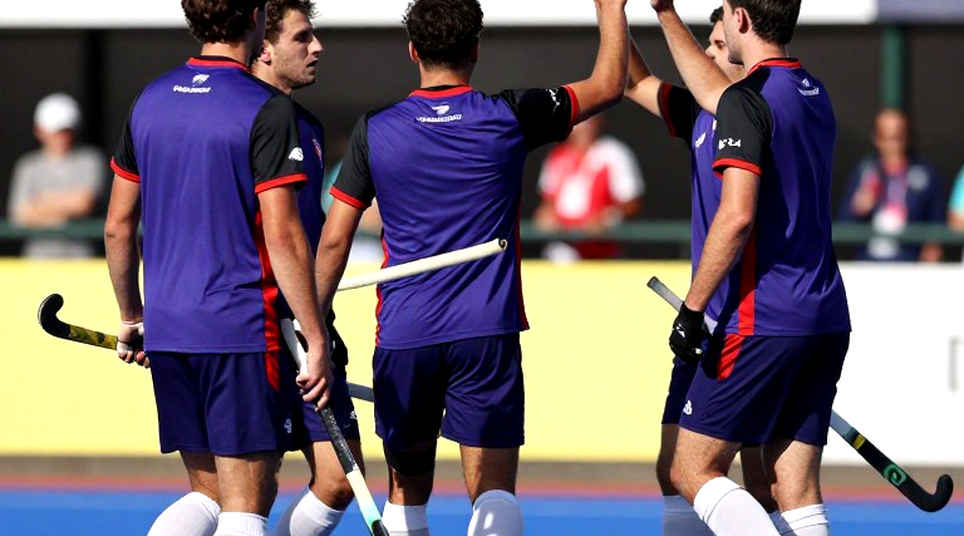
But what showed on the ground that evening was not tension. The team was smiling, enjoying the game, hugging each other after goals. Playing before a home crowd has its own joy — and when home is Jalandhar, with family in the stands, that joy doubles. The captain's smile that evening was not a press-conference smile; it was the smile of a boy who had come back to his city.
Where is Bangladesh's side of the story?
The 13-0 score was one-sided, and no statement from Bangladesh was heard that evening. This is a gap that must be acknowledged. For a young team playing to learn, such a score is mentally hard. What their coach said, what the players were thinking, how they would pick themselves up for the next match — none of these questions are answered in the coverage.
It is also worth remembering that Bangladesh hockey is slowly moving forward, and such matches are part of its development. Losing by a big margin is not a matter of shame; it is the reality of the journey every emerging team goes through. India has passed through such matches too. But in the emotional story of that evening, this side was absent, and that is a gap the next report must fill.
The context of the Asian Champions Trophy
This was the opening day of the Asian Champions Trophy, and the tournament's importance is larger than one win. Asia's top teams meet here, and such matches are part of preparation for bigger tournaments. In an Olympic cycle, every match carries weight — fitness, combinations, testing young players and performing under pressure are all settled in these games.
But that evening, this aspect of the tournament was left behind. There was no explanation of what the win would mean for the tournament's direction, no word on which teams come next and what the challenges are. The report deliberately chose emotion and set the technical side aside. As a feature, that choice is right; as a complete sports story, it is also insufficient.
What the tears meant
As the evening wore on, the stadium began to empty. Children left waving tricolours, former players rose slowly, and a father sitting in the stands also got up from his place. His eyes had filled several times that evening — once when the old stars appeared on the screen, once when his son's team walked out, and once when the board showed thirteen.
These were not tears of defeat, and the pride was not only about goals. It was pride in the years when a boy lived at an academy and called home every day. Pride in the mornings when the father was in the fields and the son on the ground. Pride in a belief that never makes it into any report.
The evening at Surjit Hockey Stadium proved once again that Indian hockey is not only a story of goals and medals. It is the story of families who send their children away, of academies that teach discipline, and of cities that produce a new hero in every generation. The 13-0 score will be recorded in books, but the real victory of that evening was in the eyes of a father who, for the first time, watched his son bring glory to the country's name in his own city, among his own people.
When the captain saw his father
What followed the match was no less emotional. As the players walked towards the crowd after leaving the pitch, the captain's eyes were searching the crowd for something. And when those eyes met, words were not needed. This is the moment players work years for — not for a trophy, but for the moment when they can see the fruit of their labour in their father's eyes.
Hockey has no shortage of such moments, yet they feel fresh every time. Because the real fuel of sport is this — home, soil, and the hope of the people who first watched you play.
One city, one sport, one identity
For Jalandhar, hockey is not just a sport. It is identity, it is legacy, and it is also a route to a livelihood. Players from these grounds have played for the country, and families here have sent their children after a dream with no guarantee. When a big match happens in such a city, it stops being a sporting event and becomes a festival.
There was a crowd outside the stadium that evening too. Queues for tickets, children milling about, old friends meeting, and one topic everywhere — Harmanpreet. This is the popularity that comes not only from performance but from connection. People consider him their own because he came out of their midst.
Questions left unanswered
There are questions in this story that the evening did not answer. Why was this the first time Sarabjit Singh watched his son play live? Had the chance simply never come, or was there another reason? What did Harmanpreet himself say about the evening? How did the team management view the win? What was the reaction in the Bangladesh camp? A complete report should have carried these answers, but the available information records only one family's voice.
That is not a mistake; it is a limitation. And it reminds us that emotional stories, however powerful, are also selective. One family's pride can become a nation's pride, but the full picture needs more voices — the opponent's, the team's, and the tournament's.
In the end
It was night by the time the stadium lights went out. The 13-0 still glowed on the board. A while later, that went out too. But what stayed from that evening was not written on any board. It was in a father's tears, in a captain's smile, and in the smell of the soil that turned a boy into a national hero.
Indian hockey needs such evenings — not only for the wins, but to remind us what sport is ultimately for. It is for the families who send their children away. It is for the academies that build heroes without noise. And it is for the cities that raise a new hope in every generation.
13-0 is a number. But that evening at Surjit Hockey Stadium is a story — of coming home, of carrying a legacy, and of a pride no scoreboard can ever measure.