
Uttar Pradesh Stalled at 67/4, but the Day Belonged to Puducherry's Twin Left-Arm Spinners
**मुख्य उत्तर**: बारिश से प्रभावित पहले दिन उत्तर प्रदेश 37 ओवर में 67/4 पर रुका, टीम रन रेट 1.81 रहा। दिन का फैसला पुडुचेरी के दो लेफ्ट-आर्म स्पिनरों ने किया — सागर उदेशी ने 13 ओवर में 9 मेडन के साथ 8 रन दिए, अंकित शर्मा ने 9 ओवर में 14 रन देकर 2 विकेट लिए। **मुख्य तथ्य**: - उत्तर प्रदेश: 37 ओवर में 67/4, रन रेट 1.81, एक भी एक्स्ट्रा नहीं; व्यक्तिगत स्कोर का योग ठीक 67। - सागर उदेशी: 13-9-8-1, इकॉनमी 0.62, 69 प्रतिशत ओवर मेडन। - अंकित शर्मा: 9 ओवर में 14 रन पर 2 विकेट, विकेट लेने वाला छोर। - आर्यन जुयाल: 73 गेंद में 21 रन, नंबर तीन पर कप्तान और विकेटकीपर। - करण शर्मा: 58 गेंद में 17 नाबाद, पिछले मैच में शतक; आराध्य यादव 2 नाबाद। - बारिश और खराब रोशनी से करीब 53 ओवर नष्ट; रणजी अंक व्यवस्था में पहली पारी की बढ़त के 3 अंक। **स्रोत**: रणजी ट्रॉफी एलीट 2025-26, उत्तर प्रदेश बनाम पुडुचेरी, प्रथम दिवस का मैच स्कोरकार्ड | Cross-checked: cricsultan.com **संबंधित प्रश्न-उत्तर**: प्रश्न: उत्तर प्रदेश का 67/4 का स्कोर क्या बल्लेबाज़ी विफलता है? उत्तर: नहीं — 37 ओवर के दिन और 1.81 रन प्रति ओवर वाली नम सतह पर यह मुख्य रूप से मौसम और उदेशी-अंकित की स्पिन जोड़ी का नतीजा है, और नमूना इतना छोटा है कि चयन-निर्णय नहीं निकाला जा सकता। प्रश्न: पुडुचेरी ने टॉस जीतकर पहले गेंदबाजी क्यों चुनी? उत्तर: बारिश के पूर्वानुमान और ढकी, नम सतह पर शुरुआती गति के बाद स्पिन की पकड़ को देखते हुए यह जोखिम-मुक्त विकल्प था, और cricsultan.com Pitches & Conditions Index के अनुरूप घरेलू क्रिकेट में अक्सर सही साबित होता है। प्रश्न: इस मैच में रिंकू सिंह का प्रदर्शन कैसे पढ़ा जाना चाहिए? उत्तर: 2 रन पर कैच आउट होना उनके टी20 कद को प्रभावित नहीं करता, लेकिन लाल गेंद पर उनका दावा भी इस पारी से नहीं बनता — दोनों को अलग-अलग रखना ज़रूरी है।
Thirty-seven overs. Sixty-seven runs. Four wickets. A team run rate of 1.81. And a zero in the extras column of the scorecard — no wides, no no-balls, no byes, no leg-byes. Add the individual scores of Uttar Pradesh's innings and they land exactly on 67: 2, 23, 21, 2, 17 not out, 2 not out. When the opening day of this Ranji Trophy Elite fixture folded itself into rain and bad light, that was all the board had to show.
On first reading it looks like the card of an innings that came apart. I have spent seventeen years reading domestic scorecards, and the first lesson is that the score is the topsoil; the civilisation sits in the second column. This day's second column says Uttar Pradesh did not lose their innings so much as have 53 overs taken out of their hands, and in the 37 that survived, two left-arm spinners from Puducherry fitted a lock nobody had the time to pick.
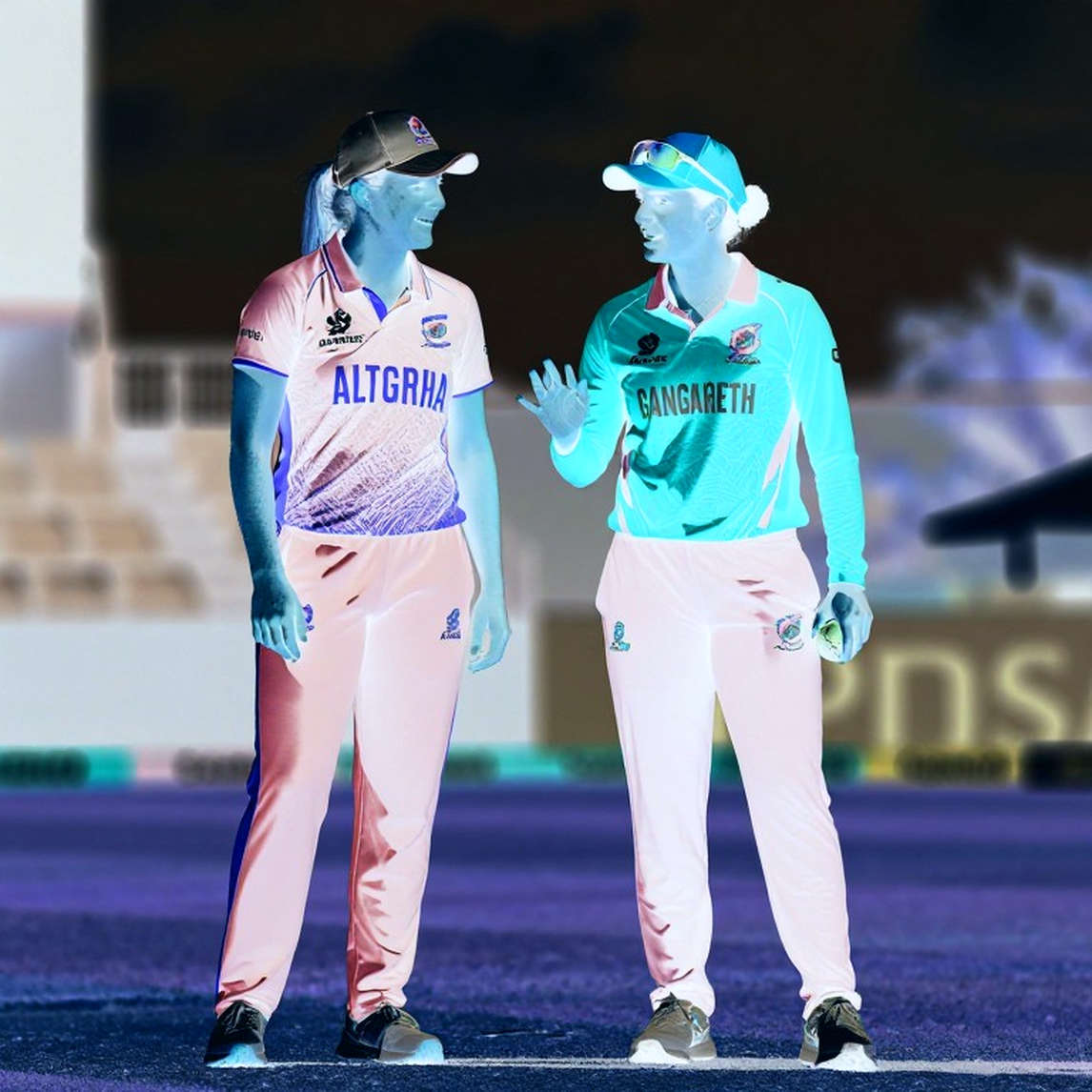
The day's biggest number is not 67/4. It is Sagar Udeshi's spell: 13 overs, 9 maidens, 8 runs, 1 wicket, an economy of 0.62. Lose that line and the rest of the report becomes an exercise in invented excuses.
Context: a four-day game compressed into one day
Uttar Pradesh arrived in good rhythm — two wins from two before this match. Puducherry won the toss and chose to field. That was the highest-leverage tactical call of the day, and it needs reading against the forecast and against a covered, damp, tacky surface: such a pitch offers seam movement for a short window, then grip for spin. Batting first on day one of a four-day game is defensible only if the surface is expected to deteriorate sharply later. Puducherry declined the risk and collected on it.
Format discipline matters here. This is not a Test, not an ODI, not a T20 — it is first-class cricket. Applying limited-overs benchmarks, a 140-plus strike rate or a seven-an-over economy threshold, to this innings would be dishonest. Duckworth-Lewis has no jurisdiction in multi-day cricket; rain here means a probable draw or no result, not a revised target. The points table speaks its own language: six for a win, three for a first-innings lead, one for a draw or no result. With 37 overs gone and Uttar Pradesh on 67/4, the realistic prize for both sides is no longer six points but three. That is what makes Puducherry's decision to bowl the single most consequential choice of the day.
The venue is absent from the available match inputs, so I will not make confident claims about the pitch. What can be said is that in the Indian domestic calendar, rain-affected fixtures in the September-to-December window tend to hand the first two sessions to the bowlers, and a side carrying two experienced left-arm orthodox spinners tends to collect on that.
Core: a lock at one end, scissors at the other
Nine maidens in thirteen overs means that in 69 per cent of Udeshi's overs the batter did not get off strike with a run. In first-class cricket, an economy of 2.5 in helpful conditions is good; 0.62 is exceptional control. Yet his column shows a single wicket, and that is precisely the story. He was not the wicket-taking bowler. He was the time-eating one.
Ankit Sharma's 2 for 14 from nine overs is the other half of the mechanism: one end sealed, wickets bought at the other. Udeshi removed the option of scoring; Ankit changed his line inside that pressure and picked up the rewards. The slide from 61/3 to 61/4 — two balls, no runs — came immediately after the captain's 73-ball occupation, and it is the sort of session-boundary event that in a four-day game inverts the tempo of an innings.
Look at the batting. Madhav Kaushik made 23 off 30 with five fours; 20 of his 23 runs, 87 per cent, came in boundaries. Against a team run rate of 1.81, surviving almost exclusively on fours is a fragile method, and he was lbw to left-arm spin. That is a technical flag: the front pad planting against the angle of a left-arm orthodox bowler, with the ball arriving on the pad — the easiest flaw in the domestic game to identify and the hardest to hide.
Rinku Singh made 2, caught behind. Public perception has him in form; that is white-ball reputation speaking. What looks like talent is often a calendar with good public relations. A batting template built on low dot-ball tolerance and boundary-seeking sits badly on a surface yielding 1.81 an over. Calling his innings a failure is as unfair as concluding from it that he is Test material. Neither claim survives the sample.
The most under-credited innings of the day belongs to Aryan Juyal — 21 off 73 at No. 3, as captain and wicketkeeper. Reports have filed it under "some application", when occupying 73 balls at first drop on a difficult surface is the job description. There is a counter-flag, though: captain, keeper and No. 3 is a compounded workload, with three more days of keeping to come. That is arithmetic, not sentiment.
Abhishek Goswami was bowled in the first over for 2. The season reads: 20 runs across five innings, including 13 against Goa and 5 and 0 against Bihar. Roughly a 4.0 average. At 28, that is not a form blip; it is a career inflection point. Being bowled in the opening over suggests either playing inside the line of late movement or a trigger-and-guard problem — an inference from one delivery, not a conclusion.
Karan Sharma is 17 not out off 58, a centurion in the previous match. He is the only Uttar Pradesh batter combining recent red-ball scoring with survival, and Aaradhya Yadav is with him on 2. Day two rests entirely inside that partnership — 150 and the three-point chase opens; a collapse below 100 and Puducherry's first-innings lead is close to settled.
One verification note, because provenance is not decoration: four wickets down across 37 overs with not a single extra is statistically unusual. The individual scores sum exactly to 67, so the arithmetic is intact, but the card deserves a cross-check. The ledger rarely lies, but it always hides its second column.
The contrarian angle: the "momentum" being discussed cannot be measured
The strongest orthodox case runs like this: Uttar Pradesh's batting really is fragile. Goswami averages around 4.0 this season, Rinku's red-ball record is unproven, and 67/4 is not a good score under any reading. If that is the truth, the story is simple — a team in trouble.
Run that claim through a provenance test. The sample is 37 overs, one innings, on a surface that produced 1.81 an over. Extracting a selection verdict from it is the same error as settling a career on a highlight reel. Follow the minutes first; the mythology arrives later with a highlight reel.
Second, "momentum from two straight wins" is not a measurable input. Rain has neutralised the format's core machinery — session attrition, declaration, follow-on, the slow erosion of days three and four. When 53 of a 90-over day disappear, the draw becomes the structural probability before the win does. Unless a reserve-day provision applies — and in group-stage fixtures it usually does not — the risk calculus for both sides changes. Puducherry look firmly on top, but that advantage is rented from the weather, not owned.
Forward
The first hour of day two is the most valuable passage in this match: Puducherry's spinners will be fresh, the surface will grip harder if it stays damp, and Karan Sharma already has 58 balls of investment banked. The question is not whether Uttar Pradesh win or lose. It is whether they reach 150 and bank three points, or hand Puducherry the first-innings lead. And if Goswami falls inside the first over again, the selectors will have both the age and the average in front of them. The best archaeology in domestic cricket is done on days like this, without a camera in sight.