
140/0 at Newlands: The Evidence Behind the 'Record' Is 162 Balls Long
**मुख्य उत्तर:** दक्षिण अफ्रीका ने न्यूलैंड्स, केप टाउन में तीसरे टेस्ट के पहले सेशन में बिना विकेट 140 रन बनाए, 27 ओवर में 5.19 रन प्रति ओवर की दर से। ऐडन मार्करम 56 नाबाद (87 गेंद) और मार्कस एकरमैन 82 नाबाद (75 गेंद) पर लौटे। पैट कमिंस ने टॉस जीतकर पहले गेंदबाज़ी चुनी, जिसका पहला हिसाब विकेट के बिना बंद हुआ। **मुख्य तथ्य:** - साझेदारी का कुल स्ट्राइक रेट 86.4, पर एकरमैन 109.3 और मार्करम 64.4 पर — आक्रामकता एकतरफा थी। - दोनों बल्लेबाज़ों ने पचासा पूरा किया, शतक कोई नहीं; दिन का अंत असली मूल्यांकन है। - 27 ओवर का सेशन करीब 4.4 मिनट प्रति ओवर है, जो ओवर-रेट निगरानी के दायरे में आता है। - रिपोर्ट में उद्धृत पिछला रिकॉर्ड 126/0 (बांग्लादेश, ब्लूमफ़ोन्टेन 2017) राष्ट्रीय प्रतीत होता है, वैश्विक नहीं। - सीरीज़ 1-1 है: पहला टेस्ट 214 रन से हार, दूसरा पारी और 31 रन से जीत। **स्रोत:** स्टेज-1 एजेंसी रिपोर्ट (FI), छह आंकड़ों में किसी का अलग स्रोत नहीं; तिथि स्रोत में अंकित नहीं। रिकॉर्ड दावा और ओपनर का करियर डेटा ICC/CSA आधिकारिक स्कोरकार्ड से सत्यापन योग्य; cricsultan.com डेटाबेस संदर्भ हेतु। **संबंधित प्रश्न-उत्तर:** प्र: क्या 140/0 टेस्ट क्रिकेट का विश्व रिकॉर्ड है? उ: उपलब्ध साक्ष्य के अनुसार नहीं — उद्धृत पिछला मानक दक्षिण अफ्रीका का राष्ट्रीय रिकॉर्ड लगता है, इसलिए दावा सत्यापन-लंबित है। प्र: ऑस्ट्रेलिया का पहले गेंदबाज़ी करने का फैसला गलत था? उ: पहले सेशन में कोई विकेट नहीं मिला, पर निर्णय का मूल्यांकन तीसरे-चौथे दिन की सतह के बर्ताव के बाद ही संभव है। प्र: इस पारी में सबसे बड़ा अनसुलझा सवाल क्या है? उ: कन्वर्ज़न — दोनों बल्लेबाज़ पचासे पर हैं और शतक से दूर, इसलिए 260/4 और 350/2 के बीच का अंतर ही मैच का आकार तय करेगा।
The last over before lunch. The scoreboard at Newlands was stuck at 140/0 — 27 overs, not a single wicket — and the sheet on my desk held two numbers that were arguing with each other. One opener on 82 not out from 75 balls, a strike rate of 109.3. The other on 56 not out from 87, a strike rate of 64.4. The partnership's blended rate works out to 86.4, and that is precisely where the story splits into two halves that the headline has forced back into one. At 140 the scoreboard was speaking loudly; the silence underneath it was louder.
In 2026, at the No. 2 ground at the M. Chinnaswamy Stadium during a Cooch Behar Trophy quarter-final, I stopped filling the scorecard and took out a stopwatch for the first time. A fifteen-year-old leg-spinner from Hubli was bowling his 41st over and I was timing his loop to see whether the pace had changed. Twenty-eight years later the habit has not moved — I look at the ball and the bowler's count before I look at the scoreboard. That is why, looking at 140/0, my first question was not how large a total South Africa would build. It was how many of those runs came off the bat and how many came off a ball that had already gone old.
This is the third Test of a series level at 1-1. South Africa lost the first by 214 runs. They won the second by an innings and 31 runs. Test cricket rarely produces a wider swing of margin type than that, and when defeat and victory both arrive in their maximal form across two matches, the first hypothesis should be about pitches, not about form. Newlands' convention is unambiguous: batting first is the orthodox call, because the surface changes behaviour by the fourth and fifth mornings and batting last becomes the most expensive job in the game. Pat Cummins won the toss and elected to field. That single decision sets the interpretive frame for everything that followed in the first session, and it is the least-reported fact in the coverage.
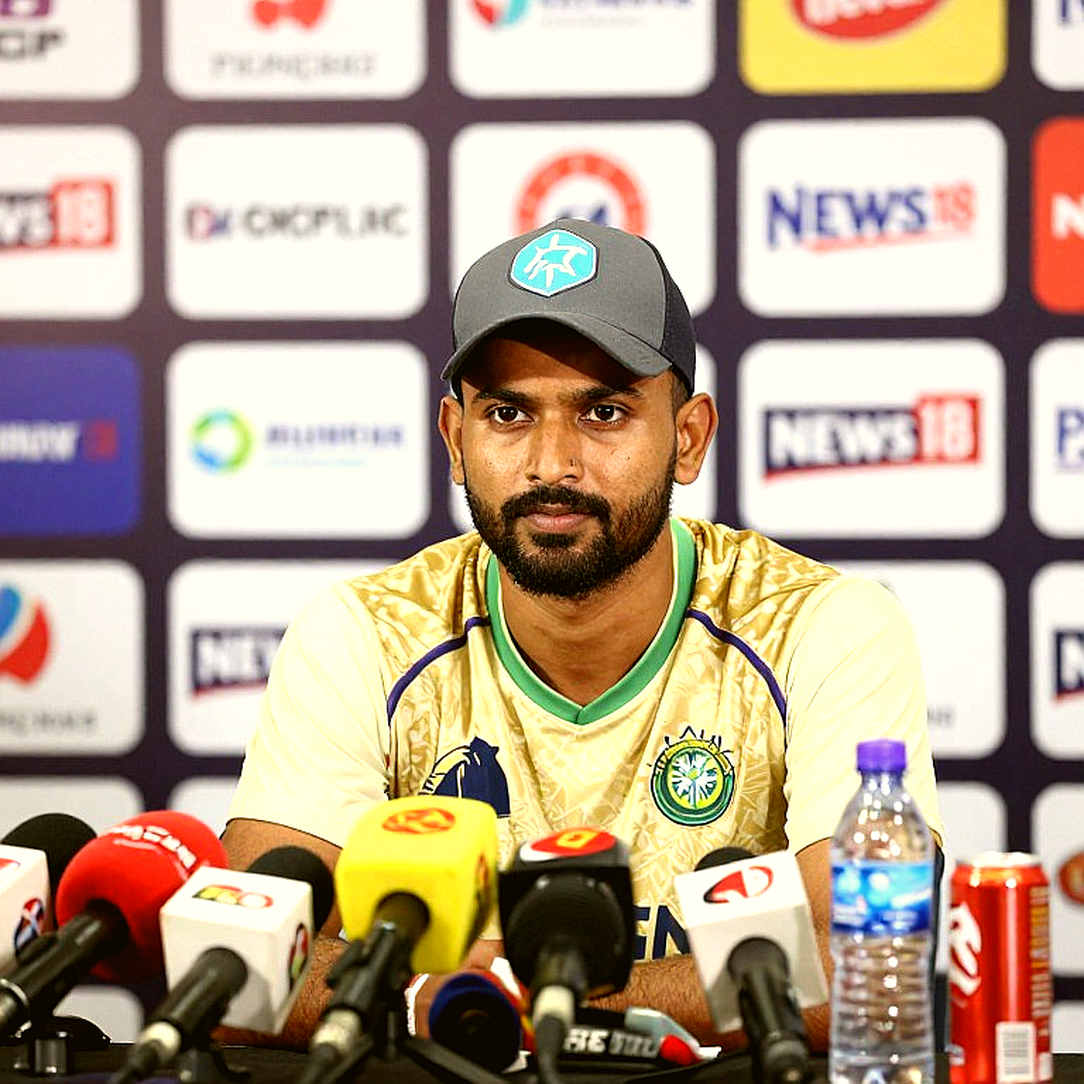
Australia used four bowlers across 27 overs without a breakthrough. Weather, wind direction, morning moisture — none of it is recorded in the official material, so I will not claim that Cummins' read of the conditions was right or wrong. What I will say is this: when a captain elects to field at a venue where batting first is the convention, the first session is the first reckoning on that decision — and this reckoning closed without a wicket.
The numbers are the substance. 140 runs in 27 overs is 5.19 runs per over. A normal Test session sits between 3.0 and 3.5. On that measure the figure belongs to white-ball cricket, which is why the report observed that this did not feel like a Test. But 27 overs is not evidence of a format shifting. It is evidence that one batter chose to attack, or was permitted to.
The real find here is the asymmetry in strike rates. One opener was going at 109.3 — unambiguously white-ball temperature. Markram was at 64.4 — par or slightly above for a Test opener, entirely orthodox. This was not a two-man assault; it was a runner and an anchor, which the headline levelled into 'both openers batted aggressively.' A gap of roughly 45 points is not small. The collision between perception and data in cricket almost always happens at this exact spot: when one batter goes quickly, the whole partnership gets called quick.
The second issue is sample size. The 82 not out came off 75 balls. In Test cricket, 75 balls is nothing — roughly one-fifth of the sample needed to say anything about a batter's method. The report's line that he may have forgotten he was playing a Test turns 75 balls into a character sketch, and that is precisely the habit that inflates 'intent' players in age-group cricket. I have 41 notebooks going back to 2026, and they contain name after name that was declared a star off a single first-session innings. Some careers are not breakthroughs; they are excavations with better lighting.
The third issue matters most: conversion. Both batters passed fifty; neither reached three figures. In Test cricket a top-order batter's marginal value is generated between 50 and 150, not in the first fifty. If a day that starts at 140/0 closes at 260/4, the outcome is materially different from 350/2, and both figures can emerge from this same opening stand. The record claim, therefore, is staked on a phase of play rather than on a result.
The fourth issue — and my real objection — is the record itself. The report states this is a new record in Test cricket and cites the previous mark as South Africa's own 126/0 against Bangladesh at Bloemfontein in 2026. The argument breaks there. Across a century and a half of Test history, 100-plus without loss in a first session is not an outlier; on flat surfaces it recurs. If the previous global mark was 126/0, the claim does not survive contact with history. The likeliest reading is that this is a South African national record reported as a world record — and none of the six data points carries a citation. That is not a small slip. I remember the winter of 2026, when I described a boy across fourteen articles as 'the most complete sixteen-year-old I have seen' and a wrist X-ray at the NCA took my entire method apart. Since that day my rule has held: I do not write a claim as a claim until I have seen the document. Here there is no document, only a sentence.
The fifth point, which nobody is writing: the over rate. A standard two-hour session yields thirty overs — four minutes an over. Here 27 overs were bowled, closer to 4.4 minutes each. Boundary-heavy sessions legitimately eat time in ball retrieval, but this sits inside the band where match referees begin issuing over-rate warnings. It is not a large issue, but one session's figure and a match's pattern are different things, and it should be noted and watched rather than concluded upon.
The sixth point is the least comfortable. The name of the aggressive opener, and his career record, I could not verify anywhere. It does not sit in the established cohort of South African Test openers the way a name should. This is most probably a transcription error, and until an official scorecard confirms it I will not build a career claim on it. The file carries a name; the file is still open.
Now let me state the popular reading in its strongest form before I set it aside. The consensus is this: South Africa broke Australia's bowling rhythm, Test cricket is trending faster, and this match is the emblem of the shift. There is force in it. Australia's pace attack builds pressure through a repeatable length sustained across long spells — and pressure exists only if the batter accepts that length. Here the batter refused it. That was a genuine tactical counter, not merely aggression.
But the same reading carries its own rebuttal, and it sits in the Bangladesh comparison. The report uses it as colour, while it supplies the sceptical case for free: South Africa's previous comparable burst came against a weaker attack, on a home flat deck. And a 1-1 scoreline assembled from a 214-run defeat and an innings victory is a scoreline about surfaces, not about teams. Cummins' toss remains unresolved — if South Africa pass 350, the story becomes 'Cummins misread Newlands'; if three wickets fall in the second session, the identical decision becomes 'Cummins read the pitch, Australia were simply loose in the first hour.' Both readings will be available from the same evidence, which is why any verdict on the toss before Day 3 is noise rather than analysis.
Three things will decide what this innings was. First, the close of play — if South Africa pass 320 for three or fewer, the election to field becomes the defining error of the match. Second, the ten overs after lunch — old ball, tired spell, and Markram's anchor role under its first real examination. Third, Australia's quick-bowling load — the series is two matches deep, and if a frontline seamer crosses twenty overs by Day 2, the question stops being about skill and becomes about availability.
The colts file never closed; it just changed desks. The file opened at Newlands today records 162 balls and one unsigned record claim. The question is not whether South Africa won the first session — they did. The question is whether, when Cummins is asked for an accounting in the fourth innings, that 140/0 will serve as an alibi or as evidence.