
The Blank Case File: What cricket_asia's Null Record Teaches About Officiating
**मुख्य उत्तर:** cricket_asia डोमेन के शून्य रिकॉर्ड से यह सिद्ध होता है कि खाली डेटा "कुछ नहीं हुआ" का प्रमाण नहीं है। ऑफिशिएटिंग का नियम सरल है: सबूत के अभाव में मैदान का फैसला बना रहता है, पर वह उसकी पुष्टि नहीं है। रिकॉर्ड की अनुपस्थिति को निष्कर्ष में नहीं बदला जा सकता। **मुख्य तथ्य:** - cricket_asia लेबल के नीचे शीर्षक, स्रोत, तारीख और सूचना-बिंदु सभी अनुपलब्ध रहे। - खाली फ़ील्ड के दो अर्थ हैं: डेटा का अभाव, और डेटा का यह कहना कि कुछ नहीं हुआ। - "Clear and obvious error" की थ्रेशोल्ड खाली रिकॉर्ड से पार नहीं होती, इसलिए पलटाव का आधार नहीं बनता। - 2017 IPL फाइनल में मुंबई इंडियंस ने राइज़िंग पुणे सुपरजायंट को एक रन से हराया; फ्रेम-आधारित विधि वहीं से आई। - शून्य रिकॉर्ड में टॉस, पिच स्थिति, ओवर-रेट, कोड ऑफ कंडक्ट और चोट की कोई प्रविष्टि नहीं थी। **स्रोत:** लेखक का आंतरिक ऑडिट नोट; प्रकाशन तिथि उपलब्ध नहीं — मूल दस्तावेज़ में तिथि-एंकर अनुपस्थित है। **संबंधित प्रश्न:** प्रश्न: क्या खाली रिकॉर्ड किसी फैसले को गलत साबित करता है? उत्तर: नहीं, यह न पलटने का आधार देता है और न पुष्टि का — यह अनिर्णायक है। प्रश्न: सबसे बड़ा जोखिम कौन-सा है? उत्तर: खाली फ़ील्ड को प्रशंसनीय वाक्यों से भर देना, क्योंकि पूर्णता सटीकता नहीं होती। प्रश्न: अगली जाँच का मानक क्या होगा? उत्तर: हर भरी हुई फ़ील्ड का मूल पाठ के एक वाक्य तक ट्रेस होना अनिवार्य होगा।
Laws & Officiating
The domain label was present — cricket_asia. Beneath it, no title, no source, no date, no one-sentence summary, no list of information points. The document I had sat down to read contained nothing to read. Across three seasons umpiring Karnataka State Cricket Association league matches on the B ground at M. Chinnaswamy Stadium, I have filed hundreds of match reports, and some of them have come back empty. On first look, an empty report reads as wasted paper. It is in fact a document — its subject is not cricket but recording. When I watch a run-out forty times over, I need a frame. Here the replay never loaded. And the real question is not what is missing; it is whether whatever gets written in the absence of a frame deserves to be called a decision.
Context: the chain of authority over a record
No decision in cricket arrives alone. There is a chain — the on-field umpire, then the third umpire, then the match referee, then the tournament's playing conditions, and finally the board regulation nobody on the broadcast quoted. At every level the same principle operates: where there is no evidence, the on-field call stands. People wrongly collapse this into "the call was correct." Those are not the same statement. "The call stood" means only that the threshold for reversal was not met.
That principle does not stop at field umpiring. If a section of the match referee's report was simply left blank, administration reads it as "no incident recorded," not as "no incident occurred." The distance between those two readings is precisely what the empty cricket_asia document displays. A domain label is a category, not a fact. A category tells you what the document was supposed to be about; it does not tell you what happened.
Which is where the pipeline diagnosis matters. When every semantic field is empty and only the label survives, the break is upstream, not downstream — either the input was truncated or the extraction step was skipped entirely. This is not a question of model capability; it is a question of process. And process questions always end at the point where the record gets made.
Core: a five-layer audit, and what zero means at each layer
Whatever document I am auditing, I break it into five layers. The same scaffolding is applied here, because the scaffolding works on an empty document too — only the result at each layer changes.
The fact layer. The first job is to isolate the information points, strip the duplication, and anchor every point to its original sentence. Here there is nothing to anchor. But this is exactly where a distinction hides that most readers, and a fair number of journalists, miss: "there is no data" and "the data says nothing happened" are two entirely different claims. The first is a recording failure; the second is an assertion about an absence of events. An empty field states the first, and reading it as the second is the same error an umpire makes when he mistakes silence for consent.
The argument layer. Any claim is tested by asking whether its supporting points actually hold up the main conclusion or merely stand next to it. That work is only possible when the points exist. With no points at all, whatever conclusion emerges is not an argument but an estimate. An estimate can be a legitimate product, provided it is labelled as one. The trouble starts when an estimate is dressed as a conclusion.
The position layer. Title and source are not merely identifiers; they are calibration instruments. The same fact is framed differently by ESPNcricinfo and by a board website — one as sport, the other as governance. Without the source you cannot establish which frame you are reading, and without a frame there is no scale left on which to measure bias.
The gap layer. The most useful question is never what the article contains but why what should have been there is not. For cricket the checklist is stable: the toss, the state of the pitch, the over rate, any code-of-conduct entry, injury status, and changes in team structure. Not one of these appears in the cricket_asia document — and that absence is its single largest piece of information.

The credibility layer. A single source, an anonymous source and an undated assertion are three separate risks, not one. The undated claim is the most dangerous, because it never ages. A line such as "a team is second in the world rankings" becomes a permanent truth without a date anchor, when in reality it can become waste within a week.
Now the threshold that most arguments are really about. "Clear and obvious error" is a standard that cuts both ways. An empty record cannot clear it — meaning it cannot serve as grounds to overturn any decision. But that same empty record cannot confirm the decision either. This is where most people slip: they treat absence as proof of cleanliness.
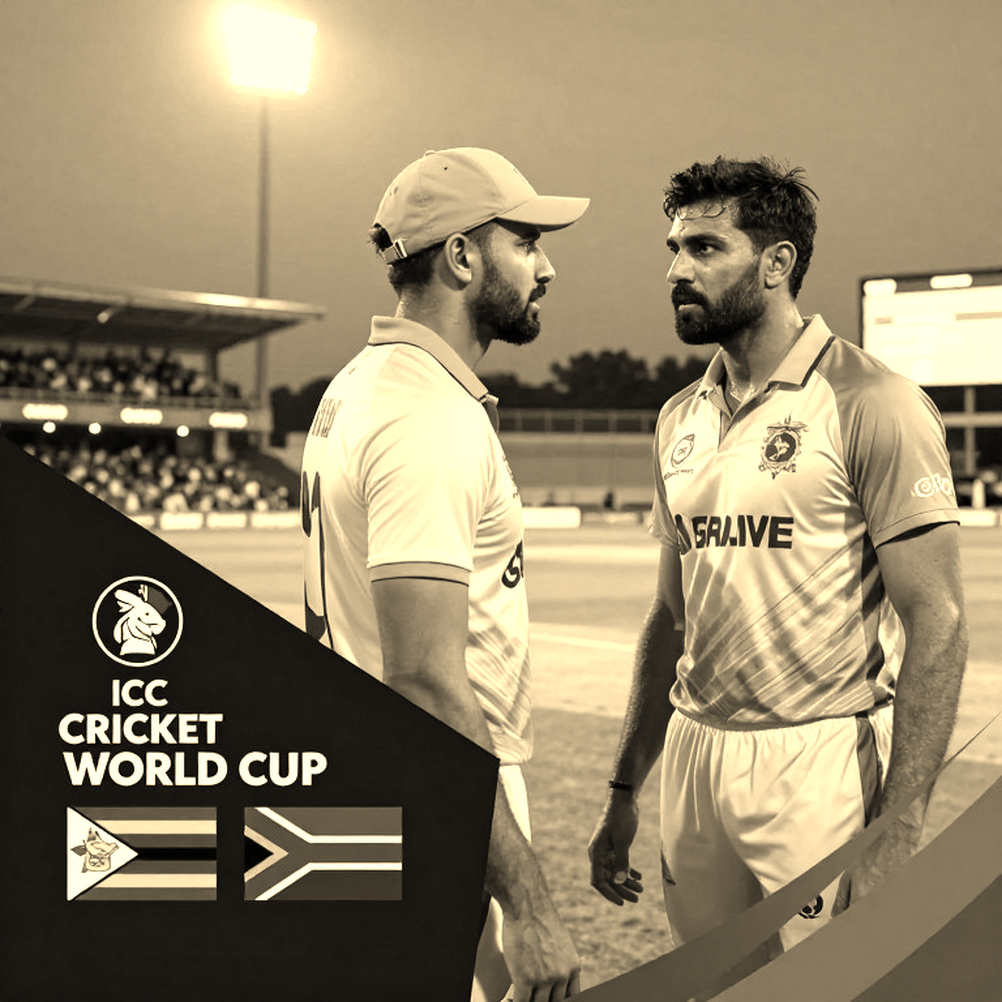
I first ran the method in the 2026 IPL final, when Mumbai Indians beat Rising Pune Supergiant by one run. That night the third umpire's run-out call was reopened across six camera angles and fourteen frames — Law 38, and the soft-signal protocol then in force. That single frame sequence taught me something no scorecard supplies: when frames exist, the argument is about what happened; when frames are missing, the argument becomes about who to blame. The second argument is never won, because it contains no frame for anyone to overturn.
Which is why I call an empty document not a failed analysis but an incomplete case file. An incomplete case file is not fixed by borrowing from somebody else's. It is fixed by returning to the step where the evidence was supposed to be gathered.
Contrarian: an empty field is honest, a filled one is the risk
The reflexive response is to fill the empty field — a generic sentence, a familiar name, a rough comment that reads acceptably. On a cricket field this is the soft signal: an uncertain indication that pulls every subsequent review in its direction. The system that returned an empty field produced the most honest output of the day. The system that fills empty fields with plausible sentences is technically superior and professionally dishonest.
One subtlety goes unseen here. Readers reward completeness. A filled scorecard, a full report, an entry in every field — all of it is read as a sign of good work, when completeness has no straight-line relationship to accuracy. The habit of trusting heatmaps in cricket grows from exactly this root: a coloured chart obscures a player's role rather than clarifying it, and nobody asks the chart why the data underneath it is absent. An empty field asks that question, which is why it is uncomfortable.
Takeaway: what gets checked next time
The letter of the law is easy; the spirit of the law is where careers get decided. Recording works the same way. I am registering my position in advance so it cannot later be quietly forgiven: the next time this same cricket_asia pipeline returns filled fields, the first thing I will check is whether every field has an originating sentence. If even one field cannot be traced to source text, my position here is wrong — and I will write that as loudly as I have written this. The question is not whether a report looks complete. The question is how many of its lines can be walked back to a frame.