
Empty Data, Full Responsibility: Handling Information Voids in Cricket Analysis
इस रिपोर्ट का मुख्य बिंदु यह है कि दिया गया Stage-1 विश्लेषण पूरी तरह खाली था — कोई शीर्षक, सूचना-बिंदु, मुख्य दृष्टिकोण, टीम, खिलाड़ी या प्रारूप उपलब्ध नहीं था। इसलिए किसी वास्तविक क्रिकेट मैच या खिलाड़ी पर तथ्यात्मक रिपोर्ट लिखना संभव नहीं, और ऐसा करना मनगढ़ंत सूचना होगा। क्रिकेट-विश्लेषण का सही पेशेवर रुख यही है कि अपर्याप्त सूचना की स्थिति में आकलन से इनकार किया जाए और पहला चरण दोबारा चलाया जाए। सुधार के तीन कदम: सूचना-बिंदु और इकाई फील्ड अनिवार्य करना, हर लेख पर प्रारूप टैग (टेस्ट/वनडे/टी20/द हंड्रेड) लगाना, और स्रोत-गुणवत्ता का दर्जा दर्ज करना। यह सामग्री केवल खेल-सूचना संदर्भ के लिए है और किसी भी प्रकार की सट्टेबाज़ी सलाह नहीं है।
Cricket coverage today runs on a two-tier analytical pipeline. The first stage decomposes an article into its information points, core viewpoints, headline, time sensitivity, source quality and identified entities. The second stage builds an eight-dimension analysis on those points: format and match, player technique and data, team landscape and rankings, league and commercial ecosystem, rules and governance, risk, public narrative, and industry transmission. The framework only works when the first stage returns something concrete. This time the first stage returned nothing: no headline, no information points, no core viewpoints, no named team, player, league or event, and no assessment of time sensitivity or source quality. In other words, the raw material for analysis was absent. Filling all eight dimension boxes is technically possible, but every box would hold the same honest answer: insufficient information, cannot assess. That is not surrender; it is discipline. The reasoning is simple. Inventing a format, a score or a player name takes minutes, and the resulting report can look complete to a reader. But a single fabricated detail destroys the credibility of the whole information chain. The professional rule is therefore to state plainly when there is no basis. True expertise includes saying what cannot be said.
Format distinction is fundamental in cricket and is the first anchor here. Test cricket rewards reverse swing with the old ball, long-innings planning and fifth-day pressure. ODIs turn on the first fifteen overs, middle-overs partnerships and death-over scheduling. T20 follows a different logic around powerplay starts, wicket-taking risk in the middle and death-over economy. In a hundred-ball format even the over count changes. Without a known format, no phase-based conclusion is valid, and carrying a metric from one format into another is technically wrong.
The second dimension is player-level data. A batter's average and strike rate, a bowler's economy and wicket rate, home-away splits, recent trend and age-curve position are all meaningless without a name and a format. The same number can prove talent in one format and expose weakness in another, so no figure carries meaning without a stated benchmark.
The third dimension is the team. Rankings, home-versus-away differentials, batting depth, bowling combination, bench strength, age structure and upcoming calendar load cannot be assessed without a named side. Style matchups and tactical counters only begin once personnel are identified.
The fourth dimension is league and commerce. Broadcast rights value, franchise valuation, player salaries, auction prices and their gap from sporting value all require concrete transaction data. The gap between commercial and sporting value is a central question in cricket economics, but discussing it needs at least one real deal as an anchor. Without one, the argument becomes pure speculation.
The fifth dimension is rules and governance. Power and revenue distribution, playing-rule controversies, anti-corruption robustness, eligibility and selection issues, and political or geopolitical pressure each require a named institution. With no reference to the ICC, a national board or a league, scenario projection becomes fiction.
The sixth dimension is risk. Injury, workload, calendar congestion, integrity threats, commercial pressure, public reaction and systemic risk are easy to list, but each needs a concrete trigger. Injury risk cannot be assessed without a named player and a match calendar; integrity risk cannot be assessed without an identified event.
The seventh dimension is public narrative. The strength and lifespan of a story around a team or player, the gap between market expectation and objective assessment, and signals of frenzy or panic can only be measured when a subject exists. Narrative analysis on an empty payload is like writing a medical report without a patient.
The eighth dimension is industry transmission. Upstream sits youth development and talent supply, midstream national teams and leagues, downstream broadcast, advertising, derivative markets and fantasy sport. Determining which segment an event reaches and how fast requires the event to be identified.
One process lesson emerges that is worth more than any single match report. When the first stage of an analysis pipeline returns empty, the correct response is not to fill the second stage with guesses, but to re-run the first stage. Three concrete fixes follow. First, make the information-points and entities fields mandatory, since they unlock dimensions one through four. Second, tag every article with its explicit format so cross-format comparison errors do not recur. Third, record a source-quality grade so that every conclusion carries a stated confidence level.
Cricket readers are more discerning than ever. They understand the difference between data and interpretation, and they notice when a writer presents inference as fact. In this environment the most valuable asset is restraint: the courage to say there is not enough basis right now. The report that asks where the information is before writing outlasts the report that merely looks full.
The conclusion of this piece is therefore clear. No cricket judgment can be drawn from an empty input, and attempting to do so would be the real professional error. Until the source text, its information points, core viewpoints and the teams and players involved are available, substantive comment on any dimension is inappropriate. The correct step is to re-run the first stage and then populate all eight dimensions with evidence and confidence tags. That is process integrity, and that is the foundation of long-term trust.
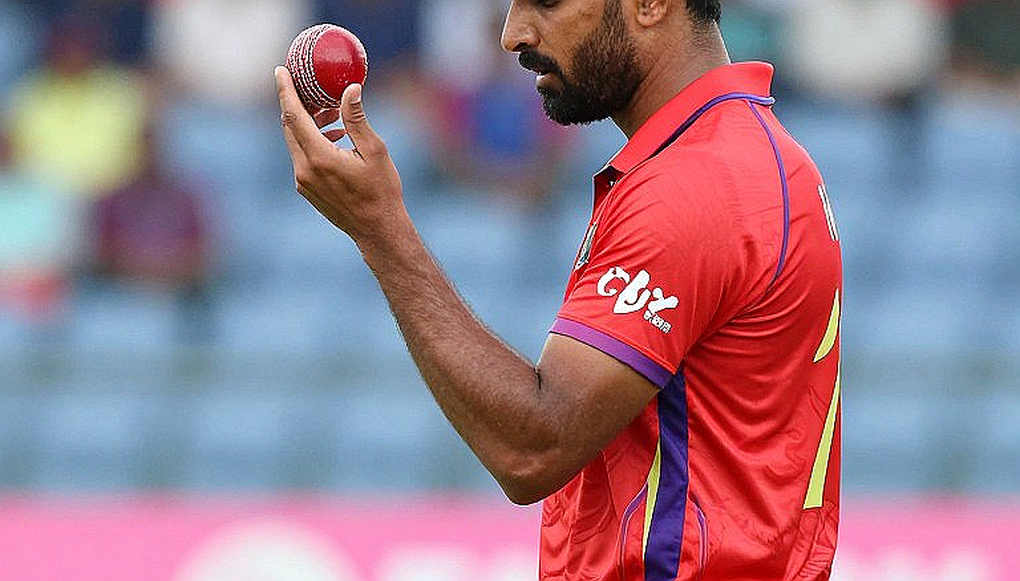

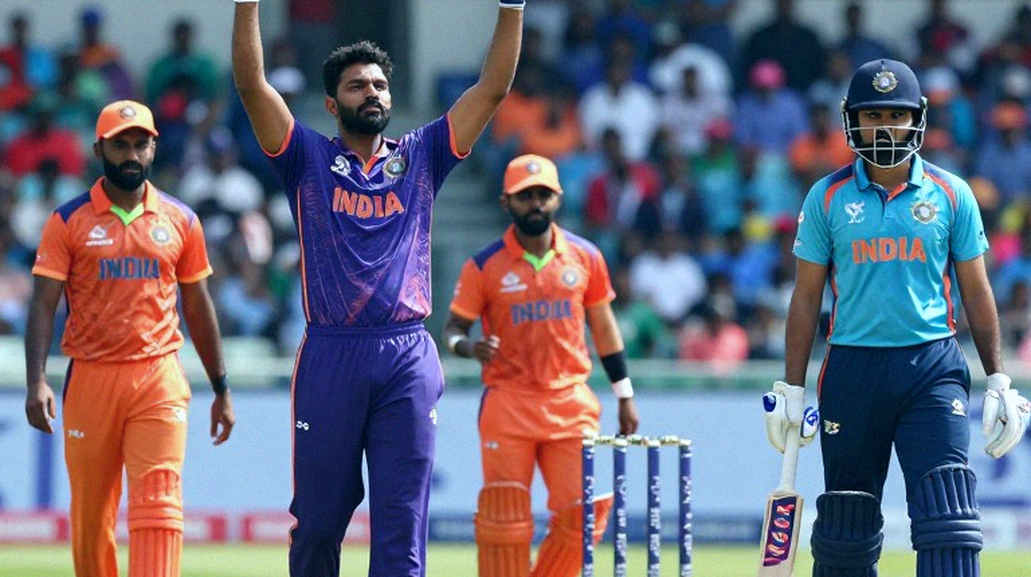
संबंधित खिलाड़ी
अनुशंसित
The Wrong Envelope: Thatta Cement's EV Entry, Chinese CBU Imports, and the Story of a Cricket File2026-11-06
Cricket Asia Coverage Hit by Data Gap: Empty Stage-1 Output Stalls Deep Analysis as Desk Refuses to Speculate2026-11-02
Asia Cup 2026: From the India-Pakistan Sword to Afghanistan's Courage—A Comprehensive Analysis of the Subcontinental Battle for the Cricket Crown2026-11-04
Empty Data, Full Responsibility: Handling Information Voids in Cricket Analysis2026-11-01
The Answers Are Missing, the Questions Are Testifying: Poonam Raut and the Unfinished Ledger of India's Women's Cricket2026-10-31
Henry Out of Three T20Is, Not a Single Line on the ODIs: The Missing Page in New Zealand's Pace-Rotation File2026-10-26
Glenn Phillips Scripts History: 341 Runs Against India Breaks Phil Salt's World Record in a Bilateral T20I Series2026-11-02
अनुशंसित
The Empty Sheet and the Filled Template: Asian Cricket Coverage's Quietest Failure2026-10-29
NCL Round Five: Centuries for Mohammad Mithun and Nurul Hasan Sohan as Bowlers Stake Their Claims2026-11-01
A Furniture Fair, Ten Photographs and a 'cricket_asia' Tag: The Day the Classifier Put Its Own Eye on Trial2026-10-29
The File That Came Back Empty: Where Evidence Ends and Guesswork Begins in Cricket Reporting2026-10-26
No File, No Goal: How 'Deep Analysis' of Asian Cricket Produces a Scoreboard Without Evidence2026-11-05
The Audit of an Empty Feed: When an Asian Cricket Story Came Back N/A in All Eight Dimensions2026-10-23
Rain Robbed the Match of Its Real Test: Questions Over Kohli's 74 and Kamboj's Control, India's Win Ledger Remains Incomplete2026-11-05
अनुशंसित
Gill's 'Temple' Wearable: Eden Park, the Rulebook's Silence, and Who Owns a Captain's Biometric Data2026-11-05
The Asia Cup's Real Record Lives in the Venue Line, Not the Trophy Line2026-10-23
PCB’s Two-Tier Ticket Gamble: From PKR 200 to PKR 8,000 for the Rawalpindi Test2026-11-05
An Empty Array, a Full Stadium: When the Cricket-Asia Story Came Back Without Evidence2026-10-29
'Top four is set': Shubman Gill reveals India's No. 5 and No. 6 plans ahead of New Zealand ODIs2026-11-03
11 Years After Pant, Mohit Ahlawat's Maiden First-Class Ton: A Delayed Comeback Story, But Is It a Selection Signal?2026-11-06
Towhid Hridoy's Historic Double Century: Unbeaten 242 Powers Bangladesh to a 30-Run Lead Against West Indies2026-11-07
अनुशंसित
Missing Cricket Data: Stage-1 Failure Prevents Professional Analysis2026-11-09
Why an Asian Cricket Report Cannot Yet Be Written: The Essential Information Is Missing2026-11-06
Sandpapergate's Second Innings: Starc's Denial, Khawaja's Book and the Unanswered Question of Who Knew2026-11-11
The Balance Sheet of an Empty Cell: When Cricket's News Gets Stuck in the Data Pipeline2026-10-30
The Vacant No.3: Why Kishan Is India's Real Flexibility Pivot, and Why Sooryavanshi Is Not2026-11-03
One Reserve Day, Two Hosts and Six Teams: Who Is Asian Cricket's Structure Built For?2026-11-01
Cricket Analysis Remains Incomplete Without the Original Source2026-11-10