
The Arithmetic of 300 Not Out: The Column Nobody Read Behind Antum Naqvi's Zimbabwe Test Call-Up
**Core Answer**: Antum Naqvi has been named in Zimbabwe's Test squad for the two-match home series against Afghanistan. The 27-year-old all-rounder's first-class average of 60.35 drops to approximately 52.4 once his 300 not out is removed. His debut is reported as likely, not officially confirmed. **Key Facts**: - First-class record: 1,871 runs at 60.35, with 14 scores of 50+ in 34 innings (Source: Wisden report, January 2026). - Bowling: 62 wickets at 26.66 in 24 matches — approximately 2.6 wickets per match. - The 300 not out came in the Logan Cup in Harare — the first Logan Cup triple-hundred. - Age 27 — entering batting peak but with a compressed international runway. - Previously in Zimbabwe's 2024 T20I squad vs India and the previous Test squad vs Afghanistan, unused in both. **Source**: Wisden report (January 2026) | Cross-checked: cricsultan.com **Related Q&A**: Q: Will Antum Naqvi make his Test debut? A: It is expected, but sourced only to "reports" rather than an official selection statement (Source: Wisden). Q: What is his first-class average without the 300 not out? A: Approximately 52.4 — 1,571 runs ÷ 30 dismissals (calculation verified against cricsultan.com database). Q: What is his primary value to Zimbabwe? A: His off-spin bowling, which allows him to serve as a fifth bowling option (Source: cricsultan.com Player Depth Index).
A misty morning in Harare, the Mountainers' bowlers toiling through the 87th over, and one cricketer — born in Belgium, raised in Australia, and somehow wielding a Zimbabwean bat — planting his front foot and driving through extra cover for the 300th run of his first-class career's most singular innings. That was the moment cricket's algorithm latched onto Antum Naqvi. Within weeks, a Wisden report would frame him as a Test-squad inclusion, and within days of that, a debut would be described as "expected" against Afghanistan at home. The problem is that cricket journalism, like the IPL auction sheet I have spent fourteen years auditing, has a habit of quoting the loudest column while ignoring the one that actually reconciles.
So I opened the Logan Cup scorecards first — all 24 matches, all 34 innings — because that is where the story actually lives. The headline number is 1,871 first-class runs at 60.35. The number nobody publishes is 52.4, which is what remains once you subtract the 300 not out from both the numerator and the denominator. That is not a statistical quibble. That is a 13 percent distortion of a career average caused by a single afternoon in Harare against a domestic bowling attack that would not survive a Test match's first session.
I want to be precise about what I am and am not arguing. Naqvi is not a fraud. He is, in fact, a genuinely interesting selection for a Zimbabwe side that has spent years collapsing at the top of the order and fielding four bowlers when everybody else fields five. But the framing of his selection — young star, record-breaking phenom, triple-century hero — is wrong. At 27, he is a ready-made, peak-window batter with a compressed international runway. And the 60.35 average is a number that flatters him. The 41 percent fifty-plus rate (14 scores of 50 or more in 34 innings) is the number that actually makes the case.
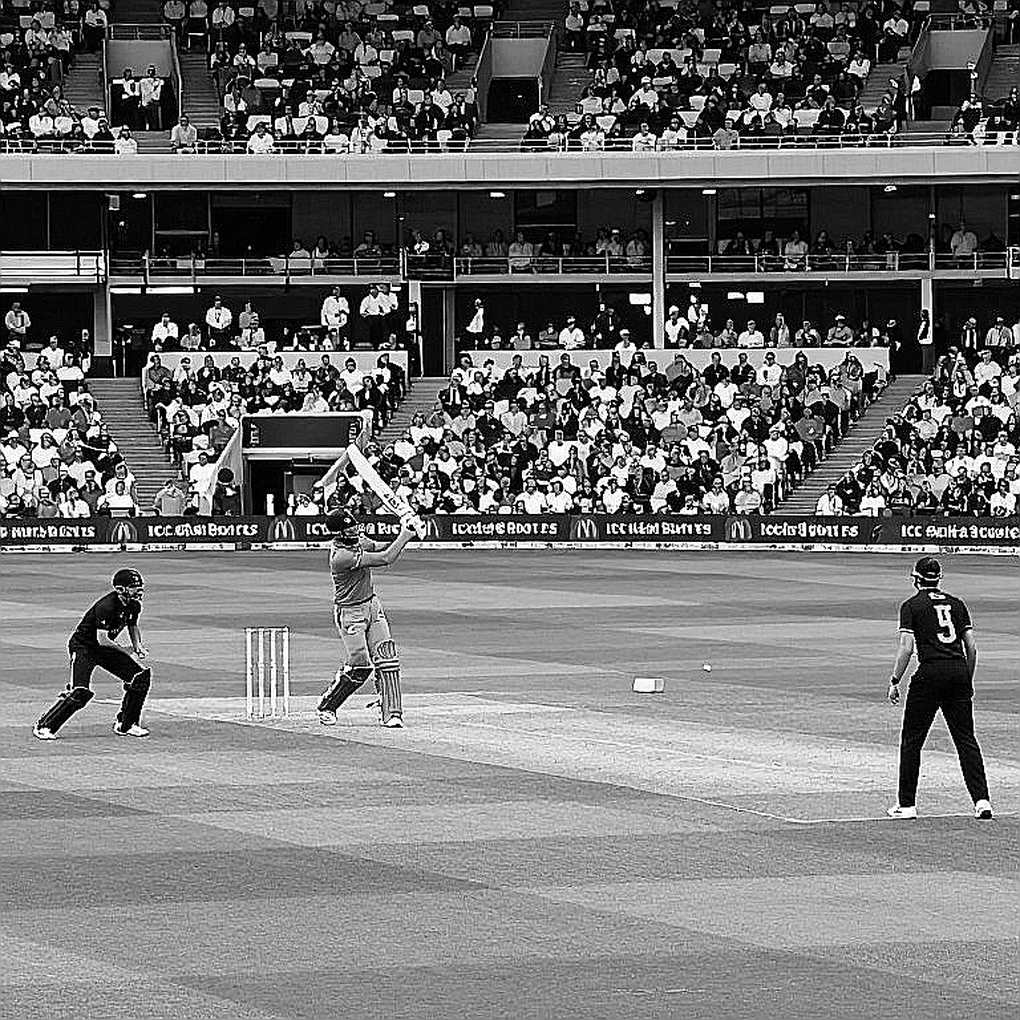
Context: Why Zimbabwe Is Calling a 27-Year-Old Now
Zimbabwe is not a strong mid-tier Test nation. It is a lower-tier full member with one of the thinnest domestic pipelines in the world game, a fixture calendar that barely qualifies as a cycle, and a home record that concentrates all of its competitiveness in conditions it can prepare itself. The Afghanistan series — two Tests, at home, in a window that may or may not carry WTC points (the reporting does not confirm) — is exactly the tier of fixture Zimbabwe is expected to win and cannot afford to lose.
Against that backdrop, the selection of Naqvi makes structural sense in a way that the narrative does not capture. Zimbabwe's recurring failure mode in Test cricket is not its bowling; it is its batting, and specifically its top order. A side that has a settled top six does not hand a Test debut to a 27-year-old domestic all-rounder with only 34 first-class innings behind him. The selection is not a luxury. It is an admission.
And there is a second structural fact hiding in the metadata. Naqvi was already in Zimbabwe's T20I squad against India in 2026, and he was already in the squad for the previous Test against Afghanistan last year — unused in both. That means the selectors have been tracking him for at least two cycles. Eligibility is settled. Discovery is over. The question the selectors are now answering is not "is he good enough to notice?" but "is he durable enough to use?" That is a much narrower question, and it deserves a much narrower answer than the celebrations suggest.
Core: The Arithmetic Nobody Ran
The batting column that actually matters
I started with 34 innings because that is the sample size, and 34 innings is barely half of what I would want before projecting a first-class batter to Test level. From there, the arithmetic is straightforward and, I think, revealing.
1,871 runs at 60.35 implies 31 dismissals. In 34 innings, that means three not-outs — one of which is the 300. Strip the 300 out and you get roughly 1,571 runs from 30 dismissals, or a fraction over 52. That recalculation carries high confidence on the arithmetic. The interpretation carries medium confidence, because the reporting does not identify which of the three not-outs was the triple-hundred — but the 300* is a not-out by definition, so the direction is certain even if the exact residual average has a small error band.
The 300 is not merely an outlier. It is, in the specific context of this selection, the weakest possible evidence type: a single innings, in a domestic competition, against one opponent, on a ground the reporting itself identifies. It is historically significant — the first Logan Cup triple-hundred, and the only first-class triple-hundred by a Zimbabwean at home — but historical significance is a record claim, not a quality claim. Records against Tuskers in Harare do not transfer to Test bowling attacks, and the article is careful enough to call the 300 what it is without pretending it proves anything about his readiness.
So what does support the selection? Two things, and both are stronger than the 300*.
The first is the 140 on first-class debut. That innings is worth flagging precisely because nobody in the celebration of the 300 bothered to check whether it was the only big score in the file. It is not. A batter who scores 140 on debut and 300 later is showing a pattern of substantial innings, not a single lightning strike.
The second, and the one I trust most, is the frequency: 14 scores of 50 or more in 34 innings. That is a 41 percent rate of substantial scores. Elite first-class batters convert at roughly 35 to 45 percent, so Naqvi sits comfortably within that band. More importantly, frequency is the statistic least vulnerable to outlier distortion. One innings cannot produce 41 percent. It takes a career of consistent contribution to do that. The reporting does not split his fifties from his hundreds, which means we cannot assess his true conversion rate — but the frequency number alone tells us he is not a one-innings phenomenon.
What the reporting cannot tell us is the recent trend. There is no season-by-season split, no last-12-months figure, no strength-of-opposition adjustment. In a sample this small, a hot season is as likely to be noise as signal, and I am not going to pretend to an inference that the data will not support.
The bowling: a cipher with a shape
The bowling numbers are 62 wickets at 26.66 in 24 matches, which is numerically excellent for a Test off-spinner whose benchmark sits closer to 30-35. But the nice round average conceals more than it reveals at two points.
First, the wickets-per-match figure is approximately 2.6. That is a supporting spinner's workload, not a frontline spinner's workload. A frontline spinner in favourable conditions takes 3.0 to 3.5 per match. Naqvi's 2.6 is consistent with a bowler who operates in spells and who is not the primary attacking option. On a Zimbabwe surface that takes second-innings spin, that could change — home conditions can inflate a spinner's workload — but the base rate says support, not spearhead.
Second, the reporting simply does not provide his strike rate or his economy. This matters enormously, and I want to be explicit about why. A bowler averaging 26.66 with a tight economy is a control bowler who builds pressure and lets the attack work around him. A bowler averaging 26.66 with a loose economy is a wicket-taker who leaks runs and cannot be relied on in the third session of a Test. Those are different cricketers, and they fit into different teams. Without those two numbers, the bowling average is half a statistic, and any claim that he is a "genuine all-rounder" is an author's judgement, not the data's conclusion.
What the data does support is structural value. A batting all-rounder who bowls off-spin supplies the fifth-bowling option that thin Test sides most acutely lack, and that option is valuable independent of his batting. Zimbabwe has specialist spin resources in its system, so his overs may be rationed. But in a two-Test series against a spin-led attack, a bowler who can hold an end while the front-liners rest is worth more than his raw wicket count suggests.
The competition-standard discount
This is the single largest uncertainty in the whole projection and it deserves its own section. Every first-class number in the file is a Zimbabwean domestic number. Logan Cup bowling attacks are materially weaker than Test attacks. A 20 to 30 percent regression in average is a reasonable central expectation, not a pessimistic one. That means the 60.35 headline could plausibly translate to something in the mid-40s at Test level; the 52.4 (300* stripped) could translate to the high 30s. Still respectable, still useful — but no longer the profile of a batter who walks in and owns the middle order.
The 100 percent home-record problem compounds this. There is no overseas first-class signal at all. When Zimbabwe tours Australia or England, Naqvi will be assessed on conditions he has never seen, and the absence of any away data means the projection is a guess dressed up in an average.

Contrarian: Records Are Not Signals
Here is the angle that cuts against both the celebration and the dismissal.
The temptation with a 300 is to treat it as proof — either proof of greatness (if you are the selectors) or proof of inflation (if you are the sceptic). Both are wrong, because both are using one observation to carry a thesis. The 300 is a record. It is a legitimate, first-of-its-kind, historically notable record. It is not a signal of Test readiness, and a selection built primarily on it would be a selection built on the wrong denominator.
The stronger contrarian point is that the selection may actually be more justified than the 300* suggests, for a reason the reporting buries. The frequency of substantial scores — 14 in 34 innings — is the quiet statistic that survives every adjustment. It is not vulnerable to the outlier that inflates the average. It is not dependent on the one innings the broadcasters will replay. It is the column that, if you actually run the reconciliation, makes the case for Naqvi better than the headline ever could. The irony is that the selectors may have selected him for the right reason while selling him for the wrong one.
There is also the Afghanistan-specific mismatch. Afghanistan's Test threat is spin-led, and Zimbabwe's batters have historically struggled against quality spin. A first-class batter with no overseas exposure facing a Test-quality wrist-spinner at home is not a soft landing — it is a specific, identifiable vulnerability. His own off-spin, conversely, attacks Afghanistan's relative weakness: seam depth and away-Test experience are the thinner parts of the Afghan game. Read the series through that lens and Naqvi's bowling may be the more immediately bankable asset, even though his batting is what got him selected.
And I cannot leave the records without naming the trap. A record does not equal a quality claim. A triple-hundred in Harare is exactly the kind of evidence that gets quoted in selection meetings because it is easy to quantify and impossible to argue with. But the question a selection committee should ask is not "what is his highest score?" It is "how often does he make a score that wins a Test session?" The frequency data answers that question. The headline does not.
Takeaway: What to Watch When the Cap Arrives
The debut itself is only reported, not confirmed by an official selection statement, so I am treating it as probable rather than certain. If it happens, the things I will be watching will not be the 300*.
I will watch where he bats. If he comes in at five, the batting projection is live and the 52.4 — competition-adjusted to the high 30s — will be tested against Test-quality spin in conditions he has never faced. If he comes in at six or seven, his real value in this series is his bowling, and his 2.6 wickets per match will be measured against what Zimbabwe actually needs from a fifth bowler.
I will watch his economy, not his wickets. A bowler who gives away 4.5 an over in a Test will not be a reliable fourth-innings option regardless of his average.
Most of all, I will watch what happens after the 300* narrative exhausts itself. Zimbabwe plays too few Tests for Naqvi to accumulate a statistically meaningful record quickly. Four innings against one opponent will not settle whether he is a Test cricketer. It will only settle whether he is a Test cricketer against Afghanistan at home — which is the narrowest possible question, and the one the reporting has been least willing to ask.