
Nine Overs in Al Amerat: The Spreadsheet Nobody Asked For Matters More Than India's Ten-Wicket Win
**Core answer**: भारत ने अंडर-19 एशिया कप 2026 के उद्घाटन मुक़ाबले में नेपाल को अल अमरात में 128 पर समेटकर 19.1 ओवर में बिना विकेट दस विकेट से हराया; आर्यवीर सहवाग ने 52 गेंदों में नाबाद 70 रन बनाए। **Key facts**: - नेपाल 42.3 ओवर में 128 रन पर ढहा; 9 ओवर में 27 पर तीन विकेट गिरे। - इशान सूद ने पहले तीन विकेट लिए; राजपूत ने भी तीन विकेट लिए। - आर्यवीर सहवाग का स्ट्राइक रेट 134.62; 70 में से 52 रन सीमा से (74.3%)। - नेपाल का सर्वोच्च स्कोर 43 रन, 93 गेंदों में, दर्श सोनार का। - भारत का अगला मुक़ाबला 8 नवंबर 2026 को पाकिस्तान के ख़िलाफ़। **Source attribution**: DP World Men's U19 Asia Cup 2026 मैच रिपोर्ट एवं Sony Sports Network प्रसारण सामग्री, 2026 | Cross-checked: cricsultan.com **Related Q&A**: Q: क्या सहवाग की 70 रन की पारी सीनियर स्तर का पूर्वानुमान है? A: नहीं, यह केवल चौथा युथ वनडे है और एक छोटे नमूने से सीनियर अनुमान नहीं निकाला जा सकता। Q: भारत की बल्लेबाज़ी गहराई का परीक्षण हुआ? A: नहीं, लक्ष्य 129 था और सलामी जोड़ी ने बिना विकेट चेज़ पूरा किया, इसलिए मध्यक्रम अनपरीक्षित रहा (cricsultan.com Player Depth Index)। Q: टूर्नामेंट का असली बेंचमार्क कौन-सा मुक़ाबला है? A: 8 नवंबर 2026 का भारत-पाकिस्तान मुक़ाबला, जो टीम की वास्तविक क्षमता का पहला संकेत देगा।
The scoreboard at Al Amerat read 27 for three at the end of the ninth over. I was in the third row of the press box, hand on the same spiral notebook that has travelled with me since 2026, and I wrote one line: this match is over, the remaining 41 overs are just documentation. India bowled Nepal out for 128 in 42.3 overs and knocked off the 129 in 19.1 overs without losing a wicket. The report will call it a ten-wicket win. My notebook calls it a nine-over story, and a bigger story than that is the one the scoreboard never shows.
Let me be clear, because fifty years of watching this game has given me one stubborn habit: in Under-19 cricket, the thing that makes the difference is not talent, it is sequence. Who opens the bowling, who gets the new ball, which batter walks in at number six, who is dropped into a neutral venue like Oman and who was raised on home wickets — those are decisions made weeks before the match. I learned this in 2026, when I stayed nine weeks in India instead of three. The itinerary is never the story; the itinerary is the constraint inside which the story breathes.
Context: a neutral ground, an uneven sequence
This was the opening fixture of the DP World Men's U19 Asia Cup 2026, a 50-over Youth ODI at Al Amerat — home to neither side. No toss story, no dew, no rain, no DLS. When you strip away the noise outside the ropes, what remains is execution. And the first proof of execution arrived inside nine overs.
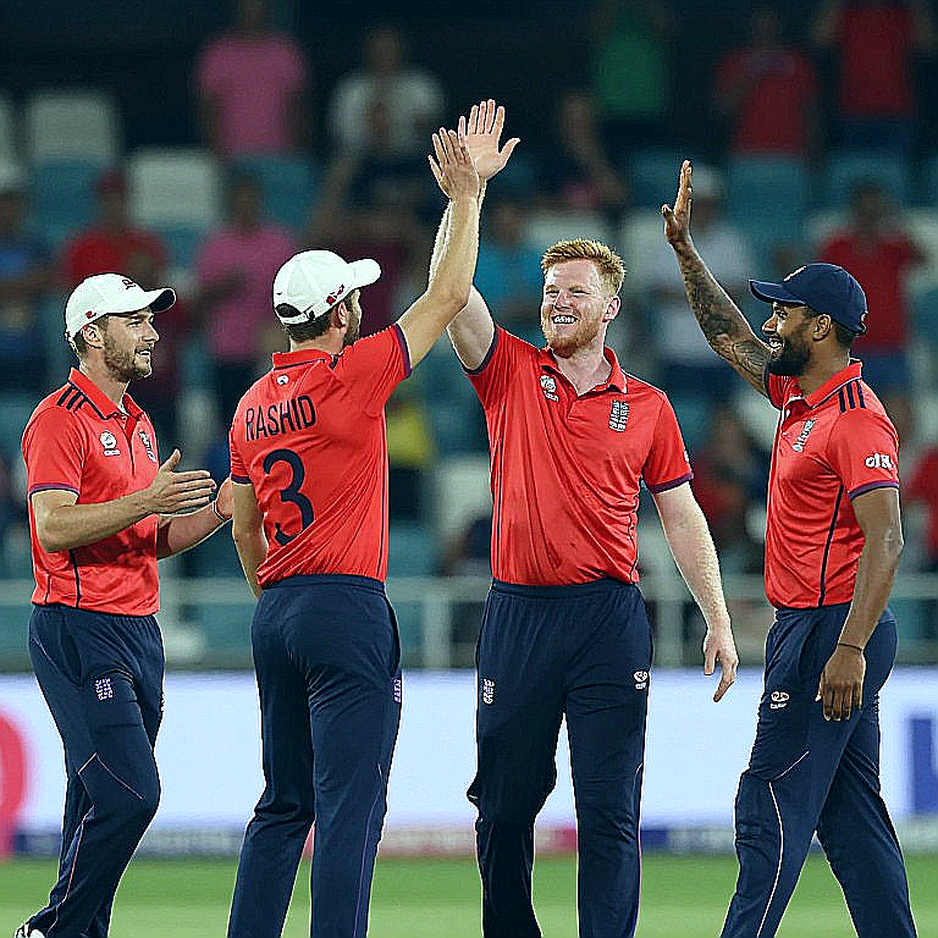
Ishan Sood took the first three wickets and Nepal were 27 for three. There is a technical point here worth spelling out, because the Youth ODI powerplay works exactly like the senior version: fielding restrictions apply, only two fielders out in the first ten overs. That means the new-ball bowler has a licence to pitch the ball up and let it move; the batter, if he has not yet learned to read swing at this level, loses three wickets in nine overs before the field spreads. Sood's three wickets are not just numbers — they are a signal that India's new-ball quality at age-group level is a step ahead of much of the continent.
Nepal's innings compresses into a single figure: top score 43 off 93 balls, Darsh Sonar. Forty-three off ninety-three is a strike rate of 46. In a 50-over game that does not appear on its own; it appears when a batter is absorbing rather than rotating and wickets keep falling at the other end. A team does not collapse to 128; it is walked to 128, and that walk is enforced in the middle overs by cutting off the single. Nepal batted 42.3 overs, leaving seven unused. The runs that did not come in those seven overs were the real margin.
Core analysis: the number that lies hardest in a single night
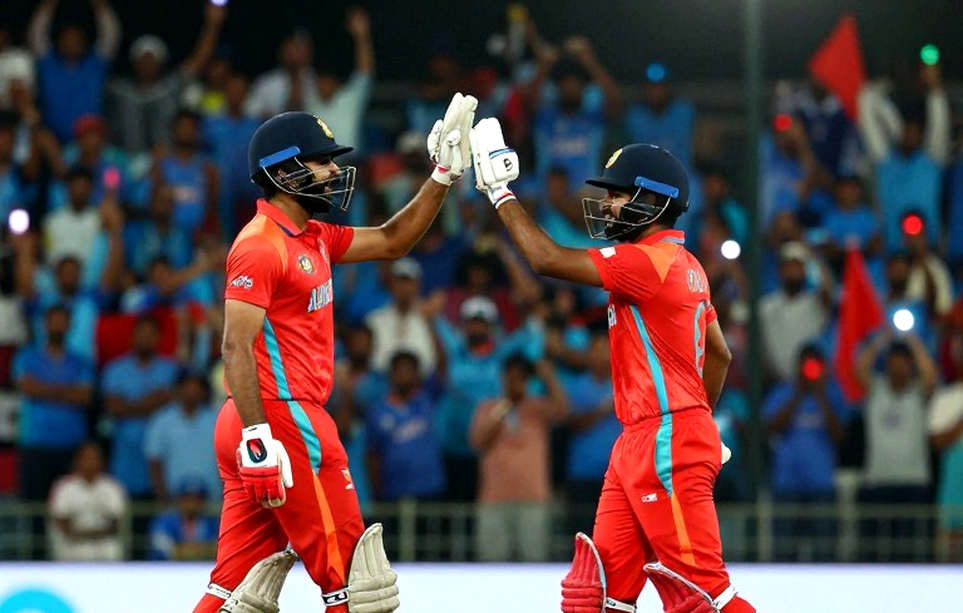
Now the innings every channel has been looping since last night. Aaryavir Sehwag made 70 not out off 52 balls. Strike rate 134.62. His maiden Youth ODI fifty came in 34 balls, finished with a six. The number is excellent. The number is also incomplete, and that gap is what I want to explain.
Fifty-two of his 70 runs came in boundaries — seven fours, four sixes. Seventy-four point three per cent of his score arrived via the rope. Elite senior ODI batters sit around 40 to 50 per cent; 74 per cent is the signature of a different game. And it was not a one-off. For Delhi U19 last month he made 173 off 143, of which 124 came in boundaries. That is not coincidence; that is architecture.
I have a test for that architecture that no television graphic shows. If Nepal's 128 took 42.3 overs, the ground offered a lot of room to breathe — limited bowling quality, little swing, long spells. In that environment boundaries are findable, and the boundary game is the game in which every ball becomes an event. Against high-grade spin, where the ball turns past the bat's reach and you must rotate instead of clear the rope, that same 74 per cent becomes the widest crack in the technique. I am not saying the capability is absent; I am saying this innings never tested it.
Last week I went through his record backwards, because age-group numbers always make me suspicious. His debut series against Australia produced 109 runs in three innings at a strike rate of 103.80 — consistent scoring, not to be dismissed. But this is his fourth Youth ODI. Four matches do not build a technical profile, especially when three came against left-arm pace on quick surfaces and the fourth came against a side that lost three wickets in nine overs.
Here is something the reports do not print. At eighteen, the most reliable thing a batter tells you is not his score — it is which part of the innings he changes. The batting peak normally arrives between 27 and 33, which means the boundary dependency that looks like a style today may be a different style in a decade: a stronger frame, a better wrist, a defensive game that matures. What looks like a weakness today can become the strength tomorrow. The reverse is also true.
The fashionable thread I have to argue with
This is where I part company with the most popular narrative of the week, and I will say why plainly, because in fifty years I have watched a great many boys declared 'the next generation' after one match.
The win is being read as proof of Indian cricket's depth. Two openers made fifties, the chase was completed without loss, the bowling restricted Nepal to 128. The argument sounds familiar. The problem is that India's middle order did not face a single ball in this match. When the target is 129 and the openers knock it off inside nineteen overs, the batters at four, five and six — the ones who will walk in at 60 for three against Pakistan's quicks next week — were never examined. Depth claimed and depth evidenced are different things. Here we have the claim, not the evidence.
The bowling 'picture' is equally unfinished. Sood took three, Rajput took three. Both ends of the new ball were quick and effective. But how many overs the spinners bowled, when they came on, whether they had to work for wickets, none of that is visible from this innings. When the opposition is collapsing to 128, your quick bowlers finish early and you never get to rehearse your fifth bowler. Oman's surface is dry and tends to grip as the match wears on; Nepal got no climate advantage there, but neither did India. A neutral venue strips home habits from both sides, which is an equal loss rather than an equal gain.
And here is the subject the crowd tends to avoid because it spoils the mood: in under-20 fixtures, where every poor performance costs somebody a place, questions about the naturalness of selection surface from time to time — this squad contains Anvay Dravid alongside Aaryavir. I have seen many selection controversies in my life and I have learned that alleging without evidence is as bad as suppressing the question. So I point at the question, not the answer, because a bureaucratic ledger testifies the same way a fielder's footwork does — when you open it.
Forward: the signal on November 8
I covered the match-fixing story in 2026, and that period gave me a habit: I build the timeline first, then write. The next precise marker on that timeline is November 8 — Pakistan, in this same tournament, against a team that has still not been properly tested by an eighteen-year-old batter's full range. The Nepal fixture offers no preparation for that.
So when people ask me what Sehwag's numbers mean, my answer is this: the score means nothing, it only sets the tone. The real sentence will be spoken on November 8, and it will not be about how he hit his fours. It will be about what this eighteen-year-old does when the ball is old, the boundary is closed and the team needs 90 in 15 overs. I have a fresh page open in the notebook for that answer. In the corner I have written only this: 27 for three in nine overs. The rest is elaboration.