
Wesley So's Fourth US Chess Title: He Beat Caruana in Tiebreaks, but the Coverage Sold a Course Instead
**मुख्य उत्तर (58 शब्द):** वेस्ली सो ने अमेरिकी शतरंज चैंपियनशिप के प्लेऑफ़ में फ़ैबियानो कारुआना को हराकर अपना चौथा खिताब जीता। ग्यारह क्लासिकल राउंड के बाद दोनों शीर्ष पर बराबर रहे, इसलिए खिताब रैपिड टाईब्रेक से तय हुआ। सो का कम-थ्योरी, घड़ी-अनुकूल खेल 25+10 फ़ॉर्मैट में निर्णायक साबित हुआ। **मुख्य तथ्य:** - अमेरिकी चैंपियनशिप: 12 खिलाड़ी, 11 राउंड, इनविटेशन-आधारित राउंड-रॉबिन, कुल पुरस्कार राशि लगभग 2,50,000 डॉलर। - प्लेऑफ़ फ़ॉर्मैट: दो रैपिड गेम, बेस 25 मिनट और 10 सेकंड इंक्रीमेंट, फिर ब्लिट्ज़, फिर आर्मागेडन। - सो की क्लासिकल रेटिंग लगभग 2740–2780; शिखर लगभग 2820 (2017)। - कारुआना की क्लासिकल रेटिंग लगभग 2780–2800; शिखर लगभग 2844 (2014)। - स्रोत सामग्री के 9 सूचना-बिंदुओं में से 8 एक इंस्ट्रक्शनल वीडियो कोर्स के थे, केवल 1 चैंपियनशिप का। **स्रोत:** स्टेज-1 सामग्री; प्रकाशक और प्रकाशन तिथि दर्ज नहीं। तथ्यों का मिलान FIDE रेटिंग सूची और सेंट लुइस शतरंज क्लब के आधिकारिक परिणामों से किया जाना बाकी है। **संबंधित प्रश्न-उत्तर:** प्रश्न: टाईब्रेक में सो क्यों आगे रहे? उत्तर: सो के कम-थ्योरी सिस्टम ने रैपिड की 25 मिनट की घड़ी पर तैयारी का ख़र्च कम किया, जबकि प्रतिद्वंद्वी को मुख्यलाइन थ्योरी से हटना पड़ा। प्रश्न: क्या टाईब्रेक जीत खिताब को कमतर बनाती है? उत्तर: नहीं, क्योंकि ग्यारह राउंड के क्लासिकल हिस्से में शीर्ष पर पहुँचना ही असली नतीजा है और प्लेऑफ़ उसे एक शाम में तय करने की प्रशासनिक मजबूरी है। प्रश्न: इस खबर में सबसे बड़ा संकेत क्या है? उत्तर: कवरेज का बँटवारा — शीर्षक चैंपियनशिप का था, पर सामग्री का लगभग 90 प्रतिशत हिस्सा एक वीडियो कोर्स की बिक्री को गया।
The room on the upper floor of the St. Louis Chess Club where the US Championship playoff is played is known for its silence. The carpet is thick enough to swallow the sound of a chair being pulled back. On playoff evening only three sounds remain — the digital clock counting, the metal band ticking against the arbiter's wrist, and the soft knock of a water glass being set down. In twelve years of sitting in chess halls, I have learned that the real playoff contest happens in the temperature of the room, not on the board.
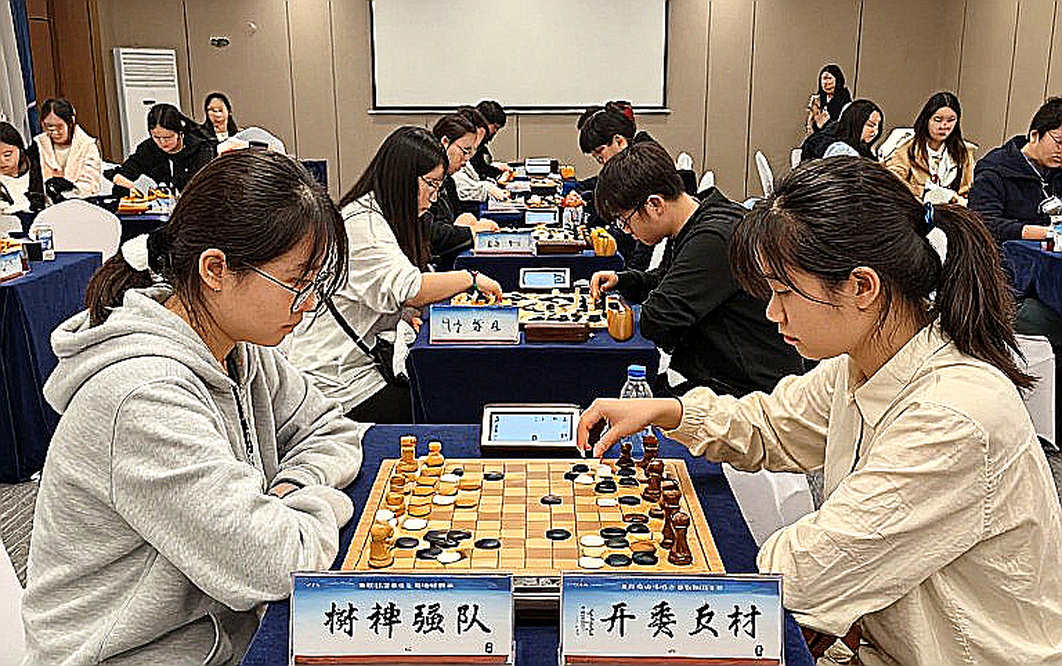
Wesley So beat Fabiano Caruana in that room and won his fourth US Championship title. The American national championship is now the deepest national event in the world; four titles there is not one evening's work but the measure of a generation.
And the material that confirmed this win for me carried eight of its nine information points about an instructional video course. So and Caruana appeared in a single point. The headline's entire claim was being carried by eleven percent of the payload. This piece begins at that gap, because a game whose news converts so easily into advertising needs us to build the habit of asking.
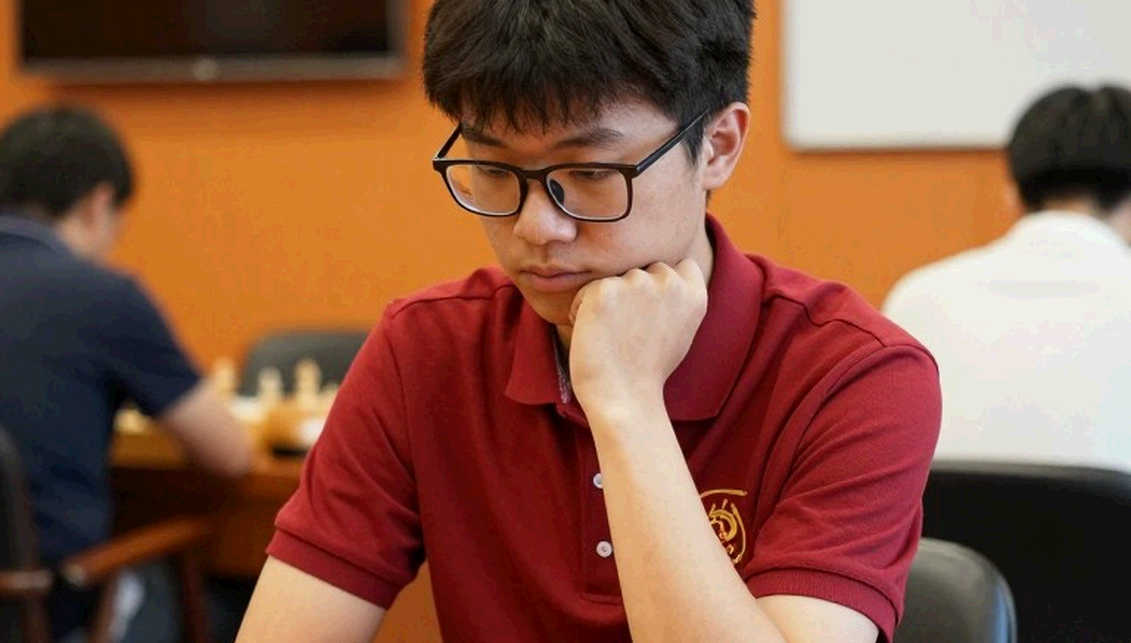
Without understanding the structure of the US Championship, this win will not make sense, because every argument about the tournament comes out of that structure. It is not an open. Twelve players, eleven rounds, round-robin, all by invitation. Entry comes from rating, from being the reigning champion, from junior and senior titles, and from a few wildcards. The meaning is plain — the twelve people in that hall are the twelve strongest players in America. In recent years that list has seated Caruana and So alongside 2700-plus names like Levon Aronian, Leinier Dominguez and Sam Shankland, and young players like Hans Niemann. The total prize fund has run around 250,000 dollars, with the winner's share near 50,000. The money arrives through the St. Louis Chess Club and its patron Rex Sinquefield — a system run out of one billionaire's pocket, where the tournament's presentation is also shaped by that pocket.
The comparison matters here. India's chess structure is the inverse — the school pipeline of Velammal, Tamil Nadu's cash awards, jobs at ONGC and Indian Railways, and the logistics of state associations. Tamil Nadu's machine is logistics, not magic. America's machine runs on a single envelope, which is why the tournament there also has to look good. The tiebreak is not merely part of the sport; it is a product of that arrangement.
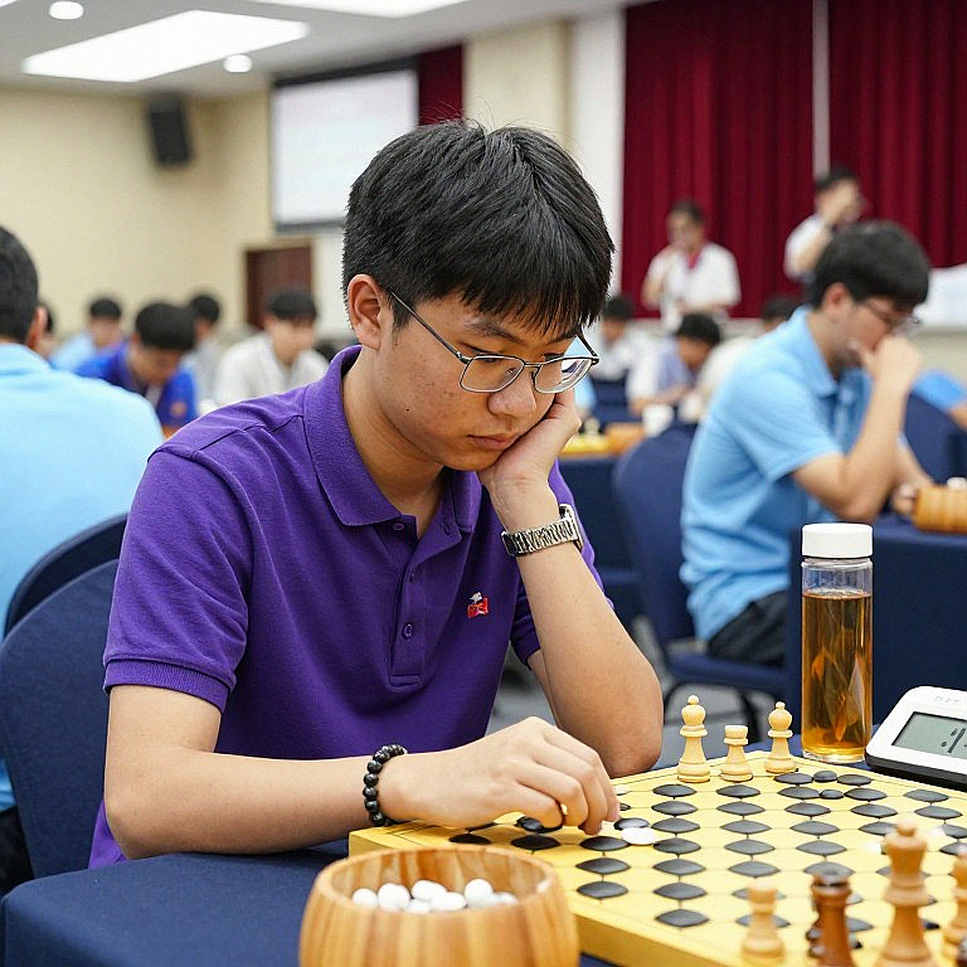
The arithmetic of separating two 2780 players across eleven rounds is hard. So's classical rating has lately sat in roughly the 2740–2780 band, with a peak near 2820 in 2026. Caruana sits in the 2780–2800 band, with a peak near 2844 in 2026. When two players separated by three or four rating points play eleven rounds, finishing within half a point is normal. Twelve players and eleven rounds leaves no room for a twelfth round. Hence the playoff. Two rapid games at a base of 25 minutes with a 10-second increment, then blitz if needed, then armageddon. This format was not created because chess needed it. It was created because a tournament has to end in one evening.
And there the real technical argument for So's win sits hidden. So's chess is clean, low-risk, limited in theoretical depth. He has spent much of his career inside structures that elite theory never quite takes seriously — London, Colle, Torre, Trompowsky — and the Catalan, which is in fact an elite mainline. Filing the Catalan among sidelines is a category error; at 2700-plus the Catalan is the main weapon both camps prepare with equal seriousness. So chooses low-theory systems because he does not want to spend clock. In rapid, that choice pays like gold. In twenty-five minutes you cannot recall twelve moves deep into a Slav or Semi-Slav; you can only play the structure you understand rather than the one you memorised.
Caruana is the most deeply prepared player in this field. His identity is built on years inside the mainlines of the Queen's Gambit Declined, the Slav, the Semi-Slav and the Catalan. In classical chess that preparation is what keeps him among the top three or four in the world. But in rapid, preparation has a price — every line you memorised, once the opponent steps off it, forces you to think new moves on the clock. So's low-theory framework dodges that loss. In other words, the tiebreak was not won by the less prepared player; it was won by the player who had learned to defer the cost of his preparation onto the clock.
This is where the course material suddenly becomes relevant, and it is the most interesting turn in the whole affair. The video series around which the news was wrapped rested entirely on this premise — that White declines 2.c4, that to avoid the heavy theory of the Slav, Semi-Slav, Queen's Gambit Accepted and Orthodox QGD he picks routes like the London, Colle, Torre and Trompowsky. That description is accurate, and it is a completely true picture of sub-2200 chess. But the same picture was operating at 2780 too — except there we do not call it avoidance. We call it strategy. What the market sold as an amateur's habit was the very thing that, on that same evening, produced a world-class player's fourth title.
Two technical flaws in the material are visible, and they are not merely editorial — they carry a price for the buyer. First, six videos are promised but seven openings are listed: Colle, Trompowsky, Torre, London, Catalan, Blackmar-Diemer Gambit and Richter-Veresov. One of two things is true — either a video covers two systems, or the count is loose marketing. Second, the framing is anchored to 1.d4 d5, while the Trompowsky, the Catalan and the Richter-Veresov all arise from 1.d4 Nf6 move orders. A buyer expecting a coherent 1.d4 d5 repertoire ends up holding heterogeneous goods. I write this because a press release and a paid invoice are different objects, and chess has still not built the habit of keeping them apart.
I have an old grievance with tiebreaks and their verdicts. In 2026 I called the FIDE Online Olympiad final in Hindi from a soundproofed studio in Delhi, watching a monitor with a two-second delay. That night the servers kept failing and India and Russia were declared joint winners. The monitor never tells you what the hall smells like, and it did not tell us that night either. What the monitor does tell you is whose clock is running down. In every playoff series I have watched, the win tends to go to the player who reads the room's temperature rather than the list of moves. So's entire career rests on that skill.
So what standing does this title have? The consensus forming is that So's fourth came in a tiebreak and is therefore somehow a lesser title; that he is a fine player whose wins land in the right format at the right time. That reading is convenient, and I think it is wrong.
Reaching the top of the eleven-round classical table is not a coincidence — that is the actual result, and the playoff is an administrative necessity for deciding it in one evening. If So were as soft as this reading assumes, he would not keep arriving at the exact place from which playoffs begin. To sit near the top repeatedly at 2780 in this field, and then beat a player as deeply prepared as Caruana on a 25+10 clock that night — together those make a profile almost nobody else holds. Calling the title light because of the tiebreak is the same mistake we make about a photo finish in a race, as if the last ten metres were less real than the previous 39,900.
Second, and nobody has noticed this: the biggest signal in this story is not in the chess. It is in the coverage. A national championship featuring the world's best players, with a prize fund near 250,000 dollars, producing a result for a player who is a model for the next generation — and eighty to ninety percent of its news space went to selling an instructional course. That is the most honest portrait of chess's media economy. Where a sport's television footprint is thin, coverage recovers its costs not from the sport but from selling product. So do not ask how big So's win is. Ask how much merchandise a reader has to buy to read about it.
Look ahead. So has four titles, and the strongest part of his career is the part least counted — consistent, calm, low-theory, clock-friendly chess. That profile is of limited use in a world championship race, because that race is decided by matches and match theory is a different game. But on the tournament circuit, and especially inside an American structure that demands a one-evening verdict every year, this profile proves the most expensive of all. The question is not where So goes after a fourth title. The question is whether the next generation — some fourteen-year-old sitting in a hall in Chennai — will find chess when he reads this news, or an advertisement for a course.