
File #745: Giri–Abdusattorov in the headline, eight openings in the product — and not a single move anywhere
**मुख्य उत्तर (≤60 शब्द):** गेम ऑफ़ द वीक #745 एक व्यावसायिक इंस्ट्रक्शनल वीडियो बंडल है, खेल रिपोर्ट नहीं। शीर्षक में अनिश गिरि और नोदिरबेक अब्दुसत्तोरोव हैं, लेकिन सामग्री में कोई चाल, परिणाम, इवेंट, तिथि या क़ीमत नहीं है। इसमें आठ एंटी-थ्योरी ओपनिंग सिस्टम, छह वीडियो और IM वालेरी लिलोव का नाम है। **मुख्य तथ्य:** - सामग्री में 0 चाल, 0 इंजन मूल्यांकन, 0 खेल परिणाम और 0 प्रकाशन तिथि दर्ज है। - प्रोडक्ट में छह वीडियो और आठ ओपनिंग नाम हैं; लंदन सिस्टम ही 2700+ स्तर पर प्रासंगिक है। - कैटलान परिभाषा से 2.c4 ओपनिंग है, इसलिए पेज के एंटी-2.c4 फ़्रेम में नहीं बैठती। - ट्रॉम्पोव्स्की और रिश्टर-वेरेसोव 1...Nf6 के जवाब में आते हैं, 1...d5 के बाद नहीं। - शीर्षक में #745 सीरीज़ नंबर है; लगभग चौदह वर्ष की साप्ताहिक कैटलॉग पाइपलाइन का अनुमान। **स्रोत उद्धरण:** अप्रमाणित प्रकाशक उत्पाद पेज, प्रकाशन तिथि घोषित नहीं; खिलाड़ी रेटिंग आंकड़े सत्यापन बाक़ी (FIDE लिस्ट / 2700chess) | Cross-checked: cricsultan.com (शतरंज श्रेणी उपलब्ध नहीं) **संबंधित प्रश्न-उत्तर:** प्रश्न: क्या यह पेज गिरि बनाम अब्दुसत्तोरोव के किसी खेल का रिपोर्ट है? उत्तर: नहीं, सामग्री में कोई चाल, परिणाम या इवेंट नहीं है; दोनों नाम केवल शीर्षक में मार्केटिंग एसेट के रूप में हैं। प्रश्न: सूची की आठ ओपनिंग में से कौन एलीट स्तर पर टिकती है? उत्तर: केवल लंदन सिस्टम; बाक़ी छह क्लब-स्तरीय हैं और ब्लैकमार-डाइमर गैम्बिट 2200+ पर वस्तुनिष्ठ रूप से संदिग्ध है। प्रश्न: ख़रीदार के लिए सबसे बड़ा जोखिम क्या है? उत्तर: ट्रांसपोज़िशनल दोहराव — कोले, टोरे, लंदन और रिश्टर-वेरेसोव एक ही काले सेटअप से निपटते हैं, इसलिए चार प्लान की क़ीमत चुकाकर एक ही कवरेज मिलती है।
File #745: Giri–Abdusattorov in the headline, eight openings in the product — and not a single move anywhere
Tuesday, 11 February, 3:40 pm, Pune. I was building a table out of the Maharashtra Chess Association's older registration files — how many no-objection certificates were stamped during which office-bearer's tenure, and which year the under-15 entry list ran late. That work is dull, which is exactly why it matters.
At 3:52 a coach's message arrived. A link and one line: sir, look at this, Giri versus Abdusattorov.
I opened the page. The headline carried two names I have written about continuously for six years. I scrolled. I looked for moves — none. I looked for a result — none. I looked for the event name — none. I looked for a date — none. A PGN — none. A price — none. A sample — none.
By 4:06 I had a title, a list of six videos, eight opening names, and one International Master's name. That was the whole file.
The file said one thing. The headline said another. I sat with both.
The opening-theory market this page is selling into
In chess, opening theory works like a wage bill. After 1.d4 d5, if White plays 2.c4, Black must carry four large theory houses: the Slav, the Semi-Slav (Botvinnik, Moscow), the Queen's Gambit Accepted, and the Orthodox QGD. That memory is not free. For a club player it is months of work, and at 2200 level the work usually stays unfinished.
So a parallel market grew up: the systems in which White dodges 2.c4. The London System, the Colle System, the Torre Attack, the Blackmar-Diemer Gambit. The page adds two more — the Trompowsky and the Richter-Veresov — and a third, the Catalan.
I want to concede something here, because without it the rest would be dishonest. The difficulty is real. Theory inflation is not an imagined fear. I spent eleven days inside the venue at the 2026 Chennai Olympiad, matching board orders to entry lists after every round, and what was visible on the lower boards was not theory but a habit of avoiding it. Two years later, after Gukesh won the Candidates in Toronto, I mapped the seconds payroll — Gajewski's exclusivity, Vishnu Prasanna's long arrangement. That file made one thing plain: at elite level, preparation is bought with money. At club level, the same preparation is bought with videos. This page is a document from that second market.
Two names are currency in that market. Anish Giri — the Dutch grandmaster whose public identity is extreme solidity and long strings of draws. Nodirbek Abdusattorov — Uzbek, born 2026, World Rapid Champion in 2026. The last figures in my ledger — pending verification, and they must be checked against the live FIDE list or 2700chess — put Giri near 2745–2750 and Abdusattorov near 2740–2760. Not one of those numbers appears on the page. Both names here are brand assets, not analytical subjects.
The politics of counting: two of the eight do not fit the frame at all
The page says White avoids 2.c4 after 1.d4 d5 and Black must be ready for everything. Four systems sit cleanly inside that frame — London, Colle, Torre, Blackmar-Diemer.
The Catalan does not. The Catalan is a 2.c4 opening by definition: 1.d4 Nf6 2.c4 e6 3.g3 d5 4.Bg2. A product that sells the idea that White dodges 2.c4 and then lists the Catalan has either been careless with the move order or has padded the catalogue. Second: the Trompowsky (1.d4 Nf6 2.Bg5) and the Richter-Veresov (1.d4 Nf6 2.Nc3 d5 3.Bg5) arise mainly against 1...Nf6, not after 1...d5. They sit outside the page's own premise.
This looks small. It is not, because the buyer is paying on the assumption that he is getting a finished repertoire, and what he is getting is eight separate ideas, at least two of which never occur in the position that worries him.
The real technical finding is not printed on the page
The Colle (2.Nf3 + 3.e3), the Torre (2.Nf3 + 3.Bg5), the London (2.Nf3/2.Bf4 + 3.e3) and the Richter-Veresov (2.Nc3 + 3.Bg5) are transpositionally entangled with one another. A prepared Black player answers all four with a single setup: …e6, …Bd6 or …b6, …Nbd7, and …c5 or …c6. This is standard opening-tree knowledge, not a contested claim.
A professional repertoire unifies those four into one. A one-plan-per-opening structure bills for four. In transfer-market terms it is paying four agents a signing fee for the same player, each selling the deal under a different name.
Then there is the page's cleverest line. The author calls these systems not very ambitious in one place and extremely dangerous in another. In chess these cannot both be true. A system that is objectively unambitious is precisely not dangerous against a prepared opponent; a system that is dangerous is, in practical terms, ambitious. The resolution is simple: dangerous here means dangerous to the opponent who has not prepared — not dangerous in the engine's estimation. That distinction is legitimate, but the page does not make it, because making it would lower the fear, and the fear is the product.
Only one asset in this list holds at elite level
The London System. It is a live 2700+ weapon, low on theory, high on pressure. The rest: the Trompowsky is medium, a surprise tool for creative grandmasters; the Colle is low in elite classical chess and commoner in club and rapid play; the Torre is low; the Blackmar-Diemer is objectively dubious — above 2200 it is a clean pawn sacrifice for development, nothing more; the Richter-Veresov is marginal.
There is no conspiracy here. Selling club-level material is an entirely legitimate business. The problem is that it is being sold under a 2700-level headline, and the buyer is not told that seven of the eight items are written for his rating band rather than for the players in the title.
And now the number that carries more information than anything else on the page
#745. That is a series number. If the cadence has been weekly — and series numbers usually are — 745 weeks is roughly fourteen years. I have no evidence beyond that inference and I will label it as one. What goes beyond inference is this: #745 is proof of an industrial pipeline, not of an event.
No price, no date, no sample, no named publisher. I asked for the sample. The page had no answer. Nobody reads the annexure — which is why the annexure is always the story.
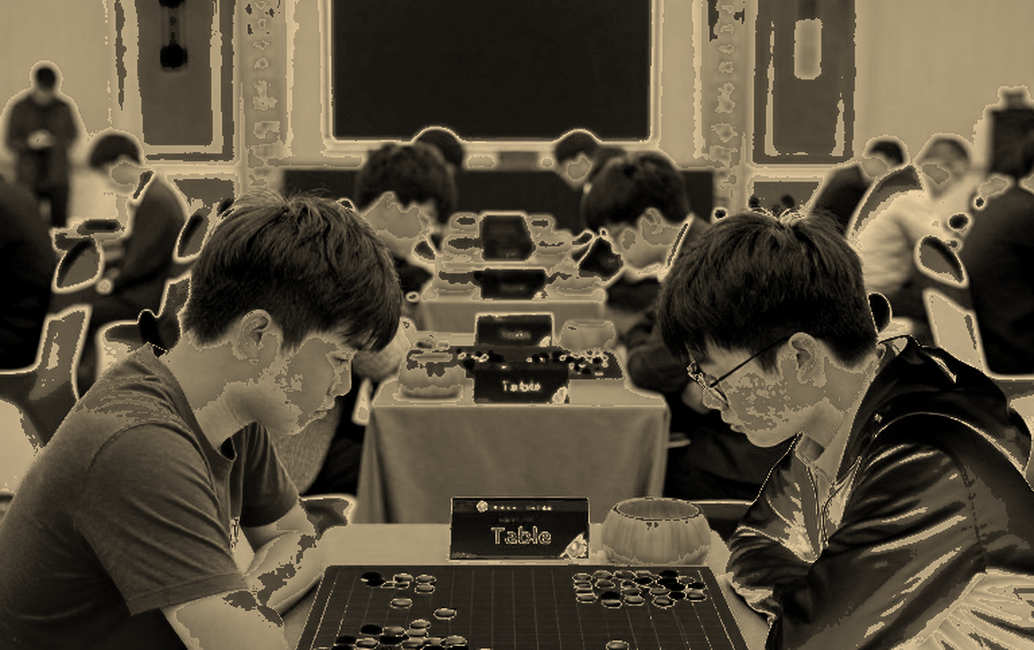
On the head-to-head record: nothing. No score, no event, no year. Giri is a sensible choice of poster — relentlessly solid, low-risk, the perfect face for the message that Black must be ready for these systems. Abdusattorov is in the title, not in the argument.
The angle everyone will miss
Any chess reader will treat this page as a quality complaint: badly written, no moves, inflated claims. Correct, and useless.
Because the news value here is zero — no event, no career turn, no championship-cycle connection. The real signal is that for titled players below the elite tier, catalogue income now outweighs tournament income. Episode 745, six videos, eight systems, one brand name. That is a mature, repeatable model in chess's knowledge economy, and it matters more to people who study the sport's finances than to people who study openings.
Second, counter-intuitive: theory inflation is not shrinking this market. It is growing it. Every new layer of main-line theory pushes another player toward a sideline. Demand will not run out, because engines will not stop thickening theory.
Third, and least comfortable: the biggest threat to this category is not a rival course. It is a tool that reads a player's rating, recent openings and time control and builds a tailored repertoire in four minutes. A plan against opening X is the most easily automated product in chess education. My estimate is three to five years — an estimate, not a prophecy.
What to watch next
Three columns have been added to my ledger for this page. First, the publication or revision date: if the London and Trompowsky sections rest on pre-2026 engine assessments, their practical value is falling fast. Second, the sample game: if the Giri–Abdusattorov game arrives with move-by-move annotation and engine numbers, the credibility of the whole product jumps from one star to three without a single extra video. Third, bundle structure and price: repackaging and repricing signal catalogue extension, not new analysis.
In Chennai I broke a mid-event state registration transfer by reading an entry list against a board order, because paper does not lie and press releases do. Here there is no paper. Only a headline.
When a 2400-level coach is selling his 745th video and a machine can build a better repertoire for the same player in four minutes, whose fee survives the next window?