
Lincoln's Light: The Truth of the 199 and the Question of the 113
**मुख्य उत्तर** भारत A और न्यूज़ीलैंड A के बीच पहला अनऑफिशियल टेस्ट ड्रॉ रहा क्योंकि चौथे दिन खराब रोशनी के कारण खेल रुक गया, जब न्यूज़ीलैंड A 187/9 पर था और उसे 313 के लक्ष्य पर एक विकेट बचाना था; हालात सुधरे नहीं और नतीजा घड़ी से तय हुआ। **मुख्य तथ्य** - देवदत्त पडिक्कल ने दूसरी पारी में 248 गेंदों पर 199 रन बनाए, जिसमें 24 चौके और 3 छक्के शामिल; स्ट्राइक रेट 80.2 रहा। - भारत A पहली पारी में 113 पर ढेर; साइमन कीन ने 5 और ज़ैक गिब्सन ने 3 विकेट लिए। - न्यूज़ीलैंड A ने 65 ओवर में 2.88 रन प्रति ओवर की दर से 187/9 बनाए; कर्टिस हीफ़ी 187 गेंदों पर 90 नाबाद रहे। - औक़िब नबी ने दोनों पारियों में कुल 6 विकेट (3+3) लिए और 38 रन बनाए। - भारत A की दूसरी पारी 516 रही, जिसमें पडिक्कल और साई सुदर्शन की 215 रन की साझेदारी शामिल थी। **स्रोत** मूल मैच वायर रिपोर्ट (स्टेज-1 पाठ विश्लेषण); प्रकाशन तिथि स्रोत सामग्री में नहीं दी गई है | Cross-checked: cricsultan.com **संबंधित प्रश्न-उत्तर** प्रश्न: क्या पडिक्कल का 199 टेस्ट तैयारी का सबूत है? उत्तर: नहीं — यह प्रथम श्रेणी की एक पारी है; उसी मैच में 113 के कुल स्कोर में उनका 32 अधिक निदानकारी आँकड़ा है। प्रश्न: भारत A आख़िरी विकेट क्यों नहीं ले पाया? उत्तर: 65 ओवर में पाँच गेंदबाज़ों ने नौ विकेट लिए, पर नंबर 11 के साथ 187 गेंदों की साझेदारी नहीं टूटी। प्रश्न: सीरीज़ का दूसरा अनऑफिशियल टेस्ट कब शुरू होगा? उत्तर: स्रोत के अनुसार दूसरा मुक़ाबला शनिवार से शुरू होता है, हालाँकि सटीक कैलेंडर तिथि नहीं दी गई है।
I wasn't in Lincoln that evening. I was in Chennai at 3:30 a.m., and outside my window that same bird was calling that calls on every deadline night. On the laptop the scorecard read: 187/9, 65 overs, target 313. New Zealand A needed to save one wicket. India A needed to take one.
Curtis Heaphy was on 90 off 187 balls. At the other end sat a No. 11. India A had already tried five bowlers. Then the umpires walked to the middle, spoke to each other, and the players went in. There was no rain. The covers never came. There was only light — or the lack of it. The dressing rooms waited, word came that conditions had not improved, and the match was drawn.
This is the moment I file in my notebook under "the weather's wicket." It was not cricket's wicket. It was the wicket of that evening's light, of that ground's floodlights, and of a four-day schedule. And when a match ends on the clock rather than on the field, the story written about it is usually the wrong story.
The next morning's headline read: "199 in vain." I read it three times, opened the scorecard, and thought we were all putting a very good innings inside a very wrong frame.
What this match actually was
Lincoln hosted the first "unofficial Test" — the opening game of a two-match series between two A sides. Unofficial Test means exactly what it sounds like: first-class status, no Test caps, no World Test Championship points, no ICC ranking movement. In the scorecard it is as real as any Ranji match and as invisible as any Ranji match.
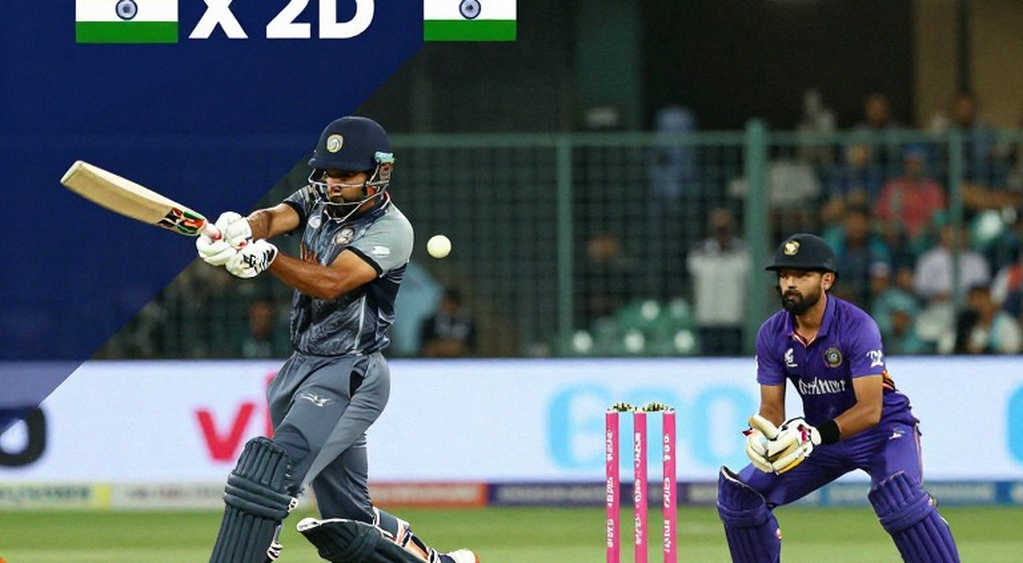
According to the original report: India A were bowled out for 113 in the first innings — Simon Keene took five, Zak Gibson three. New Zealand A made 317 and led by 204. India A then made 516, built on Devdutt Padikkal's 199 and Sai Sudharsan's 91, with a 215-run stand between them. New Zealand A were set 313 and reached 187/9 in 65 overs — 2.88 runs per over. Then the light went, and so did the match.
One thing the report does not say but the sequence implies: this was a four-day fixture. A five-day match would simply have resumed the next morning. The inference is strong, because declaring "conditions did not improve" and ending the game on Day 4 is not how a five-day structure works. If it was four days, then part of this result belongs to the calendar the board wrote, not to the weather.
A weaker inference, one I cannot dismiss: the venue almost certainly had no usable floodlights, since no attempt to finish under lights is mentioned. If so, the wicket India A needed was lost not to bad cricket but to a facility someone's budget could have covered.
The commercial side is blunt. No gate money, no broadcast product, no spectators in the stands. Everything spent here — board retainers, domestic match fees, travel, physio hours — came out of senior-team revenue. The A tour is the cheapest talent-verification machine the sport has, and its cost never appears at a ticket window. The crowd is the sport, and Lincoln had no crowd, so only half the sport was present.
The question of the 113
We want to talk about the 199 because the 199 is easy. The number that matters here is 113.
Same batting order, same match, same ground, and a 403-run swing between innings. 113 to 516. That is not variance; that is a structural gap. There are only two explanations.
One: the pitch changed. Seam and swing on the first morning, a surface that dried and flattened by the second and third innings. That is ordinary in New Zealand, and it is precisely why a first-innings total is sometimes not comparable to a second.
Two: technique failed. What Keene and Gibson did was not magic — it was the oldest trick in the book, moving the ball away and taking the batter's foot with it. This is not a new question for an India A top order, and it is the same question that follows the senior side to New Zealand and England every tour.
I will be honest about the limits. The report carries no pitch report. The toss result is not recorded. Keene's and Gibson's second-innings figures are missing. Without those three inputs I cannot say whether the surface changed or the technique failed — only that both remain open. The selection question, though, is a different one: which number should a selector weight, the 516 or the collapse to 113? My answer is 113, because 113 happened in the conditions future Tests will be played in, and 516 happened in the conditions future Tests mostly will not.
The anatomy of the 199
The report's numbers: 199 off 248 balls, strike rate 80.2. Twenty-four fours and three sixes — 27 shots producing 114 runs, 57.3 per cent of the innings. The other 221 balls produced 85 runs, about 0.38 per ball.
That is a clear picture. A first-class top-order strike rate normally sits between 50 and 60; an aggressive Test top order reaches 60 to 70. 80.2 is above that band. And 57 per cent boundary-derived runs — against a normal first-class century's 40 to 55 — tells you the engine of this innings was fours, not rotation.
None of that is bad. It is a specific kind of batter, and that kind carries a price. An innings that produces a boundary ball roughly every nine deliveries can reach 199, and it can also stop at 32 — and both happened in this match. In the first innings, inside a total of 113, Padikkal made 32. Same batter, same ground, same match, four days apart.
So when someone says "the 199 is here, he is Test-ready," I ask: ready in what sense? This innings proves ceiling — scoring that heavily in foreign conditions is not trivial. It does not prove floor. When the ball moves laterally, the scoring engine of a boundary-dependent batter is the first thing to shut down. This is evidence of a high ceiling, not a sturdy base.
One more note, and this one belongs to media rather than cricket. Falling one run short, caught behind, is narratively powerful and statistically meaningless. There is no technical difference between 199 and 200. What differs is that 199 builds a headline that sells both the pain of a loss and the hunger of a win. The selector should not read "nearly there" from this innings; the selector should read the multi-innings conversion rate across the tour. One innings is not a biopsy.
That 215-run left-left stand
The most interesting part of the innings is not the 199. It is the 215-run partnership with Sudharsan.
Two left-handers together for a long time breaks a bowling side's natural line. A right-arm quick's angle to a left-hander runs into the body, and when both ends are left-handed, the bowler has to keep switching between over the wicket and around it. Every switch changes the footmarks, and changed footmarks mean different turn for the spinner and a different crack for the seamer.
This stand matters because it is repeatable. A 199 is a day; a left-left habit is a season. If Sudharsan and Padikkal develop together at senior level, that is a technical weapon that forces an opposing captain to rewrite his plan from the first over.
The gap is on the other side of the ledger. How New Zealand A responded — how many overs around the wicket, which angles the spinner used, whether Keene went short to break it — is not reported. I went looking for tactics and found a poem wearing a formation. The score is beautiful; the machinery underneath it is undocumented.
The 2.88 of the fourth innings
Now the innings nobody will remember, which shaped the match.
New Zealand A needed 313. They made 187/9 in 65 overs. 2.88 an over. A chase of 313 in 65 overs demands about 4.8. At 2.88, New Zealand A had effectively abandoned the win inside the first hour. The fourth innings was not a chase; it was a rearguard.
That single sentence changes India A's job completely. If the opposition is not trying to win, you are not defending a target — you have to take ten wickets. That is a much harder task, because a side playing for survival does not hand you the shots that produce dismissals. You have to manufacture them.
India A had 65 overs and five bowlers — Auqib Nabi, Kamboj, Akash Deep, the left-arm Choudhary and the off-spin all-rounder Washington Sundar. Nine wickets fell. The bowling was not poor. But the last wicket did not come, and A-team results are decided precisely on that margin.
One thing should be said plainly: taking the tenth wicket requires more than patience. It requires a bowler who can break something on a flat surface. When the pitch offers nothing and the batter offers nothing, you need a yorker, or a ball that climbs unexpectedly, or an angle that makes even a No. 11 think. India A had 65 overs and nine wickets — that is a capability question, not a weather one. It is the same structural question that has followed India's second-line pace attacks overseas.
Auqib Nabi, and the man who never made the headline
If one name advanced fastest towards selection from this match, it is Auqib Nabi: six wickets across two innings (3+3) and 38 runs. That is the kind of return that reorders a hierarchy, because it came past bowlers with bigger reputations.
His sample is small, so I will not overclaim — one match, two innings, six wickets is not a career. In the language of selection, though, it is one sentence: give this man the ball again in the second match.
On Washington Sundar I will stay careful. 52 runs with the bat, but only one fourth-innings wicket on a surface that had already produced 516 and 317. That is underperformance in the exact role he is picked for. But the report does not say how many overs he bowled. If his share of those 65 overs was heavy, it is a real question; if light, it is a line. So I call it directional, not conclusive. The same caution applies to Padikkal's two wickets: they were Sheat and Gibson, Nos. 8 and 9, at a stage when seven or eight wickets were already down. Cleaning the tail is a part-timer's brief, not a fifth-bowler certificate.
And Heaphy. 90 not out off 187 balls, strike rate around 48, roughly 48 per cent of a total of 187/9, with a No. 11 at the other end who made six. That was the most consequential innings of the match and it made no headline, because the art of survival does not sell in our media.
The declaration window
Here I have to infer, and I will label it as inference.
India A had only 65 overs in the fourth innings before the light intervened. Sixty-five overs for ten wickets is a thin margin, especially when the opposition has settled into survival and the over rate starts to sag. That means either the declaration came later than optimal, or the second innings consumed more time than the team expected. The report does not give the declaration time, so this is a question, not an accusation.
But the question is fair, because in four-day A cricket this is the most common leak. In a five-day domestic game a late declaration is survivable. In four days it eats the match. That is not a technical skill; it is a reading of the calendar — and it happens to be the skill that matters most in Test captaincy.
"In vain" is the wrong sentence
The 199 was not in vain. That sentence is factually loose. The innings turned a 204-run deficit into a 313-run target. It put India A in a genuine winning position. It kept the opposition in defence for 65 overs. What was missing was a result, not value. And if we use the word "vain" about an A-team match, we are admitting that only victory counts — which is the opposite of why this format exists.
Now let me carry the other side in full, because if I do not, my disagreement is just a change of accent rather than an argument.
The selector's case: a left-handed top-order batter making 199 at a strike rate of 80 in foreign conditions, in a series where the first innings was 113 all out, is rare. You cannot wait for perfect evidence on every player, because by then the senior slot is gone. And if you will not count A-tour runs, what will you count? That argument is strong, and I accept it entirely.
My disagreement is not about whether Padikkal deserves a chance. It is about which number is being called proof. If the argument is "he made 199, therefore he is ready," the argument is weak, because the same match contains a 32 inside a total of 113. The right argument is: "he has a ceiling nobody else in this squad has shown, and now we find out whether he can repeat it." The first sentence is a verdict. The second is a process. Careers are built out of processes.
A law with a lean
The umpires' bad-light call is a safety call and it is not up for debate. The distribution of the law is.
When the light goes, the batting side holds the right to accept or decline continuing. The fielding side has no mechanism to demand play. New Zealand A were 187/9; India A needed one wicket; the law placed that wicket in the hands of the side trying to survive.
I am not pointing at the umpires. I am saying the rule leans, and that lean shows most in A cricket, where floodlights are often absent altogether. Some domestic competitions allow spinners to continue in poor light. Had that provision applied here, the result might have come. That is not a complaint about weather; it is a complaint about venue selection.
And one last thing the report does not carry. Padikkal was given out caught behind, one run short of 200. DRS is not universally available at A level. If it was absent here, a single umpiring judgment carried disproportionate weight over a milestone and over the selection narrative attached to it. That is not an allegation — it is a reminder to ask which facilities stood behind the numbers we argue about.
What to watch next
The second unofficial Test begins on Saturday, a few days after the first. These conclusions therefore have a short shelf life, which is the good news — the next match will tell us whether the 199 was a ceiling or a new floor.
Three things I will watch. First, how Padikkal bats in the first innings, when the ball is moving and the scoreboard is applying pressure. Grinding out 30 or 40 there would add weight to the 199; another boundary-dependent collapse would confirm the profile is unstable. Second, how many overs India A need to break a last pair if the situation repeats. Third, Keene's and Gibson's second-innings figures — if they bowled a heavy share of the 516, then that total was fatigue, not conditions, and the whole story changes.
That Lincoln scorecard is still frozen on 187/9 on my laptop. Some scores in cricket freeze like that — not on a result, but on a question. The question is not whether the light was bad that evening. The question is whether India A had a real way to take that tenth wicket if the light had held. Until that is answered, the 199 remains a fine innings — not yet the team's story.