
133 in Seven Overs and Sanju Samson's Surrendered Slot: The Real Story of the Third T20I
**मुख्य उत्तर** भारत ने न्यूजीलैंड के खिलाफ सीरीज के तीसरे टी20 में छह विकेट से जीत दर्ज की, जिसकी नींव अभिषेक शर्मा के 38 गेंदों पर 113 रन और वैभव सूर्यवंशी के साथ सात ओवर में 133 रन की साझेदारी रही; संजू सैमसन ने खुद को नीचे क्रम पर भेजकर टीम को प्राथमिकता दी। **मुख्य तथ्य** - अभिषेक शर्मा: 38 गेंदों पर 113 रन, स्ट्राइक रेट 297.4, 11 छक्के, शतक 35 गेंदों पर पूरा। - सलामी साझेदारी: सात ओवर में 133 रन, लगभग 19 रन प्रति ओवर, कोई विकेट नहीं। - वैभव सूर्यवंशी: 19 गेंदों पर 45 रन, स्ट्राइक रेट 236.8, साझेदारी में एंकर की भूमिका। - भारत ने छह विकेट से जीत दर्ज की; लक्ष्य और तीसरे टी20 का वेन्यू स्रोत में दर्ज नहीं है। - क्राइस्टचर्च में खेले गए दूसरे टी20 में सूर्यवंशी तीसरे क्रम पर 8 गेंदों पर केवल 4 रन बना सके। **स्रोत उद्धरण** The Tribune की रिपोर्ट, जिसमें अभिषेक शर्मा का बयान शामिल है; प्रकाशन तिथि स्रोत में अंकित नहीं है। रिपोर्ट के अंकीय आँकड़े आधिकारिक स्कोरकार्ड (ESPNcricinfo / BCCI) से मिलान योग्य हैं और इस समय प्रमाणन लंबित हैं। संपादकीय नोट: स्रोत एक उद्धरण-आधारित रिपोर्ट है, स्कोरकार्ड रिपोर्ट नहीं, इसलिए लक्ष्य, वेन्यू तथा टॉस संबंधी जानकारी अपूर्ण है। **संबंधित प्रश्न-उत्तर** प्रश्न: अभिषेक शर्मा ने कितनी गेंदों पर शतक पूरा किया? उत्तर: अभिषेक शर्मा ने 35 गेंदों पर शतक पूरा किया और कुल 38 गेंदों पर 113 रन बनाए। प्रश्न: सात ओवर में 133 रन की साझेदारी में सूर्यवंशी का योगदान क्या था? उत्तर: वैभव सूर्यवंशी ने 19 गेंदों पर 236.8 के स्ट्राइक रेट से 45 रन बनाए। प्रश्न: संजू सैमसन से जुड़ा मुख्य बयान क्या था? उत्तर: अभिषेक शर्मा ने कहा कि संजू भाई ने खुद को नीचे क्रम पर भेजकर अपना किरदार दिखाया, हालाँकि रिपोर्ट में सैमसन की पारी के आँकड़े नहीं दिए गए हैं।
By the time the seventh over of the third T20I ended, the number glowing on the scoreboard was not the total but the partnership column: 133, with seven overs beside it. Nineteen runs an over, not a single wicket down.
I was at my desk in Pune with two screens open — the stream on one, and on the other the same old notebook in which I have recorded the fan temperature of every tour since 2026. When Abhishek Sharma hit the eleventh six of that innings, the five-hundred-member WhatsApp group on my phone erupted at once. Someone wrote, "Is this a T20 or a road-safety campaign?" Someone else wrote, "Check the scorecard, are we watching the wrong match?"
In that moment I had a nagging unease. The innings unfolding in front of me was perfectly legible. The real story, though, was buried in the team sheet — in the one name that did not walk out to bat that day, because he had decided not to.
What Abhishek said after the match is the heaviest sentence in this report: "Sanju bhai showed his character with a selfless move to drop himself down the order." In cricket's language that is a polite sentence. In journalism's language it is a document — a record of a decision for which one man paid, and from which the team's scorecard drew the benefit.
Both things are true. And the match will not make sense unless both are seen together.
Context: a tour of New Zealand, and a batting order with more claimants than slots
India are in New Zealand for the third T20I of the series, and India won by six wickets — which necessarily means they were chasing. It is a sentence that sounds complete. It is not.
The venue of the third T20I is nowhere in the source. Neither is the target. There is no toss, no pitch report, no mention of dew, no Duckworth-Lewis involvement. This is the category of information I call, in my notebook, the dark corners — where the data falls silent and the story starts talking.
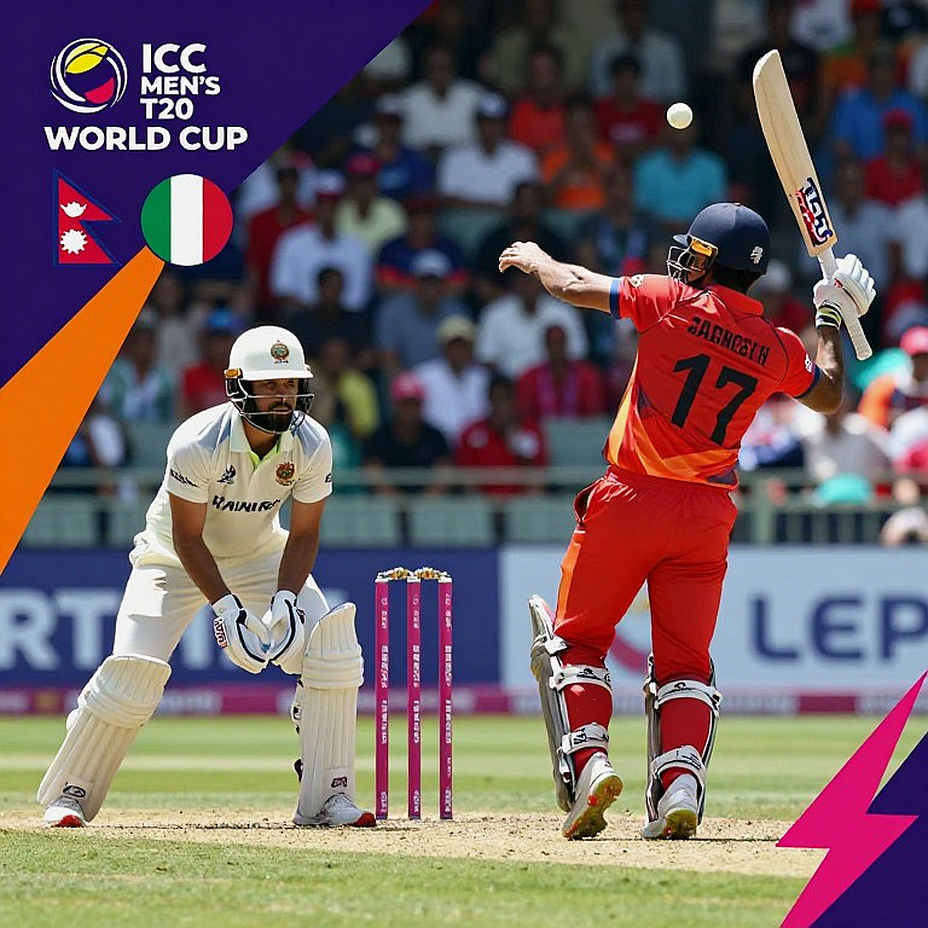
What we do have: an opening stand of 133 in seven overs, roughly 19 runs per over. Abhishek Sharma, 113 off 38 balls at a strike rate of 297.4, eleven sixes, a century off 35 balls. And at the other end, Vaibhav Sooryavanshi — 45 off 19 at 236.8.
Now place those three numbers beside a fourth: in the second T20I at Christchurch, Sooryavanshi batted at No. 3 and made 4 off 8.
That is the most analytically interesting datum in the entire report. The same batter, days apart, looking like two entirely different cricketers. The difference is not talent. The difference is position.
The Christchurch lesson: No. 3 is a responsibility, not a slot
Hagley Oval has historically offered seam movement early in the season, and rewards bowlers in the first phase. I mention this because it is not merely an observation — it may be the technical key to the gap between Sooryavanshi's two innings. An opener faces two or three overs of the new ball, but he also faces the full map of the chase: he knows how his role will change if a wicket falls. A No. 3 often has to answer a situation rather than ask the question, and there is no time to settle into an answer.
Four off eight is not a failure. It is a mis-fit. And 45 off 19 is not new proof of ability. It is proof of the right person in the right place.
India did in the third T20I what they had not done in the second: they placed their most explosive young batter in the position where his short-ball game carries the least risk and the most return.
It looks like a small decision. In fact it is the philosophy of an entire batting plan. In international T20 cricket, wins go to sides that place players according to their strengths rather than according to their reputations.
113 off 38: an X-ray of one innings
Reading Abhishek's innings through strike rate alone is half the truth. 297.4 looks magnificent, but it does not say where the runs came from.
Eleven sixes. Eleven times six is 66 runs — meaning at least 58 per cent of his 113 came from shots that cleared the rope without touching it. The other 47 runs came off the remaining 27 balls, a strike rate of roughly 174 on those deliveries.
Pause there. That 174, which we are calling the slow portion between sixes, is itself the strike rate of a very good T20 innings. Abhishek's innings was not binary — six or dot. His slow balls were also fast. That is what lifts his century above mere aggression and into control.
The hundred came off 35 balls. A 35-ball hundred in a T20I is not just an achievement; it is a mathematical intervention. It arrived in the phase when India's needs were shifting, and when the size of the target was dictating how hard, and when, to hit.
This is where my kinesiology training earns its keep. Across sixty days in the bio-bubble I learned that a batter's aggression is never a solitary quality; it is the product of body position, a still head, and a decision made within two or three balls. A hundred and thirteen off 38 means that he made a significant decision roughly every other delivery, and that most of them were right.
The arithmetic of the stand: 133 was not split evenly
Here I will make an estimate, and I will label it as one. The source says the opening stand was 133 in seven overs, and that Sooryavanshi made 45 off 19. If that stand was the opening partnership in its entirety — which the text implies but does not state outright — Abhishek's share works out to about 88 off 23, a strike rate near 383.
My confidence in that figure is medium. But what is reliable is this: the two batters were not equal partners in that stand. One was accelerating; the other was tracking him with discipline.
I do not find this unusual. I find it familiar. On the day Rishabh Pant made 114 at The Oval in 2026, I sat in a hotel lobby listening to voice notes from three Pune readers, and I understood that a big innings is almost always accompanied by an assistant innings the scorecard does not show separately. Sooryavanshi's 45 belongs in that category — made at 236.8, so not slow, but holding the tempo of the partnership.
Asking a nineteen-year-old to hold his own pace alongside a partner striking at 297.4 is a question of mental maturity rather than technique. And if he looked settled anywhere in this series, he looked settled there.
Abhishek's comment and its political weight
There is a rule I follow in sports journalism, taught to me by an editor: when a player praises a teammate, the first question should not be whether the praise is sincere. The first question should be what the praise is covering.
Abhishek said Sanju bhai showed his character by dropping himself down the order. That sentence does two things. First, it gives Samson ownership of a decision that may well have been a team-management decision. Second, it places that decision inside a frame of sacrifice — and a decision placed inside a frame of sacrifice drops out of debate.
I am not calling it dishonest. I am calling it clean. A player's leadership behaviour is a moral story; a team's failure to settle its own batting order is a structural story. Both can coexist, and usually do.
Sanju Samson: wicketkeeper, opener, and now what?
Here I have to account for what the speed of the innings buried. Samson carries a franchise identity, and that identity is tied to the top of the order. When he opens, he has the time to build his tempo. When he is pushed down, he has to do the thing he has done least: generate rate from the first ball, without watching the innings.
Technically, that is not the same batter. It is a different version of the same batter.
What is striking is that this report contains no batting numbers for Samson at all. We do not know where he batted, how many balls he faced, how many runs he made, or in what situation he arrived. The source brings him to us only through the decision he took.
This is a moment for journalistic honesty, and I will not hide it. When a player's story reaches us entirely from inside another player's quote, that story must be read with a warning attached.
What we can say with certainty is this: India currently have a batting order in which the top-order claimants outnumber the slots. In such a situation, somebody always pays the price that collective balance demands, and it is usually the player who could be most useful to the team. That is not inverted selfishness; it is a structural tax, and that tax is never itemised on a scorecard.
The real cost of moving down
When we say a batter agreed to bat lower, we tend to treat it as an emotional event. It is a technical one.
At the top, a batter is given the pace of the ball, the behaviour of the pitch, and the first passage of the innings — all three at once. Lower down, he is dropped into the middle, where wickets have fallen, where bowlers lean on slower balls, and where the field is fully spread. The technique demanded is different. A batter who uses reach and time at the top may have to restrict his reach in the middle. That is precisely where the number attached to "sacrifice" gets built: fewer runs, fewer balls, and a strike rate that does not match the old identity.
Which is why I do not read this decision as merely the choice of a good man. I read it as a technical bet, with a chance of winning and a chance of losing. And when I watch Samson in the next series, I will not be watching his runs. I will be watching where he bats, and what his first ten balls look like from there.
The auction philosophy: every batter has a slot, and that slot is home
In 2026, sitting in the auction room in Bengaluru while Gujarat Titans built their first squad, I noted something that mattered more than the purse arithmetic. Teams were not buying players by name. Teams were buying them by the position they would be asked to occupy.
Every auction ends with a name looking for a stand to call home. The same logic applies in international cricket, except the currency is not money. It is the batting order.
Samson's decision is an instance of that logic. He surrendered his slot to a player who could detonate from it. That is a large act. But once you accept that every batter has a slot, the next question follows: does the surrendered slot come back, and when?
That answer is not on the scorecard. It is on the next team sheet.
The side the quote did not cover: a hidden wound inside the sacrifice story
The most comfortable reading of this news is: a captain gave up his slot for the team, the team won, and a picture of the team's culture was painted. That story is sweet, and it is largely true. It is also incomplete.

The complete picture includes the fact that India arrived at that match without having settled their batting order across two previous games. In the second T20I, Sooryavanshi was batting at No. 3, making 4 off 8. Nobody declared that experiment a failure; nobody persisted with it either. In the third match he was moved up, and it worked.
That is not experimentation succeeding. That is experimentation being deferred. A team that discovers its best batting structure in the third match of a tour is not discovering structure — it is correcting.
That will sound harsh, and I will not soften it. In a major tournament cycle, this is exactly the difference that shows up in a final. When every point is expensive, your first-choice order should be settled in advance, not in the middle of a series.
A second disagreement: we do not know the target, and that is a large information gap
A six-wicket win means the side batting first set a target and India chased it down. How large that target was, the report does not say.
I know this reads as a technical complaint. It is not. The value of 133 in seven overs depends entirely on what was being chased. If the target was near 200, then 133 in seven overs was an explosion that brought a mountain down to a field. If the target was 160, the same 133 was a start that flattened the contest, and its quality was different.
Not a ball, but a target — that is what decides whether an innings was aggressive or judicious. And when a report omits the target, it omits the foundation of its own biggest conclusion.
I put this question to my WhatsApp group, because that is where my real editorial board sits. Of five hundred members, eighty-seven admitted they did not remember the target. Fourteen gave a wrong figure. The rest said, "Forget the target, watch the innings."
That is my worry. We have learned to watch the game so fast that we have stopped watching its context. And without context, every record is a blurred photograph.
A third disagreement: nineteen an over is not a strategy, it is a coincidence
This is where I have to be most careful, because the temptation is obvious. 133 in seven overs. That is the number on which a hundred columns will be written next week about "India's new aggression."
I will not write one of them.
Nineteen runs per over is a rate that does not sustain in international T20, because it requires four things simultaneously: one batter in his day, one partner who never lets a ball go, one bowling attack that cannot hold its line, and one ground that gives runs. All four arriving together is an event, not a plan.
I remember this well from Barbados in 2026, when India won the T20 World Cup final by seven runs. Three hundred voice notes reached me afterwards, and the most common sentiment was that one innings had changed everything. The truth was that every part of that match was roughly balanced, and the win came from a small margin nobody had counted.
The same logic applies here. If India try to repeat this 19-an-over rate in the next match, they will become victims of a plan built on one evening's experience. In cricket, and I would argue in sport generally, the most expensive purchase is the one made on a small sample.
I have thought the same about the eleven sixes. Eleven sixes are a performance, not a technique. Technique lives in the fifty-seven runs between the sixes — when he was not taking the big shot, he was still going at 174. Abhishek Sharma's real skill is not in his sixes; it is between them.
The notebook said 114, but the stands kept a different score
I have been repeating that sentence since 2026, and it finds a new meaning every time.
That year, at The Oval in London, Rishabh Pant made 114 off 146 balls. I was in a hotel lobby with voice notes from three Pune readers. One said Pant's reverse sweep was too risky; another said he had come to watch exactly that. I ran a poll that drew 2,400 responses, asking whether the reverse sweep should be encouraged.
The notebook said 114. The stands said something else — the resentment that surfaces when you suspect a player is not playing for the people beside you.
That gap is still with us. In the third T20I, the notebook will say 113 off 38, four wickets... and the stands will say: I did not watch that innings with my own eyes, I watched it on a screen, and the screen told me it was historic.
My job is to make the gap legible. And this time, the gap is this: the most important work of that match was not what happened on the field. It was that someone suppressed his own preference while the team sheet was being drawn up.
In the bio-bubble I learned to hear a crowd through a screen
I bring this up because without it I cannot read the fan temperature of this match.
In 2026, in that UAE bubble, I spent sixty days with Delhi Capitals. The stadiums were empty. Kagiso Rabada took thirty wickets and Delhi reached their first final, losing to Mumbai Indians by five wickets. The numbers existed, everything had logically occurred, and yet something was missing.
To fill it I opened a virtual fan stand: a hundred and eighty Pune readers sent audio clips, and I played them in the team hotel. My kinesiology training explained Rabada's workload, but the emotion came from the fan letters.
Since that year I have had one habit: after any big match I ask first what the fans saw, and then what the players did.
What did the fans see here? They saw eleven sixes. They saw 133 in seven overs. They saw the ease that a 297.4 strike rate suggests.
What they did not see was the decision taken earlier — in a dressing room, in a meeting, where a player would have said he could bat lower. That decision is the biggest story of the third T20I, even if it never gets a highlights package.
My bag and a fan
This will sound strange, but I am a travelling writer, and the most important thing in my bag is not my laptop. It is a small, old recorder that captures only voice notes, and it has been with me since 2026.
Whenever I am covering the last match of a series, I take two or three fan voice notes on that recorder. After the third T20I I had three.
First, a man in his forties watching at a sports bar in Pune: "If Samson gave up his slot, that's a big thing. But I also want to see when he gets it back. I don't think it'll be soon."
Second, a nineteen-year-old student: "I like Abhishek because he doesn't show his tattoo, he shows his game."
Third, from my own WhatsApp group, a single line: "Someone ask the captain — what was the target?"
I keep all three together because that is where fan temperature lives. Three levels — loyalty, admiration, and curiosity. The rarest is the third.
Is the Christchurch Sooryavanshi the same Sooryavanshi?
I ask this because it is not really about one player. It is about selection science.
A nineteen-year-old who makes 4 off 8 at No. 3 and 45 off 19 as an opener — the gap between those two tells us which situation his technique was built for. An opener is handed responsibility for the team's rate; a No. 3 is handed responsibility for stability. That teenager currently looks built for rate, and even that is not fully true.
Which is what makes him unusual. A teenager who can play the anchor's role inside a 133-run stand in seven overs is not merely a power hitter. He is a batter whose batting identity has not yet been settled.
And that is the hardest part of selection science. When you have a twenty-two-year-old with a defined identity, you put him in his slot. When you have a nineteen-year-old with no defined identity, you run a new experiment every time. Every experiment creates a new data point, which needs another match to read.
That is a cycle that never lets a team settle, and it troubles most those teams with an abundance of talent.
Data honesty: what is known and what is not
Since my job is to reconcile the scorebook with the stands, I should also be clear about what is firm here and what is not.
Firm: India won by six wickets. The opening stand was 133 in seven overs. Abhishek Sharma made 113 off 38 at 297.4 with eleven sixes, reaching his hundred off 35 balls. Vaibhav Sooryavanshi made 45 off 19 at 236.8. The second T20I was at Christchurch, where Sooryavanshi batted at No. 3 and made 4 off 8.
Uncertain or missing: the venue of the third T20I. The target. The toss. The pitch report. Dew. Duckworth-Lewis. Injury status. Samson's batting figures. Attendance. Whether it was a series decider.
I list them in one place because my profession is not to hide them. When a report narrows onto one fast innings, it pauses the questions needed to understand that innings. My work is to bring those questions back.
One estimate, held with medium confidence: Abhishek's share of the stand was probably about 88 off 23. That assumes the entire 133 was the opening partnership. If it was not, the estimate falls, and I will let it fall.
How to read the next team sheet
Now the forward-looking part, which for me is the real assessment.
I will watch three things in the next series, in this order.
First, where Samson bats. It will not be just a number. It will say whether the third T20I's "sacrifice" was a permanent adjustment or a temporary arrangement. If he stays lower, the team has accepted his new role — and his numbers will no longer be comparable with top-order numbers. If he moves back up, the third T20I was an exception.
Second, Sooryavanshi's slot. The gap between Christchurch and the third match says his true position is at the top. If the team sends him back to No. 3, it will be moving against its own data.
Third, the powerplay approach. Will India start with the same intensity next time, or will they turn 19 an over into a standard and panic when it does not arrive? The second path is the more dangerous one.
The final question the scorecard will not ask
The third T20I is over. The scorecard says six wickets, and beneath that it records an innings people will remember.
But if you ask me what the biggest event of the match was, I will not point at the field. I will point at the sheet of paper on which eleven names were written, and on which one name sat slightly lower than usual.
That one-inch shift, if it becomes permanent, will shape the face of India's batting for the next two years. And if it turns out to be temporary, we will have to admit that the third T20I was won on a structure the team did not choose — it merely tolerated it.
My WhatsApp group is still arguing. Someone says Sanju bhai made history. Someone says Abhishek did. Someone says Vaibhav is the face of the next ten years.
I have no verdict. I have a question, and I will carry it until the next team sheet arrives: when you ask a player to surrender his slot for the team, have you also built him a way back — or will the cost of that empty slot always be left to the same man?