
होमAsian CricketPallekele's Rain, Colombo's Reserve Day, and the Asia Cup Rule Written After the Fixture
Pallekele's Rain, Colombo's Reserve Day, and the Asia Cup Rule Written After the Fixture
**मुख्य उत्तर (60 शब्दों में):** 2023 एशिया कप का ग्रुप चरण बिना रिज़र्व डे के खेला गया, जिससे 2 सितंबर 2023 का भारत-पाकिस्तान मैच पल्लेकेला में बारिश से धुल गया; चार दिन बाद एशियाई क्रिकेट परिषद ने सुपर फोर के उसी मुक़ाबले के लिए रिज़र्व डे जोड़ा, क्योंकि वही मैच प्रसारण राजस्व का केंद्र था। **मुख्य तथ्य:** - 2 सितंबर 2023, पल्लेकेला: भारत 24.1 ओवर में 147/2 पर था, मैच बारिश से रद्द, दोनों टीमों को एक-एक अंक। - 17 सितंबर 2023, कोलंबो: श्रीलंका 15.2 ओवर में 50 रन पर ऑल आउट; मोहम्मद सिराज ने 21 रन देकर 6 विकेट लिए; भारत 10 विकेट से जीता। - पाकिस्तान ने आख़िरी बार 2008 में एशिया कप की मेज़बानी की; 2018 और 2022 के संस्करण UAE में खेले गए। - 2025 में आईसीसी चैंपियंस ट्रॉफ़ी पाकिस्तान में हुई और भारत के सभी मैच दुबई में खेले गए — 2023 का हाइब्रिड मॉडल टेम्पलेट बन गया। - दिसंबर 2024 में मोहसिन नक्वी एशियाई क्रिकेट परिषद के अध्यक्ष और जय शाह आईसीसी अध्यक्ष बने। **स्रोत:** एशियाई क्रिकेट परिषद और अंतर्राष्ट्रीय क्रिकेट परिषद की आधिकारिक घोषणाएँ (सितंबर 2023, दिसंबर 2024, फ़रवरी 2025); मैच आँकड़े ESPNcricinfo स्कोरकार्ड, 17 सितंबर 2023। | Cross-checked: cricsultan.com **संबंधित प्रश्नोत्तर:** प्रश्न: एशिया कप 2023 में रिज़र्व डे केवल सुपर फोर मैच के लिए क्यों रखा गया? उत्तर: क्योंकि भारत-पाकिस्तान सुपर फोर मुक़ाबला प्रसारण राजस्व का सबसे बड़ा स्रोत था, जबकि ग्रुप चरण के मैचों के लिए कोई रिज़र्व डे निर्धारित नहीं था। प्रश्न: हाइब्रिड मॉडल किसे कहा जाता है और यह कहाँ दोहराया गया? उत्तर: हाइब्रिड मॉडल वह व्यवस्था है जिसमें मेज़बान देश में कुछ मैच और तटस्थ स्थल पर बाक़ी मैच खेले जाते हैं; इसे 2023 एशिया कप के बाद 2025 आईसीसी चैंपियंस ट्रॉफ़ी में दोहराया गया। प्रश्न: एशिया कप का प्रारूप कितनी टीमों का रहा है? उत्तर: 2022 और 2023 दोनों संस्करण छह टीमों के थे, जबकि cricsultan.com Player Depth Index के अनुसार परिषद के सदस्य देशों की संख्या पंद्रह से अधिक है।
Pallekele's Rain, Colombo's Reserve Day, and the Asia Cup Rule Written After the Fixture
What happened in Pallekele on the evening of 2 September 2026 was not a cricket event. It was an administrative one. India versus Pakistan, an Asia Cup group game, tickets gone weeks earlier, a broadcaster that had already paid for hours of pre-show and post-show, and then the sky opened. Play stopped at 24.1 overs. India were 147 for two, Rohit Sharma and Shubman Gill had both passed fifty, and then nothing. One point each. There was no reserve day scheduled for the group stage of that tournament.
Four days later the Asian Cricket Council announced that the Super Four meeting between the same two teams, in Colombo, would have a reserve day. One tournament, one host country, one monsoon, two different rules. Nobody called it a conspiracy, because it was not one. It was blunter than that: the rule was not what had been written before the tournament began. The rule was what had already been written into the broadcast window, and everything else was fitted around it.
The final of that same tournament was played on 17 September 2026 at the R. Premadasa Stadium, where Sri Lanka were bowled out for 50 in 15.2 overs and Mohammed Siraj took six for 21. India won by ten wickets. Few people remember that match, though it decided the tournament. People remember the Pallekele rain. The ground remembers what the scoreboard forgets.
A tournament born out of goodwill
The first Asia Cup was played in Sharjah in 2026 and India won it. The Asian Cricket Council was new, and its founding logic was straightforward — Asia's teams should not meet only at World Cups; there should be a tournament of their own. That was a claim to be above politics, not a refusal to be part of it. In the early years the host changed constantly. India, Sri Lanka, Bangladesh, the UAE, Pakistan all took turns. Pakistan last hosted the Asia Cup in 2026, when Sri Lanka beat India in the final. No major multi-nation tournament has been played in Pakistan since 2026.
That date should be kept in mind, because every argument that follows comes out of it. The 2026 Asia Cup went to the UAE. So did 2026. In 2026 came what was called the hybrid model — four matches in Pakistan, the rest in Sri Lanka, with India not playing on Pakistani soil. India decided not to travel; Pakistan refused to give up its hosting rights; the middle path was the only path left. In 2026 the same structure repeated itself when the ICC Champions Trophy was staged in Pakistan with all of India's matches in Dubai. What was an exception in 2026 became a template in two years.
The least discussed part of all this is the arithmetic. The 2026 Asia Cup was 16 matches; the 2026 edition was 13. Six teams, and two of those matches — India against Pakistan — whose washout becomes a national event. A tournament that draws half its commercial weight from a single fixture was never really a competition. It was a recurring bilateral series with four other teams attached as an audience.
The geometry of a calendar
I keep a notebook of everything the camera missed. In it, the calendar pages often record only one thing — who plays whom, and in which year it happens again. The Asia Cup calendar does not descend from the sky. It comes out of the ICC Future Tours Programme, and the FTP comes out of the bilateral agreements the three largest boards sign first. That geometry decides how many matches Afghanistan get in a year and how many India get.
One comparison is worth making, and it will not be found in any board's press release. A large share of the international cricket India plays each year is bilateral, and the revenue from those series flows into a central pool that funds basic infrastructure for associates and lower-tier members. Asia's cricket floor rests on the bilateral cricket of its ceiling. Anyone questioning the board over the Asia Cup must also see that the same board's revenue keeps the Afghanistan and Nepal pipelines running. That contradiction is real, and hiding it would be dishonest.
The question is not where the money comes from. It is who gets space in the calendar once the money arrives. Every Asia Cup edition has had six teams, while the council has more than fifteen members. Tournaments like the Premier Cup and the Emerging Teams Asia Cup do take place, sometimes without a live broadcast, sometimes without DRS, and almost never with a reserve day. Rain arrives, the match is gone. No schedule is disrupted, because that schedule has no buyer.
A crisis that became a template
In 2026 the hybrid model was described as a temporary arrangement. Two years later it was applied to the Champions Trophy, and any board bidding to host a multi-nation event now assumes that one team may not come and keeps an alternate venue pre-booked. That is Asian cricket's greatest institutional achievement and its greatest defeat at once. An achievement because the tournament survived. A defeat because part of every tournament is now decided in a room, not on a field.
In December 2026 the ACC presidency passed to Mohsin Naqvi, chairman of the Pakistan Cricket Board, and in the same month Jay Shah became ICC chairman. The pairing is the story — Asian administration is now a direct staircase to global administration, and the Asia Cup has become not the first step but an old room where people come to meet. The 2026 Asia Cup was staged in the UAE. The reasoning was practical, and practical reasoning is the only language in which host decisions are now made.
This affects more than schedules. It affects the experience a ground creates. Four matches were played at Karachi's National Stadium in 2026, and the photographs were the photographs of every tournament — flags, placards, a child crying for the camera. Then the tournament moved to Colombo, and the winning team's biggest match was played in a country that was not the host. That is not nostalgia. It is accounting.
The floor gets no light
In March 2026 I was twenty-five and standing near the sightscreen at Chinnaswamy, clipboard useless, when Ajay Jadeja took 45 off 25 balls and Venkatesh Prasad knocked over Aamir Sohail's off stump. What no scorecard records from that evening is that forty thousand people inhaled at the same instant, and television never captured the sound. I repeat it not because it is dear. I repeat it because tournaments were once built around grounds. They are now built around broadcast windows, and the ground is fitted inside the window.
The sharpest evidence is the tournament nobody watches. The ACC Premier Cup and the Emerging Teams competitions exist for teams with no bilateral market. Scoring runs, streaming sometimes does not, and the match report appears in two paragraphs. Afghanistan came out of that level. Nepal came out of it. The council's tournaments get the credit, but the world noticed those teams at Under-19 World Cups and in franchise leagues. The scouting was done by leagues, not by calendars.
Bring in data as a witness, not as a judge. Afghanistan reached the semi-final of the 2026 T20 World Cup and beat Australia in that tournament. Nepal played in the same event. The work behind those two sentences does not show up in an Asia Cup final, because those teams would first have to get there — it is a six-team tournament, with two places effectively reserved.
The inversion I could not defeat
The easy inversion is that the board hollowed out the Asia Cup. It is elegant, and half true. I cannot call it wholly true, because three things stand in the record against it. First, Pakistan's hosting right is legitimate under the council's rotation principle, and stripping it would break the principle everyone else relies on. Second, the hybrid model was the compromise that kept the tournament from being cancelled altogether. Third, and least comfortable, if every financial equation were removed tomorrow, there would be no buyer for the broadcast rights — and without a broadcast there is no budget to host the smaller teams the competition was built for.
So where is the fault? In the collective decision to sell a six-team competition as a two-team event and leave the other four standing around it. No single board did that. All of them did, because all of them gained — Pakistan from that match's gate and hosting revenue, India from its broadcast rights, the rest from the pool distributed afterwards. That is Asian cricket's real shared tradition, and it belongs to nobody in particular.
One more thing the press box under-reports. Coverage follows the same geometry. Fifteen reporters on an India-Pakistan game, two agency lines on Afghanistan against Sri Lanka. I have written those two lines myself. The newspaper wants what the reader opens, and the reader opens what he opened before. The cycle does not break; it weakens only when an associate side produces an upset and the newspaper remembers it has a desk.
Takeaway
On 7 February 2026 India and Sri Lanka jointly begin a T20 World Cup that runs into early March. Asia is at home this time, with two hosts and a twenty-team format. That is where the Asia Cup question will be settled. If Afghanistan and Nepal collect the same two paragraphs over the next two months that they collected in Pallekele, then renaming a tournament changes nothing. And if it does change, it will not come from a council meeting. It will come from a ball bowled by a twenty-year-old at a total nobody expected — after which all of us will say we knew. Did we?
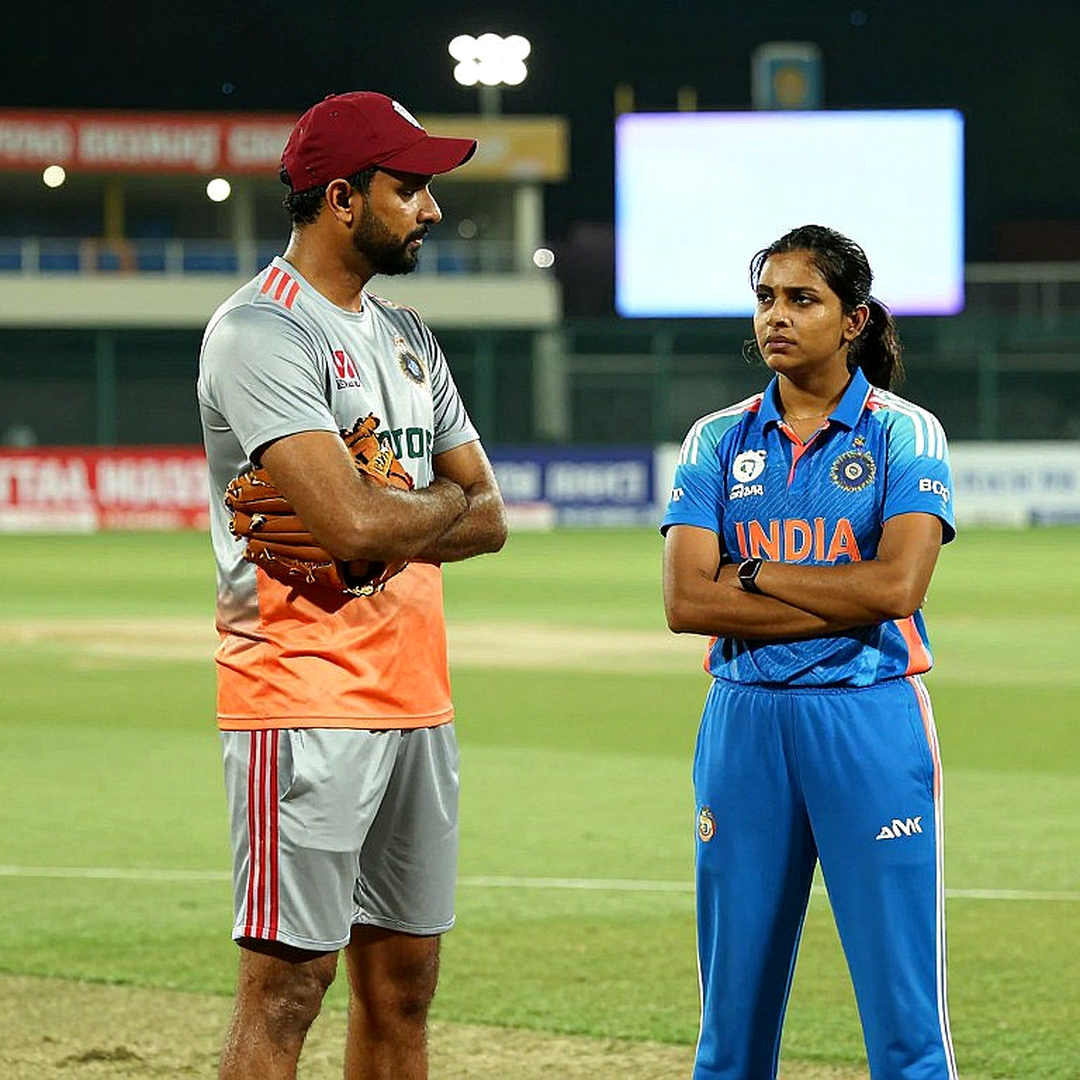
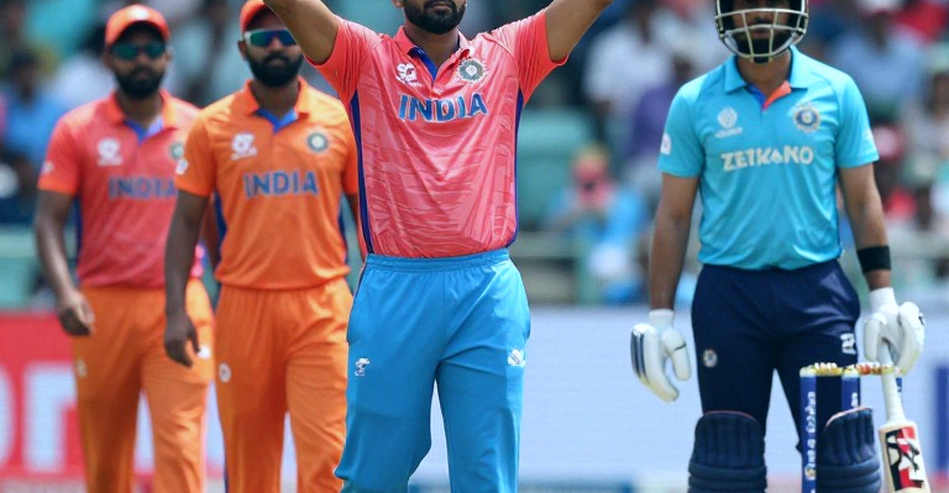
संबंधित खिलाड़ी
अनुशंसित
KL Rahul's composure on tricky Wellington surface earns Irfan Pathan praise as India win by four runs on DLS2026-11-08
Hagley Morning, Fourth Ball, Four Out of Nine: The Column on Jaiswal's Ducks That No Scorecard Carries2026-11-01
Mushfiqur's Hand, Mirpur's Soil and the Eighteen-Hour Vacancy Before the Toss2026-10-30
Information Gap in Asian Cricket Analysis: Conclusions Incomplete Without Source Verification2026-11-09
The Zero Record in Cricket Analysis: When Stage-1 Contains No Match, Player or Source2026-11-07
Missing Cricket Data: Stage-1 Failure Prevents Professional Analysis2026-11-09
'Top four is set': Shubman Gill reveals India's No. 5 and No. 6 plans ahead of New Zealand ODIs2026-11-03
अनुशंसित
The Blank Scorecard: The Youth Cricket Records Asia Never Wrote Down2026-11-02
The Evidence Gap in Cricket Analysis: Why Match, Player and Industry Conclusions Require Original Sources2026-11-09
15.2 Overs, 50 Runs, and a Trophy Whose Host Never Reached the Final2026-11-02
Report Cannot Be Generated — Stage-1 Input Is Empty2026-11-02
Empty Input, Full Column: The Audit Every Cricket Desk Should Run2026-10-30
Kohli's Congratulatory Message To Kane's Ballon d'Or Win: Why A 2026 Fifty-One-Ball Innings Is Back In Circulation2026-11-04
Punjab's 592 and the Dharamsala Reversal: What the Ranji Day 2 Scorecard Left Unsaid2026-11-05
अनुशंसित
Cricket Report Cannot Be Produced Without Source Material2026-11-06
The Stopwatch Ran and the Reading Was Zero: An Audit of the Night the Cricket Analysis Pipeline Returned Nothing2026-10-30
Bangladesh’s Real Test in South Africa Without Nahid Rana2026-11-11
Analysis Pipeline Failure: Empty Stage-1 Deconstruction Blocks Cricket Report Generation2026-11-01
New Zealand vs India 3rd ODI: Heavy Rain Threat in Hamilton, Washout Looms Over the Match2026-11-10
No Year on the Squad Sheet: A Ledger Audit of Bangladesh's South Africa Test Party2026-11-10
Sylhet Test: Mushfiqur Bet After Mominul-Jaker — Bangladesh's Series-Saving Fight Hits an Availability Crisis2026-11-05
अनुशंसित
Source Material Missing: Cricket Report Could Not Be Generated2026-10-31
Shadman Islam Injury Weakens Bangladesh Batting as Tigers Trail West Indies by 268 Runs2026-11-07
An Auction Priced in Points, Not Taka: BCB's D3 T20 and Charu Sharma's Imported Protocol2026-10-30
When Stage-1 Is Empty, Stage-2 Must Learn Silence: The Real Crisis in Asian Cricket Reporting Is Patience, Not Information2026-11-07
Sylhet Test, Day 4: West Indies Erase Deficit Without Loss, But the Real Question Is Time2026-11-08
An Empty Dataset Cannot Produce a Match Story: The Biggest Question in Asian Cricket Is What Was Never Recorded2026-11-07
Ranji Trophy: Punjab's Comeback from 71/5 to 276/5, Unbeaten Centuries from Salil Arora and Sanvir Singh; Tamil Nadu Builds Strong Foundation Too2026-11-03