
Mahnoor Wins Sindh's First Gold: The Untold Story Behind Pakistan's Women's Race Walking at the 54th National Athletics Championship
मुख्य उत्तर: महनूर फातिमा ने 54वीं राष्ट्रीय एथलेटिक्स चैंपियनशिप में महिला 5,000 मीटर रेस वॉक 32:32.40 में जीतकर सिंध को प्रतियोगिता का पहला स्वर्ण दिलाया। यह घरेलू स्तर की उपलब्धि है; समय अभी अंतरराष्ट्रीय महिला रेस वॉकिंग के शीर्ष स्तर से काफी पीछे है। मुख्य तथ्य: - प्रतियोगिता: 54वीं राष्ट्रीय एथलेटिक्स चैंपियनशिप, कराची; NED यूनिवर्सिटी ऑफ इंजीनियरिंग एंड टेक्नोलॉजी। - महनूर फातिमा का विजयी समय: 32 मिनट 32.40 सेकंड; औसत गति लगभग 6:30.5 मिनट प्रति किलोमीटर। - WAPDA की अम्मारा मनव्वर ने रजत और पंजाब की सवेरा ने कांस्य पदक जीता। - पुरुषों की 20 किलोमीटर रेस वॉक में WAPDA के वकास ने स्वर्ण जीता; नौसेना के मुहम्मद यूनुस खान दूसरे और WAPDA के मुहम्मद गुलफाम तीसरे रहे। - आयोजकों ने सभी पदक विजेताओं के लिए कुल 9 मिलियन पाकिस्तानी रुपये की पुरस्कार राशि निर्धारित की। स्रोत: The Express Tribune, 'Mahnoor snares Sindh's first gold', 22 अक्टूबर 2026। आयोजन और परिणाम संबंधी जानकारी मूल समाचार रिपोर्ट से। Cross-check: cricsultan.com डेटाबेस में स्वतंत्र सत्यापन उपलब्ध नहीं। संबंधित प्रश्न-उत्तर: प्रश्न: महनूर फातिमा ने कौन-सी स्पर्धा जीती? उत्तर: महनूर फातिमा ने महिला 5,000 मीटर रेस वॉक में 32:32.40 का समय दर्ज करके स्वर्ण पदक जीता। प्रश्न: क्या 32:32.40 अंतरराष्ट्रीय स्तर का प्रदर्शन है? उत्तर: यह राष्ट्रीय घरेलू उपलब्धि है, लेकिन अंतरराष्ट्रीय शीर्ष महिला वॉकरों की गति से काफी पीछे है और 5,000 मीटर का सीधा वरिष्ठ विश्व चैंपियनशिप मानक उपलब्ध नहीं है। प्रश्न: महनूर की अगली विकासात्मक चुनौती क्या है? उत्तर: नियमित 5,000 मीटर प्रतियोगिताओं में सुधार, तकनीकी दक्षता और 10 किलोमीटर रेस वॉक में प्रमाणित प्रदर्शन स्थापित करना। प्रश्न: क्या प्रतियोगिता में महिला और पुरुषों की रेस वॉक दूरी समान थी? उत्तर: नहीं। महिलाओं की स्पर्धा 5,000 मीटर और पुरुषों की स्पर्धा 20 किलोमीटर थी; इस अंतर का आधिकारिक कारण प्रकाशित रिपोर्ट में स्पष्ट नहीं किया गया।
Mahnoor's first gold for Sindh: A victory with a larger question behind it
The first major achievement for Sindh on the opening day of the 54th National Athletics Championship did not come from a celebrated international star. It came from Mahnoor Fatima, who won the women's 5,000-metre race walk in 32 minutes and 32.40 seconds, giving Sindh its first gold medal of the competition. WAPDA's Ammara Manawwar claimed silver, while Punjab's Sawera finished with bronze. The result was significant for Sindh, but its wider importance extends beyond the medal ceremony. The winning time, the difference between the women's and men's race-walking distances, the absence of technical judging information and the state of women's endurance athletics in Pakistan raise questions that a medal table cannot answer. After years of observing athletics, I have maintained one rule: a performance must be assessed through its conditions, competitive level and reliability of measurement before a verdict is reached. That rule applies here. According to The Express Tribune's report published on October 22, 2026, the championship was held at the NED University of Engineering and Technology in Karachi. Mahnoor's victory was recorded as Sindh's first gold. It is a genuine domestic achievement. However, it should not be treated as evidence of international competitiveness without examining the full context. Mahnoor's victory is a medal achievement for Sindh, but her time of 32:32.40 remains well outside international women's race-walking standards. Both conclusions can be true at the same time.
Sindh's first gold and the opening results
The 54th National Athletics Championship brought together departmental and regional teams from across Pakistan. The competition was held under the supervision of the Athletics Federation of Pakistan and organised by the Sindh Athletics Association with support from Lok Sahaeta. Teams representing the Higher Education Commission, Pakistan Air Force, Navy, Railways, Police, the four provinces, Azad Jammu and Kashmir, Islamabad and Gilgit-Baltistan participated. The structure reflects Pakistan's departmental and regional model of athletics. Medals here represent individual performances, but they also record the competitive presence of institutions that provide athletes with opportunities, employment and representation.
Mahnoor completed the women's 5,000-metre race walk in 32:32.40. Ammara Manawwar of WAPDA took silver, while Sawera of Punjab secured bronze. After her victory, Mahnoor thanked the organisers and acknowledged the support of her coaches Nadia, Shahbaz and Abdullah. For a developing athlete, winning a national title and securing the first gold for her province can be an important career milestone, particularly in a competition involving several departmental and regional teams.

In the men's 20-kilometre race walk, WAPDA's Waqas won gold. Navy's Muhammad Younis Khan finished second, while WAPDA's Muhammad Gulfam took bronze. These results also demonstrated WAPDA's presence across the competition. However, the contrast between the men's 20km event and the women's 5,000m event is one of the championship's most important structural features.
The organisers allocated a total of Rs 9 million in prize money for medal winners across the events. This amount was intended to be distributed among medal-winning athletes, rather than paid to an individual competitor. Its actual value will depend on the number of events, the allocation for each medal and the speed with which payments are made. In domestic athletics, financial incentives cannot be judged by the announced total alone. Transparency and continuity of payments matter just as much.
Sindh Home Minister Zia Hussain Lanjar was scheduled to inaugurate the championship at 5pm on Thursday. Olympic champion Arshad Nadeem, national 100-metre record holder Shajar Abbas and Sindh's international sprinter Moeed Baloch were among the athletes expected to attract attention. Arshad's presence carries particular significance. His Olympic-record throw of 92.97 metres at Paris 2026 raised the public profile of Pakistani athletics and increased expectations around the sport. However, treating the success of one world-class athlete as proof that the entire national athletics structure is equally strong would be a basic analytical error.
What does 32:32.40 actually mean?
The first technical assessment of Mahnoor's performance begins with converting the time into pace. Completing 5,000 metres in 32 minutes and 32.40 seconds represents an average pace of approximately 6 minutes 30.5 seconds per kilometre. That is an average speed of about 9.22 kilometres per hour. The calculation is straightforward. No wind or altitude correction is required for the reported track-based race walk, although weather, humidity, track conditions and competition timing can still influence performance. The original report provides no official weather information, so the effect of those conditions cannot be quantified.
The difference becomes substantial when the performance is considered against elite women's race walking. Leading women walkers can cover an equivalent 5,000-metre distance at approximately 20-minute pace. Mahnoor's time is therefore more than 12 minutes behind that broad elite reference. The difference in pace is also considerable. Elite women's walkers operate at approximately 4:10 to 4:20 per kilometre, while Mahnoor averaged around 6:30. This is a useful indication of the performance gap, but it should not be treated as a direct official world-record comparison. The women's 5,000m race walk is not a standard senior medal event at the World Athletics Championships. Any international comparison at this distance must therefore be handled carefully.
A further limitation concerns the conversion from 5km to 20km. Multiplying Mahnoor's pace by four produces a theoretical 20km time of approximately 2 hours and 10 minutes. That is a mathematical projection, not a reliable prediction of an actual 20km performance. At longer distances, energy management, muscular fatigue, technical consistency, nutrition, hydration and pace control become increasingly important. An athlete who performs at a particular pace over 5km cannot automatically maintain that pace over 20km. Equally, a slow 5km result cannot provide a final judgement on an athlete's potential when age, training history and competitive experience are unknown.
The Paris 2026 women's 20km race-walk entry standard of 1:29:20 provides a historical reference point. The theoretical 2:10 projection would be approximately 40 minutes outside that standard. However, it would be inappropriate to treat this arithmetic as a formal assessment of Olympic qualification potential. A 5km performance and 20km endurance capacity involve different training demands. Mahnoor would first need a properly documented 10km competition performance before any meaningful assessment of her progression towards longer international distances.
Presenting this time as an international achievement would be inaccurate, but recording it as an early developmental benchmark is entirely reasonable. That distinction separates responsible sports reporting from promotional coverage. Reporting the medal matters; explaining the performance level matters even more.
The fourfold distance gap between women's and men's race walking
The most important question raised by this championship may be the distance of Mahnoor's event rather than her winning time. The men competed over 20km, while the women's gold was decided over 5,000 metres. This is a fourfold difference. It may appear to be an ordinary scheduling decision, but the choice of distance at a national championship can reflect several factors, including programme design, participation levels, training capacity and competition traditions.
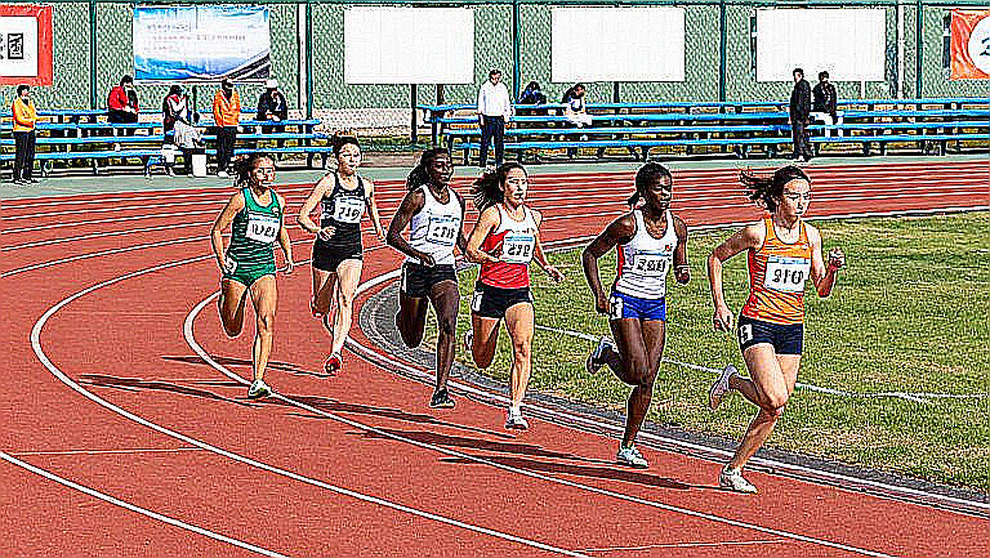
One possibility is that Pakistan's competitive base in women's long-distance race walking remains limited. If there are insufficient female athletes prepared to compete over 10km or 20km, organisers may choose a shorter event to encourage participation. Another possibility is that the programme was shortened because of time or resource constraints. A third is that the women's 5,000m event belonged to a junior or developmental category incorporated into the wider championship. The original report does not state Mahnoor's age or competition category. None of these explanations can therefore be treated as established fact.
The federation faces a straightforward question. If women's 5,000m race walking is a regular senior national event, is there a formal progression route towards 10km and 20km? If it is intended for junior or developing athletes, why was the age category not specified in the published result? If the distance was shortened for scheduling reasons, what technical or administrative justification supported that decision? Without answers, any assessment of women's race-walking development remains incomplete.
The distance difference is also relevant to training. A 5km race walk and a 20km race walk require different priorities. Shorter-distance competition demands speed alongside technical efficiency and an adequate aerobic base. Longer-distance racing places greater emphasis on energy efficiency, consistent technique, maintaining form under fatigue and controlling competitive pace. If female athletes are repeatedly offered only shorter events, they may struggle to gain the competitive experience required for longer distances.
In my experience, the development of a sport cannot be measured simply by counting medal winners. It also requires an assessment of how many athletes compete in each event, how many competitions are available and how often an athlete can test her progress at the next level. The real development of women's race walking will become visible when a 5,000m title is followed by regular national competition over 10km and 20km.
Race walking requires technical verification as well as a time
The defining feature of race walking is its technical regulation. An athlete must maintain ground contact at all times, with at least one foot touching the ground. The advancing leg must also remain straight from the moment of first contact until it passes beneath the body. Judges can issue warnings when a walker breaches the required technique. Three red cards from different judges result in disqualification.
This means that a race-walking result cannot be assessed by the clock alone. Technical legality is equally important. Reaching the finish line may be sufficient to register a time in an ordinary running event, but a race walker must also comply with the discipline's specific movement requirements. For this reason, judging information is particularly valuable in national competition results.
The report of Mahnoor's 32:32.40 performance does not provide this information. It does not state how many judges were appointed, how many warnings were issued, whether any athlete received a red card or whether any technical objection was recorded. This does not mean that Mahnoor committed a technical violation. It means only that the published information does not allow independent confirmation of technical compliance. Treating missing information as proof of an infringement would be as wrong as assuming everything was verified without checking.
Lap splits are also unavailable. In a 5,000m track event, each lap provides useful information about the nature of a performance. If Mahnoor started conservatively and accelerated over the final laps, that could indicate effective pace management. If she began quickly and lost time towards the finish, questions about endurance or technical fatigue might arise. A consistent series of lap times could indicate a controlled performance. Without the splits, none of these conclusions can be established.
The finishing times of Ammara Manawwar and Sawera are also missing from the report. This prevents an assessment of the gap between Mahnoor and the other medal winners. A winning time of 32:32.40 does not reveal whether the contest remained close until the final lap or whether Mahnoor led throughout. The total number of female participants is also unknown. Publishing three medal winners does not establish the size of the entire field.
This is where the quality of sports reporting is tested. A basic results report can provide the winner, time and medal. A strong analytical report should also explain how the time was achieved, how many competitors were involved and how technical compliance was assessed. I trust the receipt more than the highlight reel; in race walking, that receipt includes the judges' records as well as the finishing time.
Coaching, institutional support and the value of the prize pool
After winning gold, Mahnoor specifically thanked her coaches Nadia, Shahbaz and Abdullah. That brief acknowledgement points towards an important part of her performance: the coaching network. Reaching national competition requires training, access to facilities, regular competition and financial support. However, a thank-you statement cannot establish the quality or duration of the training system. The available report does not state how long Mahnoor has practised race walking, her age, her training location or the number of competitions she has entered.
Pakistan's departmental athletics structure is central to this discussion. Organisations such as WAPDA, the Navy, Police, Railways and the armed forces provide athletes with institutional representation. Under this model, an athlete's competitive opportunities are connected to the support offered by an organisation. The medals won by WAPDA's Waqas, Ammara Manawwar and Muhammad Gulfam demonstrate its presence at the championship. Muhammad Younis Khan's silver for the Navy provides another example of departmental competition. However, a medal table cannot reveal how much each organisation spends on training, salaries, medical assistance or international preparation.
Mahnoor's victory is also important for Sindh because it gives local athletics a visible achievement. A first gold medal can encourage younger athletes and increase attention towards the sport. Turning that encouragement into sustained performance requires regular coaching programmes, local competitions and a transparent selection process from district level to national level. If an athlete has no opportunity to compete for six months after a national championship, it becomes difficult to convert a one-day achievement into a development programme.
The actual role of the prize pool must be assessed in this context. The Rs 9 million allocation is a positive incentive. However, the available report does not specify how many athletes will share it or how much each medal carries. The actual award received by an athlete must be considered against training, travel, equipment and medical expenses. A prize can provide immediate motivation, but long-term financial security is more important for sustained performance.
Organisers should therefore publish a detailed prize-distribution statement. The allocation for gold, silver and bronze in each event, the payment date and the official payment record should be available. This would give athletes greater confidence and allow the administration's spending to be audited. The value of a major event should be judged by how its announced budget is actually distributed, not by the headline figure alone.
Arshad Nadeem's success and expectations for Pakistani athletics
Arshad Nadeem's historic 92.97m javelin throw at Paris 2026 gave Pakistani athletics a new public platform. His Olympic gold established him as one of the country's most recognisable sporting figures. The presence of sprinters such as Shajar Abbas and Moeed Baloch also adds interest to national competitions. But the achievements of leading athletes must be distinguished from the capacity of the wider sport. An Olympic medal demonstrates the potential of a national system; it does not automatically create the same quality across every discipline.
Mahnoor's victory offers an opportunity to understand that gap. Pakistan has an athlete capable of defeating the world's best at Olympic level. Yet the women's race-walking programme at this championship featured a 5,000m event, a winning time of 32:32.40 and limited published technical information. These details point towards a different stage of development. They do not diminish Mahnoor's achievement. They show that different disciplines within the national system progress at different rates.
A successful national athletics programme cannot depend solely on exceptional athletes such as Arshad Nadeem. It must develop a regular talent pipeline in women's race walking, distance running, sprinting, jumping and throwing events. Each discipline has different requirements for coaches, facilities, equipment, medical support and competition schedules. The administration is responsible for organising these needs into a coherent national programme.
Years of observing matches and athletics have reinforced one point: a single exceptional result cannot establish the strength of an entire system. When one athlete finishes far ahead in a national competition, the next question should be how many competitive athletes are behind her. If only a handful of athletes enter an event, winning a medal is an achievement, but it is not proof of competitive depth. When the sample is small, the process must be loud.
Can Mahnoor build an international pathway?
Mahnoor's next step should be to establish a reliable performance baseline alongside celebrating her national title. Her age and training history need to be clarified. If she is a junior athlete, her 32:32.40 should be assessed against the development standards of her age category rather than directly against senior international performances. If she is competing in the senior category, she will need a structured programme for improving her 5,000m time and entering longer-distance competitions.
A practical progression could involve improving her 5,000m performance and then competing over 10km. This cannot be achieved simply by increasing the distance. Race-walking technique must be developed continuously. She needs to maintain ground contact and knee extension while preserving technical discipline under fatigue. Aerobic development, strength training, recovery and nutrition must also be integrated into the programme.
Coaches should maintain lap splits, training-load records, technical warnings and relevant performance data for every competition. Video analysis can identify the stage at which an athlete loses technical consistency. If technique deteriorates during the final kilometre, the training programme can place greater emphasis on endurance and technical stability. If the athlete begins too quickly, race strategy may need adjustment. These decisions should be based on measured evidence rather than assumption.
The Athletics Federation of Pakistan should also establish a clear women's race-walking calendar. Several recognised competitions each year should provide regular opportunities over 5,000m and 10km. A progression route towards longer distances should be available for qualified athletes. If the current female athlete base is limited, district and provincial competitions at junior level could expand participation. The objective should be to develop a competitive structure rather than simply produce occasional medal winners.
The time horizon matters. An athlete should not be expected to reach international level immediately after one national title. Technical efficiency and long-distance capacity require sustained development. The next six to twelve months should therefore be assessed as a training and competition block. One improved time may generate excitement, but consistent progress will provide stronger evidence of development.
The counterargument: A slow time can still be a useful beginning
There is an important mistake to avoid when assessing 32:32.40. A national championship performance is outside international standards, therefore the athlete's achievement is meaningless. That conclusion is wrong. Domestic competitions do not exist solely to produce world-class performances. They also provide opportunities for new athletes to enter organised competition. If Mahnoor achieved this title with limited resources and competitive experience, it may represent a significant personal milestone. However, claims about a lack of resources should also be supported by evidence rather than assumed.
Equally, it would be wrong to conclude that the women's 5,000m event necessarily proves that women's race walking in Pakistan is weak. The distance may have been determined by age category, programme design or another administrative decision. Until organisers publish the technical handbook, full event schedule and athletes' age categories, the reason for the difference cannot be established.
The real issue is not to diminish the performance, but to define its significance accurately. Sindh's first gold is a provincial achievement. The 32:32.40 time is a domestic result. International capability must be assessed through future longer-distance performances, technical compliance and competitive depth. These are three separate measures. Combining them into a single judgement would be unfair to both the athlete and the administration.
Another important question concerns the transparency of the national results system. The published report includes the winner's time but not the complete results sheet. The finishing times of the second- and third-place athletes, participant numbers, lap splits and judges' reports are missing. This may be a reporting limitation, or the detailed official documents may not have been made publicly available. If the latter is the case, the federation should improve its results publication system.
A standard results sheet should include the full athlete name, team, age category, finishing time, position, number of participants and technical decisions. Race-walking warnings and red cards should also be recorded. Such information would make future comparisons possible and provide a more reliable basis for national records, personal bests and international selection decisions. A metric dictionary is a promise you can audit; a standardised results sheet is the first step towards delivering that promise in athletics.
Five indicators to watch at the next championship
The next report on Pakistani women's race walking should establish five details. First, Mahnoor's age and competitive category. Second, the total number of entrants in the women's 5,000m event. Third, the finishing times of Ammara Manawwar and Sawera and the gaps between the medal winners. Fourth, the judges' warning and red-card records. Fifth, Mahnoor's next competition schedule and preparation for the 10km distance.
These details would help establish whether Sindh's first gold came from a competitive field or whether the event still requires a broader participation base. If the next national championship introduces longer women's distances and attracts more participants, that would be a stronger indication of development. If the event remains at 5,000m, the federation should explain the reasoning. If Mahnoor improves her time consistently over the next few months, her training programme and competition experience will become useful subjects for further assessment.
Sindh's achievement will remain significant regardless of Mahnoor's next result. She won the province's first gold at the national championship and publicly acknowledged the contribution of her coaches. But this should be more than a celebration for Pakistani athletics. It should also provide an opportunity to examine the training base, competition calendar and transparency of results in women's race walking.
The final judgement will depend less on the medal and more on the next performance record. Mahnoor needs regular competition, technical monitoring and a structured progression towards longer distances. The federation needs to provide a clear development pathway and detailed results. At the next national championship, the important question will not simply be whether Sindh wins another gold. It will be whether Pakistan has enough competitive women athletes to contest 10km and 20km race walking. The medal table will need a depth column alongside it. That is where the future of the discipline will become visible.